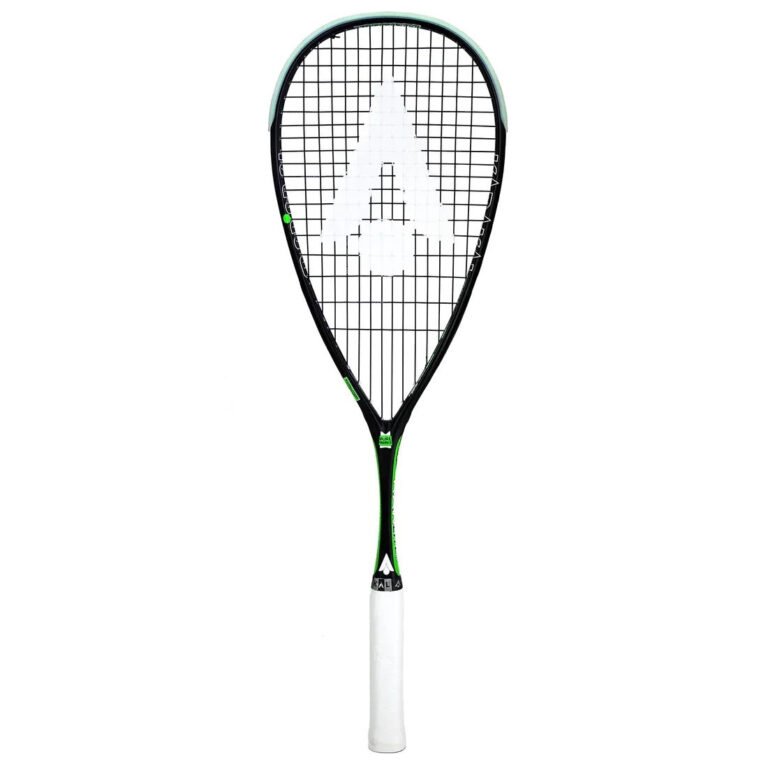
After decades of rejection, squash is finally an Olympic sport. But the debut comes with the tightest field in the Games: just 32 players, five qualification routes, and a rankings cut-off that decides almost everything in a single week of May 2028. This is how qualification actually works — route by route, date by date, from the official qualification system.
The short version
Squash makes its Olympic debut at the Los Angeles 2028 Games, with men’s and women’s singles draws of 16 players each at the Comcast Squash Center at Universal Studios, from 15 to 24 July 2028. The 16 places in each draw are filled in a strict order set by the official Olympic Qualification System (OQS): five go to continental champions, one to the host nation (USA), eight through the PSA World Rankings of 22 May 2028, one is a universality place for an under-represented nation, and the final one is winner-takes-all at a 24-player qualifying tournament in Seattle in June 2028. Almost every qualifier must be inside the PSA top 50 on cut-off day — and no country can send more than two players per draw, which guarantees at least 13 nations in each 16-player field.
On this page
The long road: why 2028 is the debut
Squash is one of the world’s genuinely global racket sports — a fixture of the Commonwealth Games from Kuala Lumpur 1998 through Birmingham 2022, and a regular at the Asian Games, the Pan American Games and The World Games. It has world champions, a professional tour and sell-out glass-court finals in front of landmarks. What it has never had, until now, is the one stage that changes a sport’s economics and visibility overnight: the Olympic Games.
The near-misses became part of the sport’s folklore. Squash was voted on and rejected four times in a row — in the decisions that shaped the London 2012, Rio 2016, Tokyo 2020 and Paris 2024 programmes. Each campaign made the same case (a worldwide playing base, genuine athleticism, a compact venue footprint, a made-for-TV glass court) and each time the sport watched another discipline take the slot. The closest brush with the Games before 2028 was a demonstration appearance at the Buenos Aires 2018 Youth Olympic Games — a showcase, not a medal event.
What changed was the mechanism. Under the IOC’s current rules, each host organising committee can propose additional sports for its own edition of the Games. LA28 proposed a package of five, and on 16 October 2023 the 141st IOC Session in Mumbai approved it: baseball/softball, cricket (T20), flag football, lacrosse (sixes) — and squash. Flag football and squash are the two genuine debutants in the package.
Two consequences of that mechanism matter for everything that follows. First, squash’s place is, for now, an invitation to one edition of the Games: the additional sports were approved for LA28, and any future inclusion — Brisbane 2032 included — needs its own decision. Los Angeles is both a debut and an audition. Second, because the field had to fit an Olympic programme built around strict athlete quotas, squash was given one of the smallest allocations of any sport at the Games: 32 athletes in total. That single number drives the whole design of the qualification system — and makes qualifying for the debut arguably harder, place for place, than winning most events on the professional tour.
The tournament: dates, venue, format
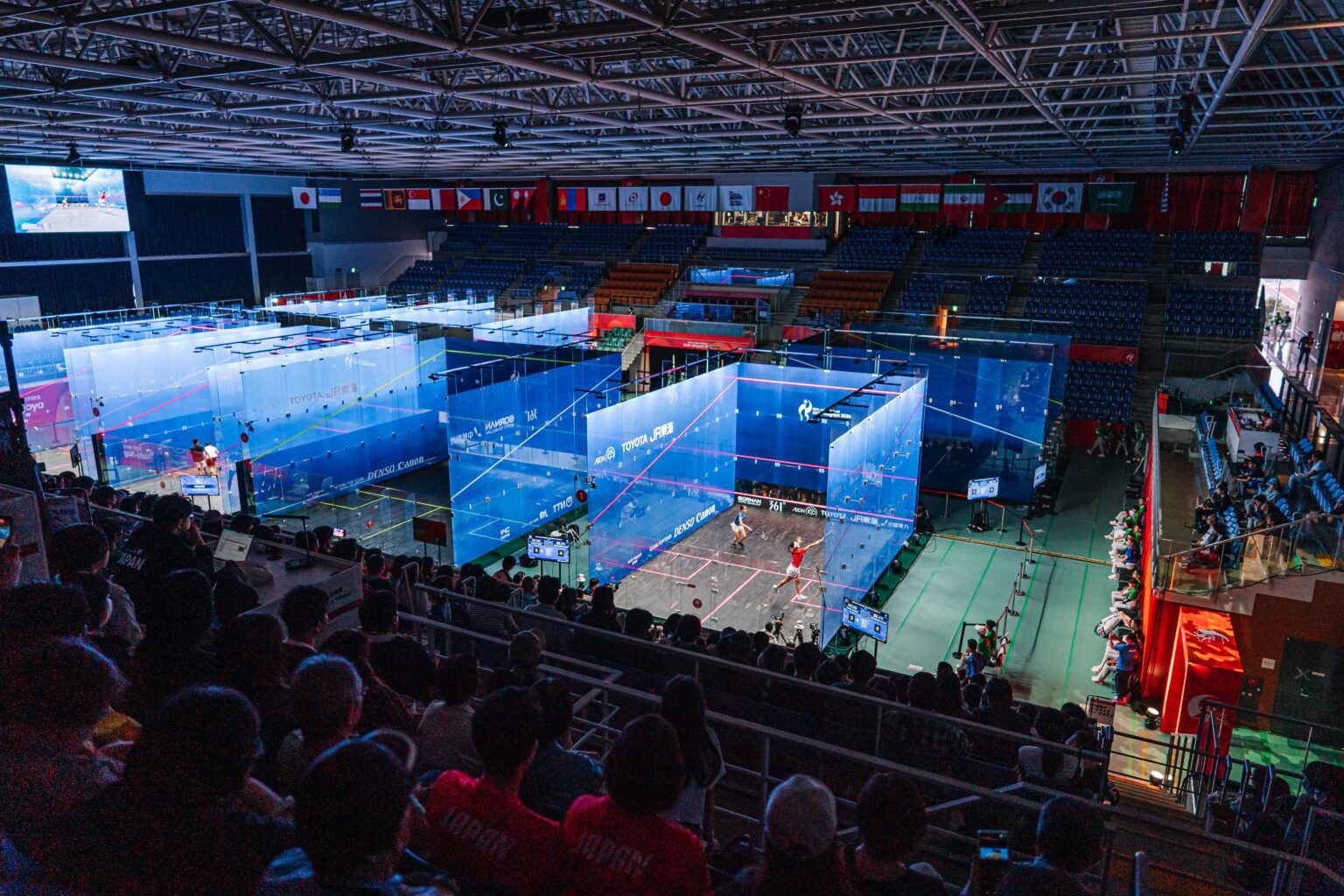
The Olympic squash tournament runs from 15 to 24 July 2028, inside the wider LA28 Games window of 14–30 July. The venue is the Comcast Squash Center at Universal Studios in Universal City — an all-glass show court built on the Universal Studios lot, in line with how the professional game already stages its biggest finals. LA28’s published competition schedule gives squash ten sessions (SQU01–SQU10) across the ten days, closing with bronze- and gold-medal matches on 23 and 24 July.
Singles only
Two events: men’s singles and women’s singles. There are no doubles and no team events at LA28 — every one of the 32 places is an individual place.
Straight knockout
Each draw is a 16-player single-elimination bracket, starting at the round of 16. Lose once and you are out — four wins take a player from the first round to Olympic champion.
PAR to 11
Matches are played under World Squash singles rules: point-a-rally scoring, games to 11 with two clear points needed from 10-all. New to the game? Our guide to how to play squash explains the scoring and the basic shots.
A 16-player knockout is a brutal format for the favourites. On the professional tour, the biggest events seed 32 or more players and the top names can play their way into a tournament; in Los Angeles there is no such runway. Every player in the draw has already survived the qualification system described below, the draw offers no weak first rounds, and a single off-day ends the campaign. The bronze-medal matches in the schedule also matter: beaten semi-finalists play off for the last podium place rather than sharing bronze, so the final weekend carries four medal matches across the two draws.
The 32 places, broken down
The official qualification system — developed by World Squash with the PSA and approved by the IOC Executive Board on 1 February 2026 — allocates the 32 places like this. Per gender, there are 14 qualification places, plus one host country place and one universality place: 16 men and 16 women, 32 athletes in total.
| Route | Places per gender | How the place is decided |
|---|---|---|
| 1. Continental Games | 5 | Winner of each of the five designated continental qualifying tournaments |
| 2. Host country quota | 1 | Guaranteed place for the USA, subject to the eligibility rules |
| 3. PSA World Rankings | 8 | The PSA World Rankings issued on 22 May 2028, under the country-cap rules |
| 4. Universality place | 1 | Allocated by the Tripartite Commission to an eligible under-represented nation |
| 5. Final World Qualifying Tournament | 1 | Winner of the 24-player last-chance tournament in Seattle, June 2028 |
| Total per gender | 16 | 32 athletes across both draws |
Three design rules shape everything. Places are awarded to athletes by name — a country cannot qualify a slot and then hand it to a different player. The routes are applied in the order above: continental places are settled first, then the host place, then the rankings places are calculated against what is already allocated, then universality, then the final qualifier. And no National Olympic Committee (NOC) can have more than two athletes in a draw — with the default being just one. World Squash has confirmed that only two or three NOCs will end up with two players in any given draw; everyone else gets one. Do the arithmetic and each 16-player draw is guaranteed to feature players from at least 13 different nations — a deliberate trade: a slightly thinner concentration of the very top ranked players, in exchange for a genuinely worldwide field on the sport’s biggest stage.
Why no predictions here: nobody — no player, however highly ranked — is officially qualified until World Squash works through the system in May and June 2028, because almost every place depends on the rankings list of one specific day, 22 May 2028. Rankings move weekly on the PSA tour. So this guide explains the system, the dates and the arithmetic rather than tipping names: any list of “likely qualifiers” published two seasons out would be guesswork dressed as news.
The five qualification routes
Route 1: Continental Games — five places per gender
The first five places in each draw go to the winners of five designated continental qualifying tournaments — one per continent, spread across the two seasons before the Games:
| Continent | Qualifying tournament | Dates |
|---|---|---|
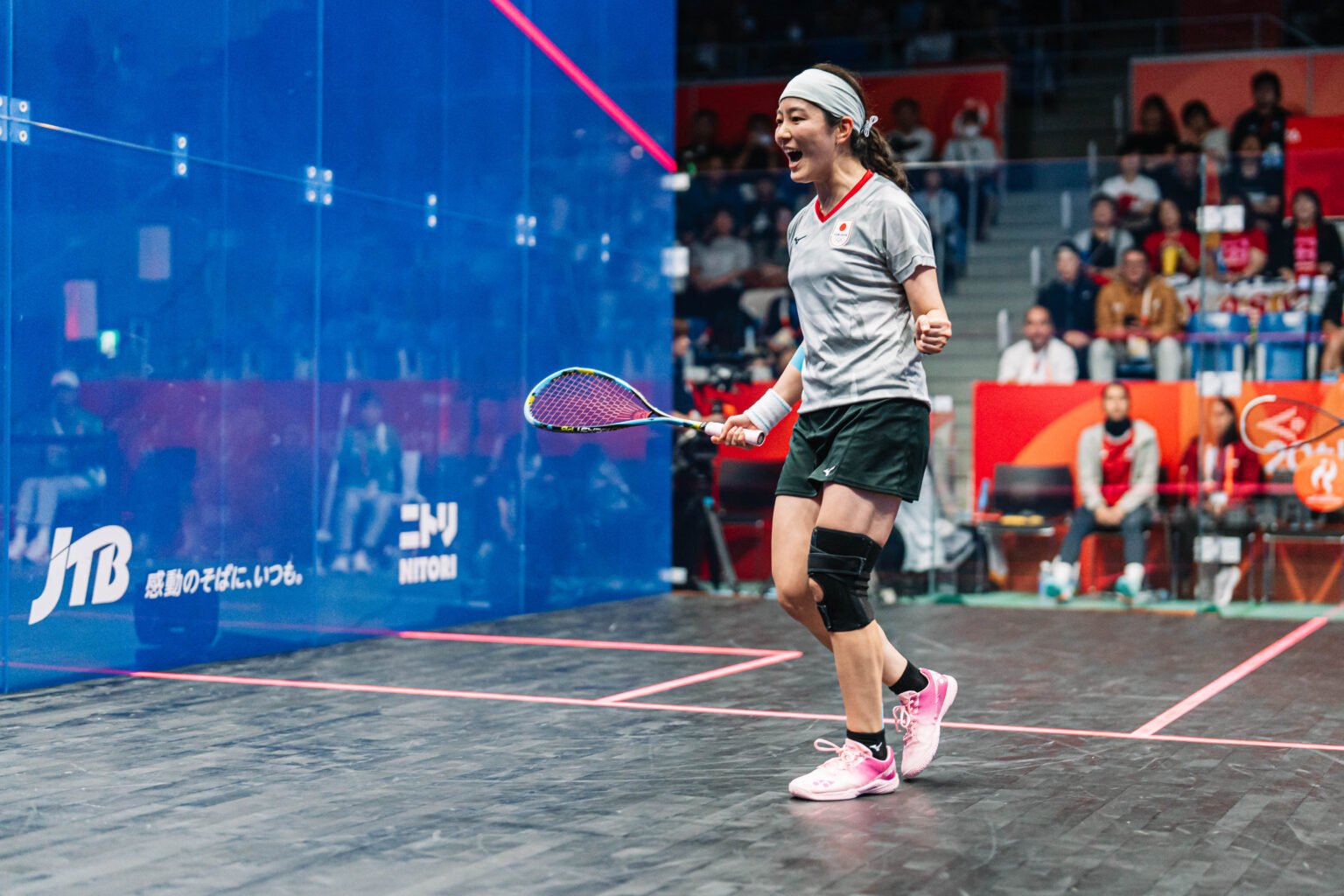
| Asia | Asian Games — Nagoya, Japan | 19 September – 4 October 2026 |
| Europe | European Games — Istanbul, Türkiye | 22 – 26 June 2027 |
| Americas | Pan-American Games — Lima, Peru | 23 July – 8 August 2027 |
| Oceania | Pacific Games — Pirae, Tahiti | 24 July – 8 August 2027 |
| Africa | African Continental Qualifying Tournament (venue to be confirmed) | 17 – 21 August 2027 |
The race has already started: the Asian Games in Nagoya opened the qualifying calendar in the autumn of 2026. But winning a continental title does not punch a ticket on the day. Continental places are only confirmed on 22 May 2028, because the winner still has to satisfy the eligibility rules on that date — above all, a place inside the PSA top 50 (see the eligibility section below). If a continental champion has slipped outside the top 50 by cut-off day, the place passes to the next highest placed eligible athlete from that same continental tournament. And if a continental winner is not their own country’s highest-ranked player, the system gives the continental winner priority — the title, not the ranking, is what their country must honour.
One detail has changed since qualification was first announced: Africa’s route was initially described as the African Games in Cairo in early 2027, but the current official qualification system instead designates a standalone African Continental Qualifying Tournament from 17 to 21 August 2027, with the venue still to be confirmed. If you are tracking the African race, the standalone tournament — not the African Games — is the event that carries the Olympic place.
Route 2: Host country quota — one place per gender
As host, the United States is guaranteed one place in each draw, allocated through the US Olympic & Paralympic Committee. The guarantee comes with the same condition as the continental route: the athlete named still has to meet the eligibility requirements, including a top-50 PSA ranking at the 22 May 2028 cut-off. If no American player is inside the top 50 when the rankings are struck, the host place is not simply handed down — instead, the USA remains eligible to chase a place at the Final World Qualifying Tournament. The host can also earn a second place in a draw, but only through the world rankings provisions described next, on exactly the same terms as every other leading nation.
Route 3: PSA World Rankings — eight places per gender
The largest single block of places — eight per draw — comes from the PSA World Rankings issued on 22 May 2028. This is where the country cap bites hardest, because the rankings places are not simply the eight highest-ranked names left over. The system works through them in a set sequence:
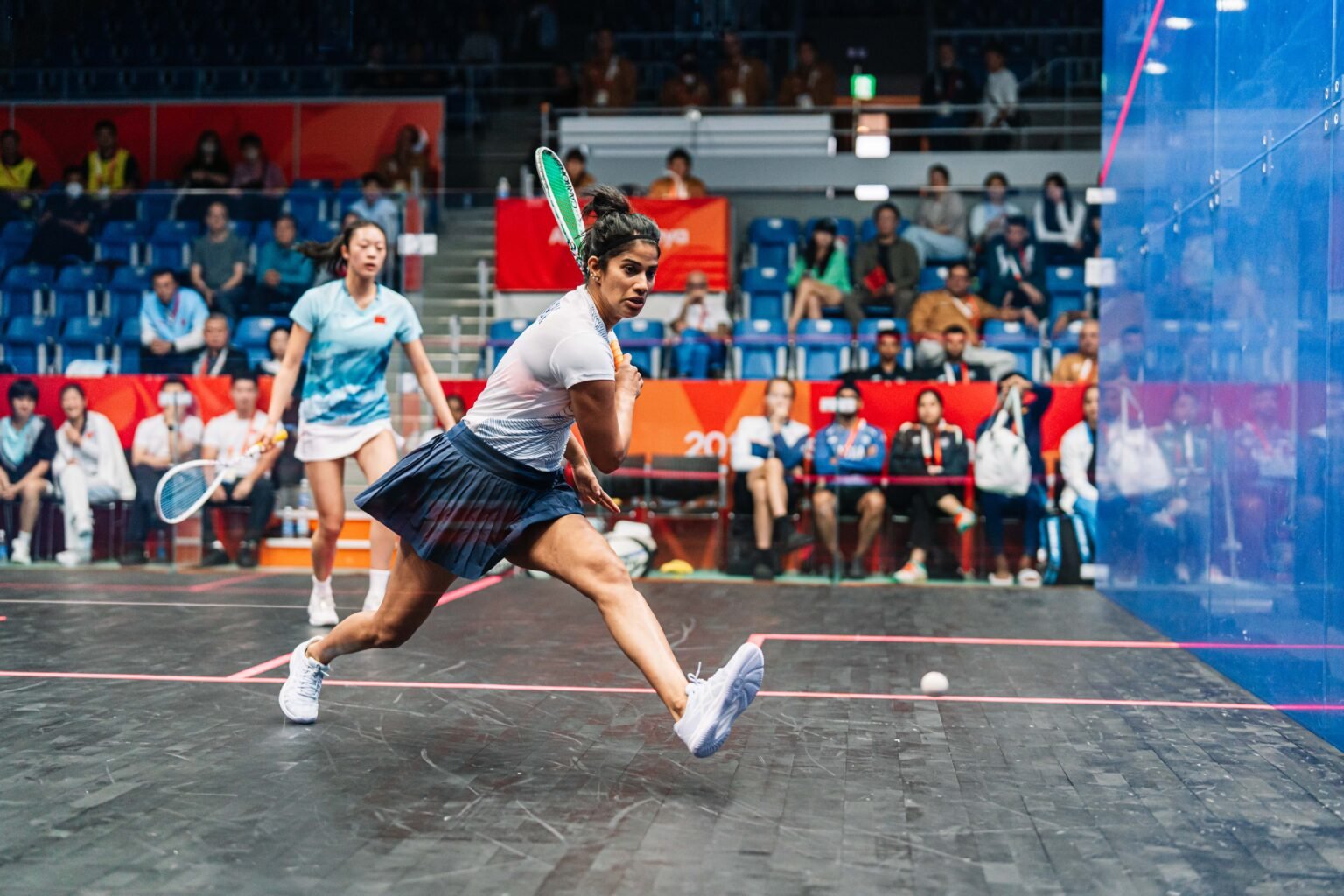
First, the pairs. The two countries whose second-best eligible players are ranked highest each receive two places — so the strength of a nation’s number two, not just its star, decides who gets a pair. Then, the singles. The remaining rankings places are filled in ranking order, one per country, from the cut-off list. Then, a possible third pair. If places remain unallocated, a third country can be granted a second place via its next-highest second athlete — provided that athlete is also inside the top 50. Finally, a safety valve. If places still remain after all that, they go to the highest-ranked eligible athletes from countries not yet represented at all — and those athletes may be taken from outside the top 50.
The practical effect is a two-season rankings war with a hard deadline. Every PSA tour result between now and May 2028 feeds the list that matters, and a player sitting just inside or outside the top 50 in the spring of 2028 has their Olympic fate decided by a handful of matches. For the countries chasing a precious second place, the race is even more specific: it is their second-ranked player’s form, measured against every other nation’s number two, that counts.
Route 4: Universality place — one place per gender
One place in each draw is a universality place — the Olympic system’s mechanism for ensuring smaller and under-represented sporting nations appear at the Games. These places are not won at a tournament. The IOC invites all eligible NOCs to apply from 1 October 2027, applications close on 15 January 2028, and the Tripartite Commission (IOC, national Olympic committees and the international federations) confirms the allocations after the qualification period ends. The athlete named still has to be a genuine tour-level player: universality candidates must be ranked inside the PSA top 75 at the 22 May 2028 cut-off — a lower bar than the top-50 line applied elsewhere, but a real one.
Route 5: The Final World Qualifying Tournament — one place per gender
The last place in each draw is decided the dramatic way: a Final World Qualifying Tournament in Seattle and Bellevue, Washington, from 6 to 10 June 2028 — five weeks before the Games. An all-glass court will be set up in Seattle, with the PRO Club in Bellevue hosting some early-round matches, and the event is delivered by YSK Events, the team behind major tour events on the US West Coast.
The fields are exact: a 24-player draw per gender, made up of the highest-ranked player from each of the next 24 nations that have not already been allocated one of the first 15 places. Invitations go out on 23 May 2028, the morning after the rankings cut-off. Forty-eight players travel to the Pacific Northwest; exactly two — the men’s winner and the women’s winner — leave with an Olympic place. Everyone else goes home. As last-chance saloons go, it is close to perfect theatre, and it means the identity of the final two Olympians will not be known until barely a month before the opening matches in Los Angeles.
The eligibility line: top 50 or bust
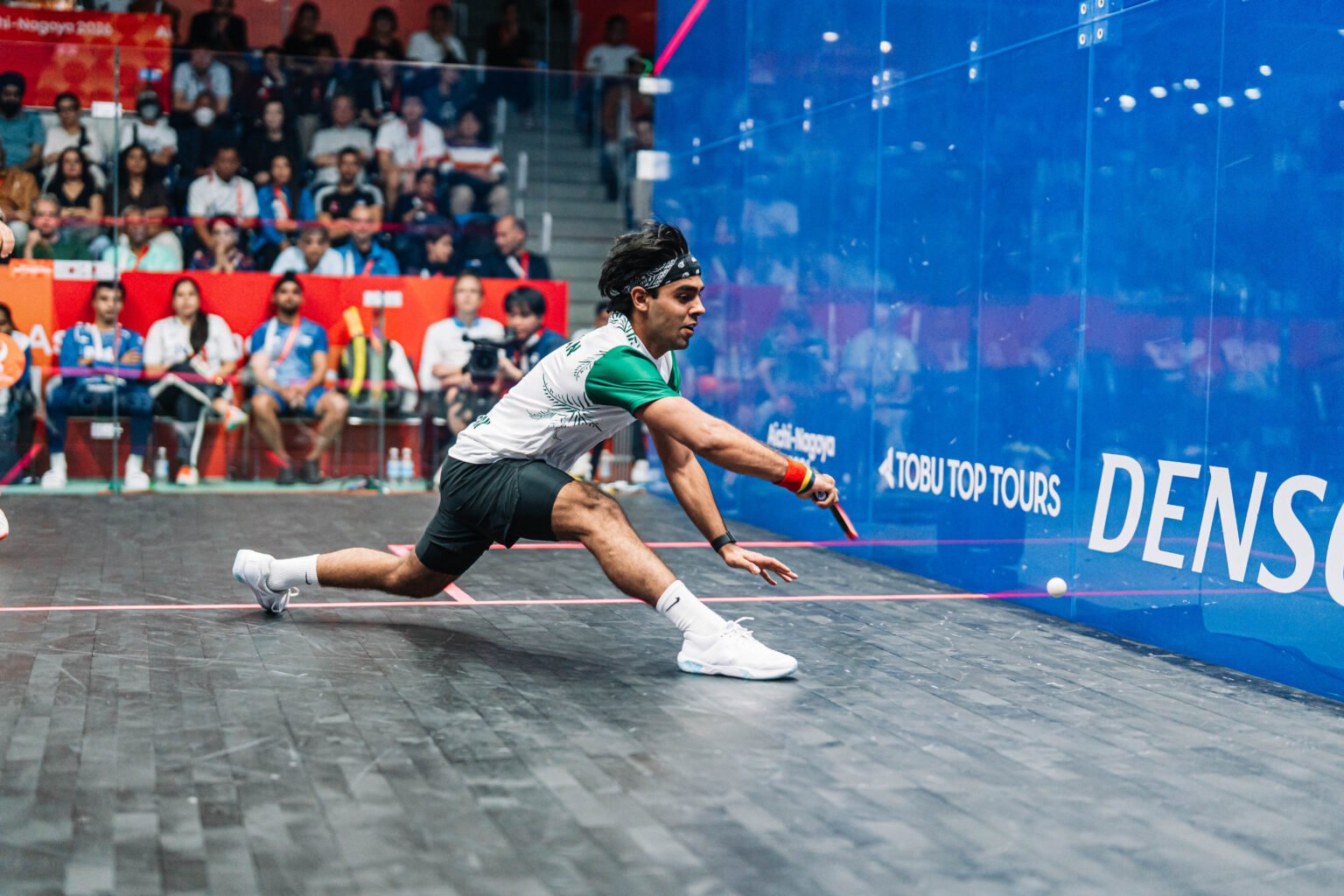
Underneath all five routes sits one hard rule. To compete at LA28, an athlete must be ranked inside the top 50 of the PSA World Rankings on 22 May 2028 — the cut-off date that runs through the entire system like a spine. The only exceptions are written into the document itself: the universality athlete (who must be top 75), the Final World Qualifying Tournament qualifiers, and the safety-valve case in the rankings route, where a place can drop to the best player of an unrepresented nation ranked outside the top 50 if the places cannot otherwise be filled.
Athletes must also comply with the standard Olympic framework — the Olympic Charter, the World Anti-Doping Code and the IOC’s competition-manipulation code — and with World Squash’s own regulations. Places are then confirmed in writing, in two waves: World Squash publishes the first 15 qualified athletes in each draw on 22 May 2028 and NOCs confirm they will use the places by 29 May 2028; the two Seattle winners are confirmed on 12 June 2028, with NOCs confirming by 19 June 2028 and the final LA28 sport-entries deadline falling on 26 June 2028. Unused places are not wasted — the system has a written reallocation ladder for every route, feeding places back into the rankings order or down the results of the relevant tournament.
Key dates: the qualification timeline
| Date | Milestone |
|---|---|
| 16 October 2023 | IOC Session in Mumbai approves squash as an additional sport for LA28 |
| 1 February 2026 | IOC Executive Board approves the squash Olympic Qualification System |
| 19 Sep – 4 Oct 2026 | Asian Games, Nagoya — the first continental qualifying tournament |
| 22 – 26 June 2027 | European Games, Istanbul — European qualifying tournament |
| 23 July – 8 Aug 2027 | Pan-American Games, Lima — Americas qualifying tournament |
| 24 July – 8 Aug 2027 | Pacific Games, Tahiti — Oceania qualifying tournament |
| 17 – 21 Aug 2027 | African Continental Qualifying Tournament (venue to be confirmed) |
| 1 October 2027 | IOC opens universality place requests to eligible NOCs |
| 15 January 2028 | Deadline for universality place requests |
| 22 May 2028 | PSA World Rankings cut-off — 15 of the 16 places per draw published by World Squash |
| 23 May 2028 | Invitations issued for the Final World Qualifying Tournament |
| 29 May 2028 | Deadline for NOCs to confirm the first wave of places |
| 6 – 10 June 2028 | Final World Qualifying Tournament — Seattle & Bellevue, USA |
| 12 / 19 June 2028 | Final places allocated / NOC confirmation deadline |
| 26 June 2028 | LA28 sport entries deadline |
| 15 – 24 July 2028 | Olympic squash tournament — Comcast Squash Center at Universal Studios |
What Olympic inclusion means for squash
Funding follows the rings. In most countries, elite-sport funding is allocated by national Olympic committees and government agencies that prioritise Olympic disciplines. Squash programmes that survived for decades on federation budgets, sponsors and private patrons now sit inside that system: coaching structures, sports science, junior pathways and court-building cases can all be argued in Olympic terms. The qualification system’s design amplifies this — because at least 13 nations appear in each draw, the funding argument lands in more countries at once.
The audience is the biggest the sport can reach. Squash’s professional product is genuinely telegenic: an all-glass court, rallies that combine speed, geometry and endurance, and matches short enough to fit broadcast windows. What it has never had is a casual audience in the hundreds of millions, and the Olympics remains the one event that delivers that to every sport on its programme simultaneously. World Squash President Zena Wooldridge, announcing the qualification system, said players around the world could now “begin plotting a course for a place in sporting history in Los Angeles” — the phrasing matters, because for the first time a squash player’s career can be measured against an Olympic start line.
But the clock is ticking on two fronts. The first is Brisbane 2032: additional sports are approved one edition at a time, so Los Angeles is also squash’s evidence file for the next decision — a well-run, well-watched tournament in a dramatic venue is the argument. The second is closer to home: Olympic debuts reliably produce a surge of first-time players in the seasons around the Games, and a surge only helps the sport if clubs and coaches can absorb it. If the debut has made you curious about the game itself, start with the rules and the shapes of a rally in our how to play squash guide, see how the game differs from its closest cousin in squash vs racquetball, and if you are buying a first racket, our guide to the best squash rackets for beginners covers the weights and head sizes that suit a first season.
How to follow the race
Your season-by-season watchlist
Now → August 2027 — the continental titles. Four of the five continental qualifying tournaments land in this window (Europe in June 2027, the Americas and Oceania in July–August 2027, Africa in August 2027), with Asia’s places already contested in Nagoya in 2026. Watch who wins each title — then keep one eye on whether they hold a top-50 ranking into 2028. World Squash (worldsquash.sport) carries the official qualification news; the PSA Squash Tour (psasquashtour.com) carries the rankings and tour results that decide the rest.
Autumn 2027 → spring 2028 — the rankings war. Follow the PSA World Rankings month by month with two questions in mind: who is hovering around the top-50 line, and which nations have a second player ranked high enough to chase one of the two-player allocations? That second race — nation against nation, number two against number two — is the quiet drama of the system.
22 May 2028 — cut-off day. World Squash publishes 15 of the 16 names in each draw. This is the day the field effectively takes shape, and the day the 48 Seattle invitations are framed — invitations follow on 23 May.
6 – 10 June 2028 — Seattle. The Final World Qualifying Tournament: two 24-player draws, two survivors. If you follow one qualifying event in person or on stream, make it this one.
15 – 24 July 2028 — Los Angeles. The tournament itself at the Comcast Squash Center at Universal Studios. LA28’s official site (la28.org) publishes the session schedule and ticketing information; the published schedule already shows ten squash sessions ending with the medal matches on 23–24 July. We will keep this page updated as World Squash confirms the outstanding details — starting with the African qualifying tournament’s venue.
The road to LA, in one paragraph
Squash waited a century for this. The price of admission is a 32-player field built like a funnel: win your continent, be the host, sit high enough in the world rankings on one named day in May 2028, carry your nation’s universality flag, or win five straight matches in Seattle with everything on the line. The system is deliberately designed so that no single superpower can fill the draw and no deserving region is shut out — and it guarantees that when the first ball is struck at Universal Studios on 15 July 2028, the 16 players in each draw will have arrived by genuinely different roads.
- Field: 32 athletes — 16 men, 16 women, singles only.
- Split per draw: 5 continental + 1 host + 8 rankings + 1 universality + 1 final qualifier.
- The line: PSA top 50 on 22 May 2028 (top 75 for universality).
- The drama: 48 players, two places, Seattle, 6–10 June 2028.
LA 2028 squash — FAQs
When is squash at the LA 2028 Olympics?
The squash tournament runs from 15 to 24 July 2028, during the LA28 Games (14–30 July 2028). It is played at the Comcast Squash Center at Universal Studios in Universal City, California, with the medal matches closing the schedule on 23 and 24 July.
How many squash players will compete at LA 2028?
32 athletes in total: 16 in the men’s singles and 16 in the women’s singles. There are no doubles or team events. Places are allocated to athletes by name, and no country can enter more than two players in either draw.
How do squash players qualify for the LA 2028 Olympics?
Through five routes, applied in order: the five continental qualifying tournament winners (5 places per gender), the host country place for the USA (1), the PSA World Rankings of 22 May 2028 (8), a universality place (1), and the winner of the Final World Qualifying Tournament in Seattle (1). That makes 16 places per gender.
What world ranking do you need to qualify for Olympic squash?
In principle, a place inside the PSA top 50 on the cut-off date of 22 May 2028. The exceptions are the universality place (top 75 required), the Final World Qualifying Tournament qualifiers, and a safety-valve case in the rankings route for the best player of an unrepresented nation.
Can one country send two squash players to LA 2028?
Yes, but only a few will. The maximum is two per gender per country, and World Squash has confirmed that only two or three countries will receive two places in any draw — the deciding factor is how highly each nation’s second-best eligible player is ranked on 22 May 2028. Every other qualified country sends one player, so each draw features at least 13 nations.
Where is the final squash qualifying tournament for LA 2028?
In Seattle and Bellevue, Washington, USA, from 6 to 10 June 2028. An all-glass court in Seattle hosts the finals, with the PRO Club in Bellevue staging some early rounds. Each draw has 24 players — the top-ranked player from each of the next 24 nations without a place — and only the winner of each draw qualifies.
Has squash ever been in the Olympics before?
No — LA 2028 is squash’s Olympic debut. The sport was rejected four times in a row in the decisions shaping the 2012, 2016, 2020 and 2024 programmes, and its only previous Olympic-stage appearance was as a demonstration sport at the Buenos Aires 2018 Youth Olympic Games. The IOC Session approved squash as an additional sport for LA28 on 16 October 2023.
Is squash confirmed for the Brisbane 2032 Olympics?
Not at this time. Squash was approved as an additional sport for the Los Angeles 2028 edition specifically, under the system that lets each host propose extra sports for its own Games. Inclusion in Brisbane 2032 or any later Games requires a separate future decision — which is why the sport treats LA28 as both a debut and an audition.
About this guide: Every date, quota and rule in this article is taken from the official Olympic Qualification System for squash at LA28 published by World Squash and the IOC (document version as of 22 June 2026), World Squash’s qualification announcements, and LA28’s published competition schedule, checked in October 2026. Qualification outcomes cannot be final until the confirmation steps of May–June 2028 are complete; where an official detail is still outstanding (such as the African qualifying tournament’s venue), this page says so rather than guessing. This page links only to guides on Alishuttler.com.