A squash bag is not a gym bag with a logo. The best ones hold your rackets flat and separated, quarantine your shoes and wet kit behind vented walls, and shrug off the weather between the car park and the club — here are the seven that do it properly.
TL;DR — The short answer
Buy the Tecnifibre Tour Endurance 12R if you want the complete tour bag: waterproof tarpaulin, two big compartments, a ventilated shoe pocket and a shell that stands upright half-empty. Buy the Dunlop SX Performance 12 if your rackets live in hot cars — it is the only bag here with a thermo-insulated racket compartment. Buy the Karakal Pro Tour Competition 9 if you play leagues and team matches, the Unsquashable Tour-Tec Pro Deluxe if you travel to tournaments, and the Tecnifibre Tour Endurance 6R if the 12R is more bag than your week needs. Commuting or cycling to the club? The Unsquashable Tour-Tec Pro Backpack is the daily-driver format. Keeping it compact and simple, the Karakal Pro Tour Match 2.2 carries four rackets three different ways and drops everything else.
Tecnifibre Tour Endurance 12R
Waterproof tarpaulin, 12 rackets, ventilated shoe pocket, stands upright. The complete tour bag.
Dunlop SX Performance 12
Three compartments, one thermo-insulated, with dividers, venting and a moulded shell section.
Karakal Pro Tour Competition 9
Nine rackets, vented side pockets, a shoe pocket and a soft-lined home for your eyewear.
Unsquashable Tour-Tec Pro Deluxe
12 rackets, two vented shoe compartments and a backpack carry — built for tournament trips.
Tecnifibre Tour Endurance 6R
The 12R’s tarpaulin build and oversized compartments in a slimmer, club-friendly footprint.
Unsquashable Tour-Tec Pro Backpack
A lockable racket compartment, shoe section and eyewear pocket in a commuter format.
Karakal Pro Tour Match 2.2
Four rackets, three ways to carry it, and a profile slim enough for any locker.
On this page
- What actually separates a squash bag from a gym bag
- Tecnifibre Tour Endurance 12R — Best Overall
- Dunlop SX Performance 12 — Best Thermal Protection
- Karakal Pro Tour Competition 9 — Best Competition Bag
- Unsquashable Tour-Tec Pro Deluxe — Best for Travel
- Tecnifibre Tour Endurance 6R — Best Mid-Size
- Unsquashable Tour-Tec Pro Backpack — Best Backpack
- Karakal Pro Tour Match 2.2 — Best Compact
- The bags, side by side
- Thermo compartments: what the lining actually does
- Racket bag, backpack or compact: which carry suits you?
- Buying guide: choosing your squash bag
- FAQs
What actually separates a squash bag from a gym bag
Throw a squash racket in a gym duffel and three things go wrong. The frame — a thin carbon hoop strung at high tension — rubs against zips, bottles and shoe soles, and the strings saw against everything hard in the bag. The shoes you played in share air with your clean shirt. And wet kit from tonight’s match sits against spare grips and strings until the next session. A purpose-built squash bag exists to solve precisely those problems, and every bag worth buying is organised around the same four pieces of architecture.
The racket compartments are the defining feature. Squash rackets are 68.5 cm of fragile leverage, and a proper bag holds them flat, in their own zipped sections, away from everything else you carry. Capacity is the first honest dividing line: the compact bags here hold three or four rackets, the mid-size holds six, and the tour bags hold nine to twelve across two or three compartments. That number should follow the frames you actually own — which is why bag shopping comes after the racket decision, not before it.
The shoe and wet zones are the second piece. A separate shoe pocket or compartment — vented, ideally, so it airs rather than marinates — keeps used footwear away from clean kit, and wet/dry sections do the same for the shirt you played in. If you have ever opened a bag on Monday that you closed on Saturday, you already know why this matters. Our best squash shoes guide will sort the footwear; the bag’s job is to store them without fumigating your towel.
The main compartment is the third: the clothing-and-everything hold. On the best designs it is a clean rectangular volume that swallows a change of clothes, a towel, a wash bag and a tube of balls without you performing origami — and the small stuff, spare grips, strings, eyewear and phone, gets its own lined pockets instead of one chaotic accessories graveyard. And the carry system is the fourth: most full-size squash bags now hide padded backpack straps alongside grab handles, because a loaded tour bag is far kinder on two shoulders than one. Backpack-format bags take the opposite trade — less volume, far better manners on a train, a bike or a walk to the club.
Everything else on a spec sheet — eyewear pockets, locking zippers, moulded protective sections, laundry zones — is refinement. Useful refinement, some of it, and the cards below call it out where it is genuinely well done. But if a bag gets the big four right, it belongs on this page; if it fakes any of them, it doesn’t.
Tecnifibre Tour Endurance 12R
Tecnifibre’s flagship tour bag — the complete hold-all
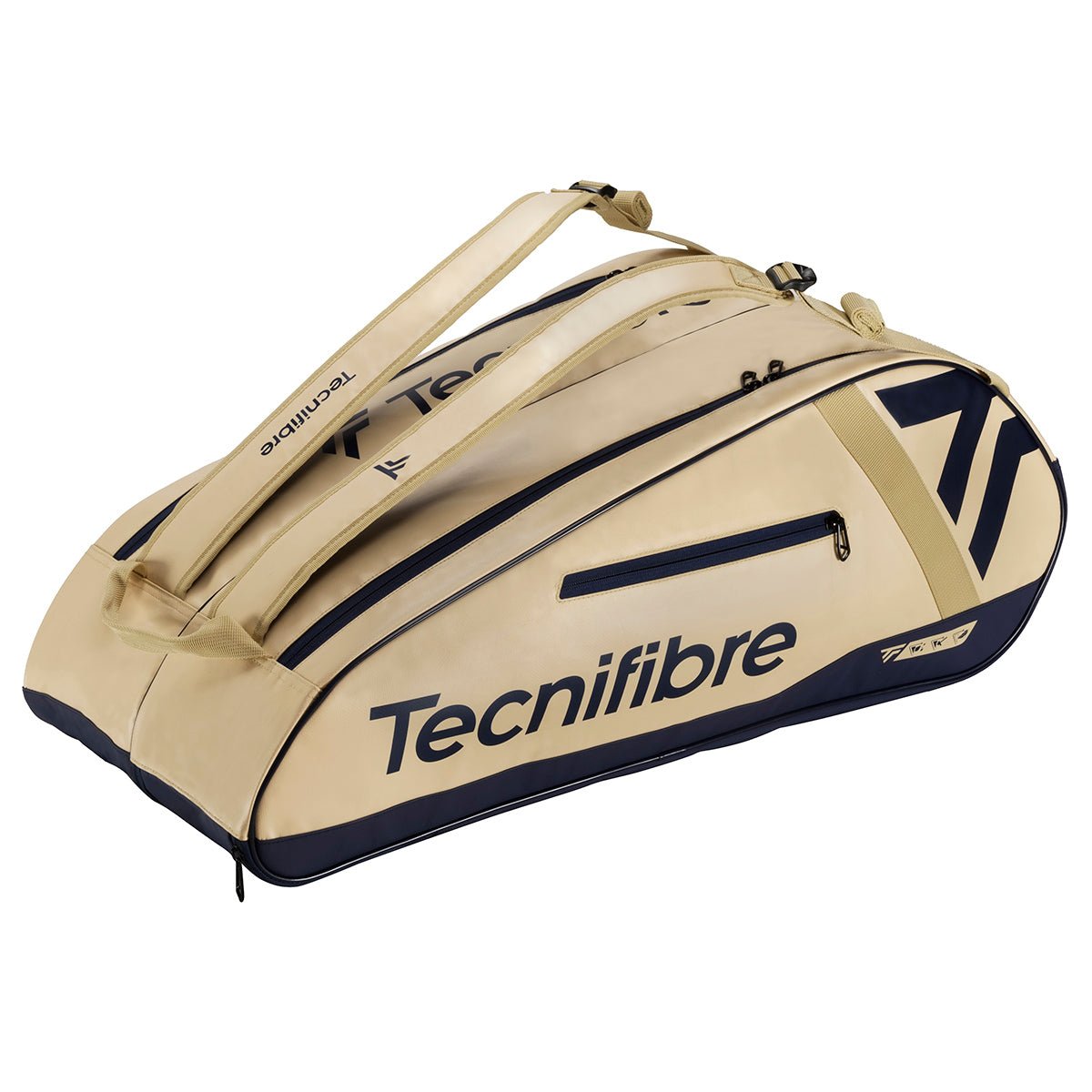
The Tour Endurance 12R is the bag the rest of this page is measured against, because it makes no obvious compromise. Two large compartments take up to twelve rackets between them, shoes get a ventilated pocket of their own, valuables hide in an internal zipped pocket, and the whole thing is skinned in waterproof, tear-resistant tarpaulin that keeps its structure — Tecnifibre redesigned the 2025 range specifically so the bags hold their shape and stand upright even when empty.
The layout rewards players who pack in systems. Match rackets in one compartment, spares and clothing in the other; shoes exiled to the ventilated pocket; phone, keys and wallet in the hidden internal zip instead of buried under a towel. The shell deserves its own sentence: tarpaulin is the material of expedition dry bags, and here it buys you a bag that shrugs off wet club floors, rainy car parks and the boot of a car in a way woven polyester never quite does. Reinforced sides protect the frames and keep the bag standing to attention on a locker-room bench. It is a big bag — at 75 cm it is built for players who carry a rotation, not a single frame — but within that brief, nothing here is more complete.
Why it leads
- Waterproof tarpaulin shell — weather simply stops being a factor
- Two large compartments plus a ventilated shoe pocket
- Reinforced sides: stands upright, protects frames
- Hidden internal zipped pocket for valuables
The catches
- 12-racket footprint is overkill for one-racket club players
- No thermo lining — Dunlop owns that feature below
As an Amazon Associate we earn from qualifying purchases.
Dunlop SX Performance 12 Thermo
The insulated one — three compartments, one of them thermal
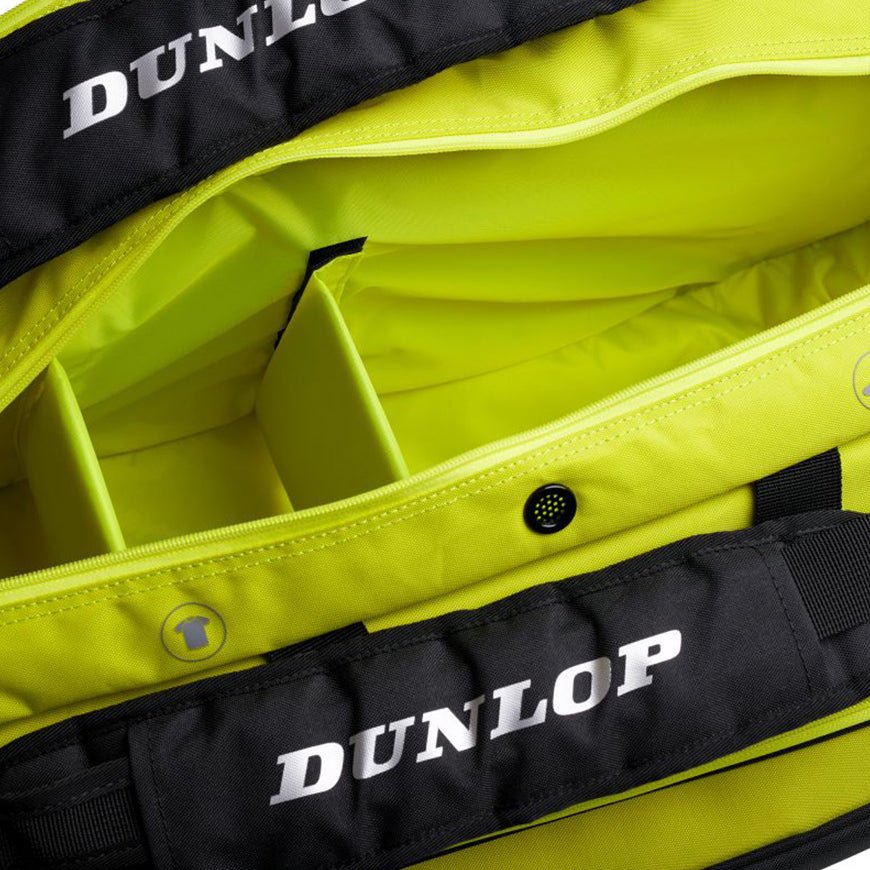
Most squash bags protect your rackets from knocks. The SX Performance also protects them from temperature: one of its three main compartments is thermo-insulated, which Dunlop frames as protection for rackets and strings in extreme temperatures. Around that headline, the design is a organiser’s delight — a centre compartment with two flexible dividers and ventilation holes that re-partitions itself around shoes, clothing or more rackets, and a moulded section of the shell carrying two accessory pockets.
This is the widest bag on the page — 46 cm across — and it uses the width honestly: three full compartments rather than two and a token. Two open mesh pockets in the backside compartment take the small, damp or grab-it-fast items, and the ergonomic straps are the padded, attached kind rather than a single sling. The thermo compartment is the reason to buy it over the Tecnifibre: if your bag lives in a car between work and an evening league match — in Gulf heat or a northern winter — your match frames and their strings ride in the one insulated section on this page. The honest trade is weatherproofing: Dunlop does not claim a waterproof shell, where the Tecnifibre’s tarpaulin is exactly that.
Why it leads
- The only thermo-insulated racket compartment here
- Divider system re-partitions the centre around your kit
- Moulded shell section protects accessories
- Three genuine compartments, not two and a pocket
The catches
- Widest footprint on the page — check your locker first
- No waterproof shell claim, unlike the tarpaulin Tecnifibre
As an Amazon Associate we earn from qualifying purchases.
Karakal Pro Tour Competition 9
The league player’s bag — wet, dry and everything zoned
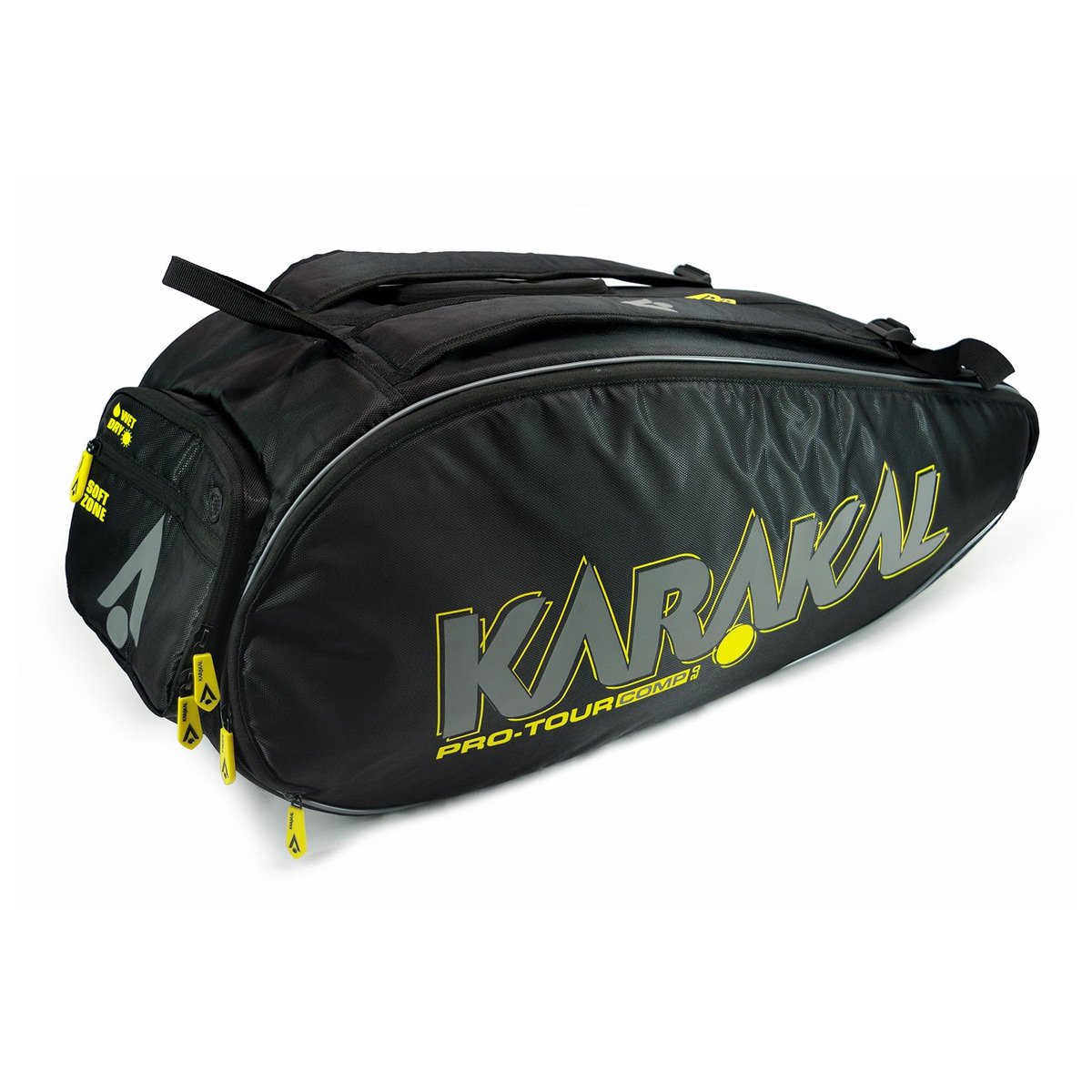
Karakal builds bags the way squash players actually pack for a team night. Two racket compartments take up to nine frames between them, a centre compartment takes the clothing, and then the details start: a shoe pocket, two vented side pockets for the kit you have played in, wet/dry compartments at the top and end of the bag, and a soft-lined pocket that keeps your eyewear or glasses from being crushed by a water bottle. The current generation is badged Pro Tour Comp 2.2; the architecture is the same.
The playing profile it serves is specific: league and team squash, where you arrive with two or three match rackets, play, shower, and need the used kit quarantined from the clean clothes for the journey home — with a post-match social hour in between. The vented pockets are the feature you feel weekly; the soft-lined glasses pocket is the one you feel the first time it saves a pair of eyewear. At 77 cm it is the longest bag here, but only 25 cm wide, so it slides into lockers and car boots that the Dunlop’s width would argue with. What it does not do is weather or temperature: no waterproof shell, no insulation. It is a zoning specialist, and zoning is what competition nights are made of.
Why it leads
- Best wet/dry zoning here — vented pockets plus wet/dry sections
- Soft-lined pocket protects eyewear and glasses
- Nine rackets in a slim 25 cm-wide profile
- Padded backpack straps for the walk to the club
The catches
- No waterproof or thermal protection
- Longest bag on the page at 77 cm
As an Amazon Associate we earn from qualifying purchases.
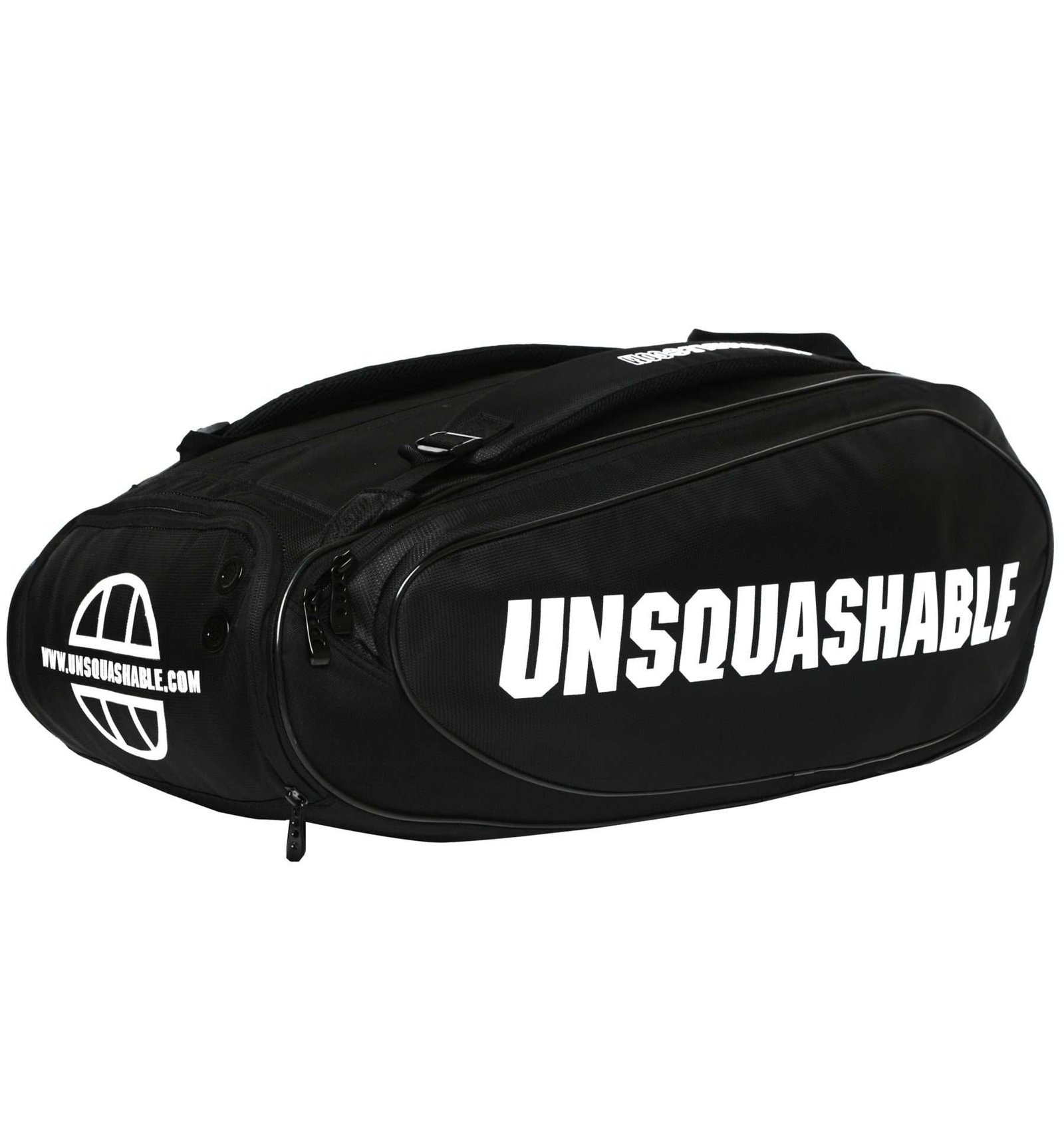
Unsquashable Tour-Tec Pro Deluxe
The tournament traveller — two shoe compartments, twelve rackets
Every bag here will get you to a local club. The Tour-Tec Pro Deluxe is the one designed for the trips beyond it: an 80 cm tour bag with a large central compartment for apparel, two independent racket compartments holding up to twelve frames between them, and — the detail no rival on this page matches — two integrated shoe compartments, vented at both ends of the bag, so match shoes and a spare pair never have to share air with your shirts.
The travel thinking goes below the headline features. The accessory pocket is soft-lined, so eyewear and a phone ride protected; the backpack carry system lets the bag go on your shoulders or back when a tournament load gets heavy, which at twelve rackets plus two pairs of shoes it will; and the sheer length — the longest here — swallows a weekend’s clothing in the central compartment without displacing the rackets. Unsquashable is a squash-only brand, and it shows in the priorities: nothing on this bag is borrowed from a tennis template. For a player whose season is home-club squash, it is more bag than the job needs; for graded tournaments and away weekends, it is the most complete answer here.
Why it leads
- Two vented shoe compartments — unique on this page
- 12 rackets plus a genuine apparel compartment
- Backpack carry handles real tournament weight
- Squash-specific design from a squash-only brand
The catches
- 80 cm and 12-racket capacity is surplus for club-only players
- Plain polyester shell — no waterproof or thermal claims
As an Amazon Associate we earn from qualifying purchases.
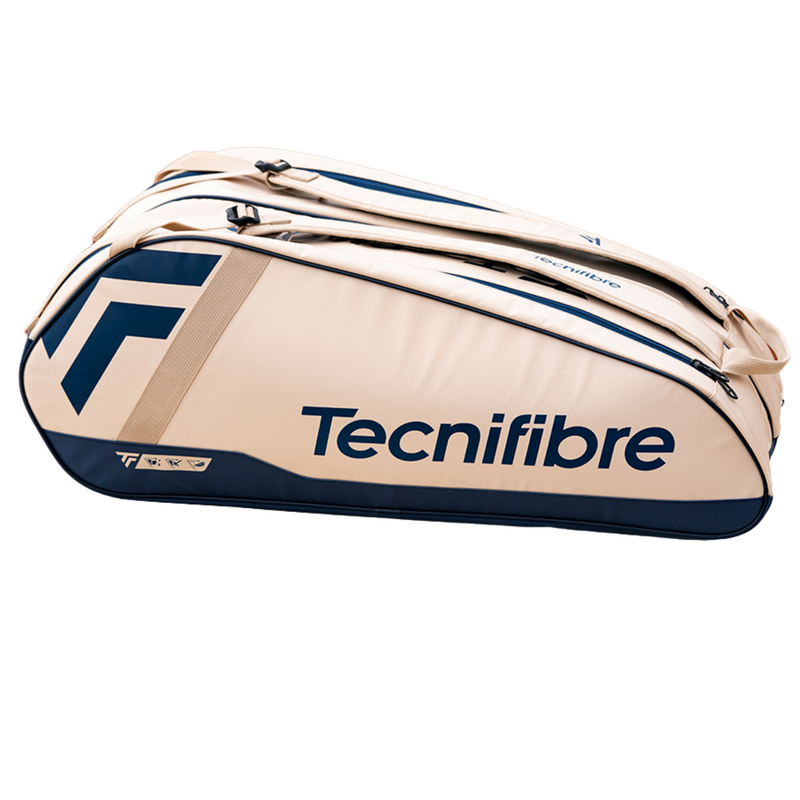
Tecnifibre Tour Endurance 6R
The 12R’s build quality in the size most players actually need
Twelve-racket bags are for twelve-racket people. The Tour Endurance 6R takes everything that makes the flagship good — the waterproof, tear-resistant tarpaulin, the reinforced sides that keep it standing upright, the ergonomic carry — and cuts the footprint to six rackets across two large compartments, with an accessory pocket for the small stuff. For the club player with a match frame, a spare and a training racket, this is the honest size.
One design decision deserves calling out: Tecnifibre makes the two compartments deliberately oversized, so rackets slide in and out easily — no wrestling a frame past a zip under tension — and clothing can share the space when a session needs a lighter loadout. That flexibility is what a mid-size bag lives or dies on, and it is designed in here rather than left to chance. The trade against the 12R is storage discipline: there is no dedicated shoe pocket, so shoes ride in a compartment with the rackets or in a shoe bag of your own — a real concession, and the reason the Karakal above it keeps its competition crown. But if your kit list is rackets, kit, towel and balls, the 6R carries it in the toughest shell here, at a size that fits a locker without negotiation.
Why it leads
- Flagship tarpaulin build in a club-friendly size
- Oversized compartments swallow rackets and clothing alike
- Stands upright — reinforced panels protect frames
- Six rackets covers a match frame, spare and trainer
The catches
- No dedicated shoe pocket
- No thermal lining or wet/dry zoning
As an Amazon Associate we earn from qualifying purchases.
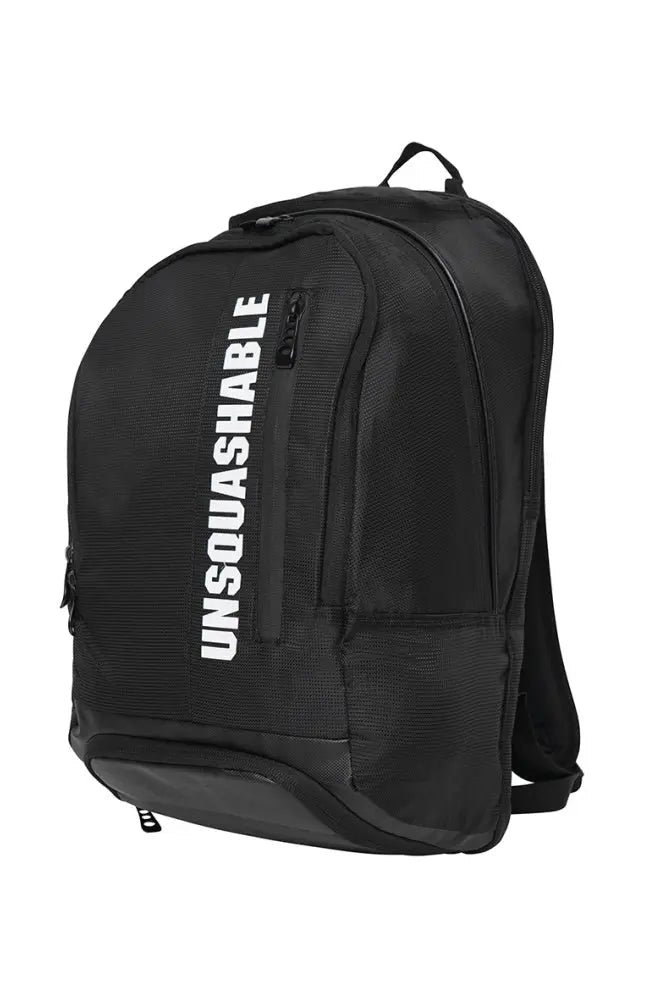
Unsquashable Tour-Tec Pro Backpack
The daily driver — rackets, shoes and laptop-era organisation
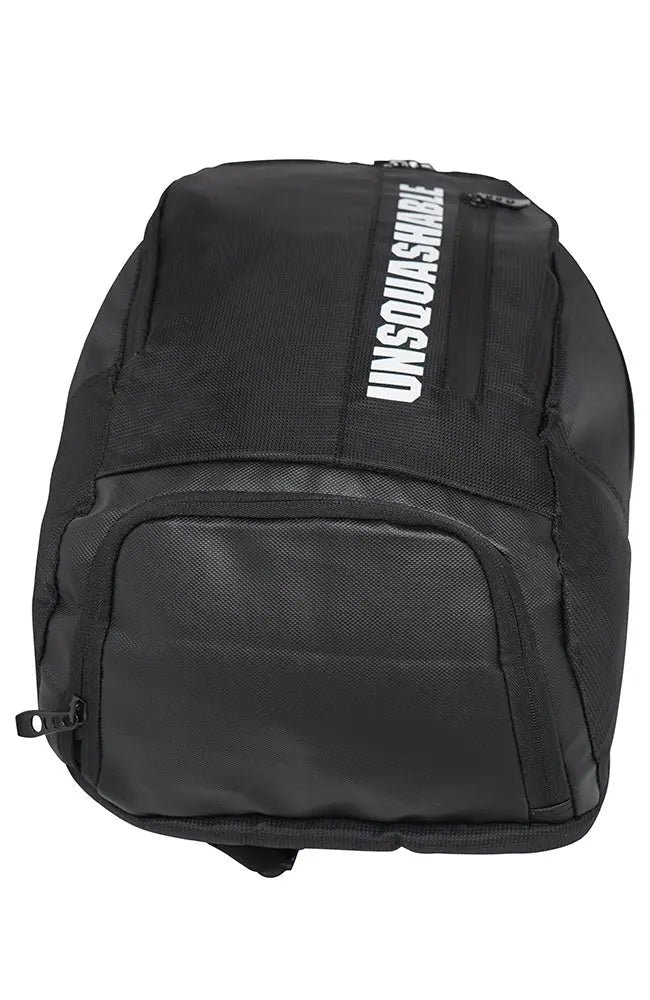
Not every squash journey needs an 80 cm hold-all. The Tour-Tec Pro Backpack takes the format most players actually live with and fixes its usual flaw, which is that the rackets ride unprotected in a general compartment. Here they get an independent compartment of their own — with a zip locking feature — sized for up to three rackets, while a large central compartment takes apparel, an integrated shoe compartment handles the footwear, and three accessory compartments with protective lining sort the small kit.
The details are commuter-grade. A soft-lined eyewear compartment on top takes squash glasses or a phone; the double zips on the main compartments can be locked together, which matters in shared changing rooms; and the padded, adjustable straps make it a genuine all-day carry rather than a bag you tolerate. Unsquashable says its Tour-Tec luggage is designed for — and used by — its sponsored players on the PSA World Tour, and the backpack is the piece of that line a club player will use most: this is the right answer for the after-work player who rides, walks or takes the train to an evening game. What it will not do is a tournament weekend — three rackets and one change of clothes is the ceiling, and it is an honest one.
Why it leads
- A real, lockable racket compartment in a backpack format
- Shoe compartment survives the format shrink
- Soft-lined eyewear pocket for glasses or phone
- Three accessory compartments keep small kit sorted
The catches
- Three rackets and one kit change — that is the ceiling
- No room for a tournament weekend’s worth of gear
As an Amazon Associate we earn from qualifying purchases.
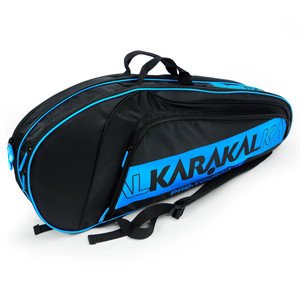
Karakal Pro Tour Match 2.2
The essentials, kept — everything else, dropped
Strip a competition bag down to what a weekly club player actually uses and you get something very close to the Pro Tour Match 2.2. Four rackets ride in a profile just 15 cm deep — the slimmest here by a distance — internal and side pockets take balls, grips, eyewear and valuables, and the carry is genuinely triple: on your back with the double shoulder straps, over one shoulder, or by the hand handles when the walk is short.
The honest framing is that this is a match-day bag, not a life-in-a-bag bag. There is no dedicated shoe compartment and no wet/dry zoning — shoes and used kit share the main space, so a shoe bag or a plastic liner earns its place in your routine. What you get in exchange is the bag that disappears: into a narrow locker, along the back seat, under a bench, carried three ways without a strap arrangement to untangle. For the player whose squash is one club, one session, home again — which is most players, most weeks — the Match 2.2 is sized to the job rather than to the dream. If your ambitions grow, its bigger Karakal sibling above is the upgrade path.
Why it leads
- 15 cm profile — fits lockers the tour bags argue with
- Three carry modes: back, shoulder or hand
- Four rackets covers a match frame plus spares
- Side pockets keep valuables and tech reachable
The catches
- No dedicated shoe compartment or wet/dry zone
- Clothing space is session-sized, not weekend-sized
As an Amazon Associate we earn from qualifying purchases.
The bags, side by side
| Bag | Rackets | Shoes | Standout feature | Dimensions | Best for |
|---|---|---|---|---|---|
| Tecnifibre Tour Endurance 12R | 12 | Ventilated pocket | Waterproof tarpaulin shell | 75 × 28 × 34.5 cm | Best overall |
| Dunlop SX Performance 12 | 12 | Vented centre compartment | Thermo-insulated compartment | 76.5 × 46 × 34 cm | Thermal protection |
| Karakal Pro Tour Competition 9 | 9 | Shoe pocket | Wet/dry zoning, vented pockets | 77 × 25 × 30 cm | League & team nights |
| Unsquashable Tour-Tec Pro Deluxe | 12 | 2 vented compartments | Dual shoe storage, backpack carry | 80 × 36 × 34 cm | Tournament travel |
| Tecnifibre Tour Endurance 6R | 6 | — (shares a compartment) | Tarpaulin build, mid-size | 75 × 25 × 28 cm | Club regulars |
| Unsquashable Tour-Tec Pro Backpack | 3 | Integrated compartment | Lockable racket compartment | 32 × 20 × 50 cm | Commuting & daily play |
| Karakal Pro Tour Match 2.2 | 4 | — (shares main space) | 15 cm slim profile, 3 carry modes | 71 × 15 × 31 cm | Compact club sessions |
Racket counts are the makers’ own figures, and they are measured the way racket counts always are — rackets only, compartments empty. Load shoes, clothing and a towel into the same space and the realistic number drops. Treat the racket count, the compartment layout and the dimensions as the hard numbers when you compare; they are the ones that decide whether your kit fits.
Thermo compartments: what the lining actually does
Thermal insulation is rarer in squash bags than in padel bags, and this page reflects that honestly: of the seven bags here, only the Dunlop SX Performance insulates a racket compartment. Dunlop’s own framing is that the thermo lining protects rackets and strings in extreme temperatures — and strings are the operative word. A squash string bed is a thin multifilament under real tension, and it, plus the grip and the frame’s resin system, is happier inside a moderate temperature band than baking or freezing, ageing faster under repeated extreme cycles. A thermal lining does not refrigerate anything; it buffers the swing, slowing how fast the compartment’s temperature follows the temperature outside it. That buffering is the entire claim, and it is a worthwhile one — no brand here publishes laboratory temperature figures, and you should be suspicious of any that does.
Where it matters most is the pattern of play in hot climates. In the UAE and across the Gulf, the riskiest storage spot in a racket’s life is not the court — it is the hour the bag spends in a parked car between the office and an evening league match. An insulated compartment buys real protection across exactly that timescale, and it pairs with the obvious habits: keep the bag in the cabin rather than the boot when you can, take it indoors with you rather than leaving it in the car all day, and never treat any compartment, thermal or not, as overnight storage in a hot car. Insulation slows the heat down; it does not repeal it. Our squash strings guide explains what heat and tension loss do to a string bed over a season — the thermo compartment is the storage half of that same story.
If your bag will not live in a car, the honest conclusion is that you can trade the Dunlop’s insulation for the Tecnifibre’s other answer to hostile weather: a waterproof tarpaulin shell that keeps rain, wet floors and damp changing rooms away from everything inside, rackets included. Weather protection and temperature protection are different tools for different journeys — pick the one your week actually contains.
Racket bag, backpack or compact: which carry suits you?
Format is the decision underneath every other decision on this page, and it is really a question about your journey to the court. The full-size racket bag — the Tecnifibre 12R, the Dunlop, the Unsquashable Deluxe — is a 75–80 cm hold built around flat racket compartments. It carries the most, protects the best, and is the right default for anyone driving to matches with a rotation of frames. Most modern tour bags hide backpack straps, which softens their one weakness, the schlep from a distant car park.
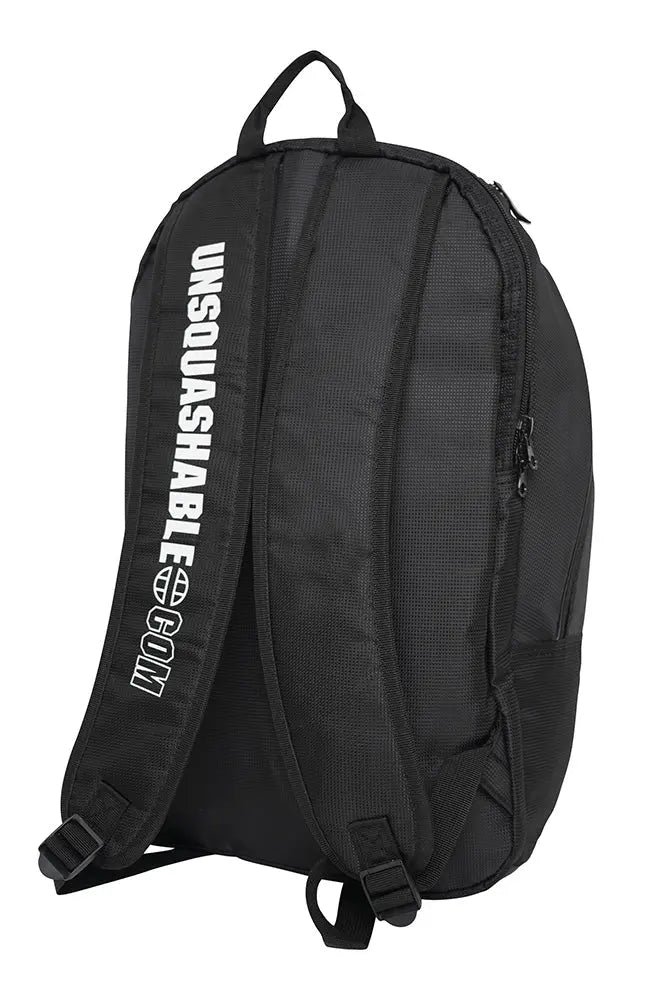
The backpack trades volume for manners. The Tour-Tec Pro shows the format done properly: racket protection survives in a lockable compartment, the shoe compartment survives too, and the whole thing behaves in crowds, on platforms and on a bike. For the player whose squash is an evening detour rather than an expedition, it is the format that gets used daily instead of admired weekly. The compact match bag, the Karakal Match 2.2 pattern, suits the one-club, one-session player: four rackets, session kit, a profile that fits any locker — and three carry modes, because a short bag gets carried every way there is. And the mid-size, the Tour Endurance 6R pattern, is the compromise most club regulars should actually make: tour-bag construction, half the capacity, no apologies. None of these is the “best” format in the abstract. The best format is the one that matches the journey you actually make, loaded with the kit you actually carry.
Squash bags — FAQs
How many rackets should a squash bag hold?
For most players, two to four: a match racket, a spare for a snapped string, and optionally a training frame. Bags like the Karakal Pro Tour Match 2.2 (4 rackets) or Tecnifibre Tour Endurance 6R (6) cover that with room for kit. The 9–12 racket bags — Karakal Competition 9, Tecnifibre 12R, Dunlop SX Performance 12, Unsquashable Deluxe — are for players with a genuine rotation, coaches, and team players carrying spares.
Do squash bags have shoe compartments?
The good ones do. A separate shoe pocket or compartment — ideally ventilated — keeps used footwear and damp kit away from clean clothes and spare strings. On this page, the Tecnifibre Tour Endurance 12R, Karakal Pro Tour Competition 9 and both Unsquashable bags quarantine shoes properly; the Tour Endurance 6R and Karakal Match 2.2 ask you to add a shoe bag of your own.
Is a thermo compartment worth it for squash?
If your bag sits in a hot or cold car, yes. A thermo lining buffers temperature swings, which protects strings, grips and frame resins from repeated extreme cycles — Dunlop frames its SX Performance lining as protection for rackets and strings in extreme temperatures. It is not refrigeration, and no bag should be left for hours in a hot car, thermal lining or not. If your bag never leaves the house-to-club run, a weatherproof shell matters more.
Can I use a tennis racket bag for squash?
Yes — squash rackets are shorter than tennis rackets, so they fit any tennis-format bag with room to spare, and several bags on this page, like the Tecnifibre Tour Endurance range, are sold for both sports. What you should check is the compartment layout: squash kit means shoes, eyewear and balls rather than a second sport’s worth of clothing, so a squash-specific design like the Karakal or Unsquashable bags usually zones the space better.
Backpack or racket bag: which is better for squash?
Neither — they solve different journeys. A racket bag carries more and protects better, and suits driving to matches with several rackets. A squash backpack like the Unsquashable Tour-Tec Pro carries up to three rackets in a lockable compartment, plus shoes and a change of clothes, and is far better on a train, a bike or a walk. Most serious players end up with the backpack as the daily bag and the racket bag for matches and travel.
What size squash bag do I need for league squash?
League squash means match rackets plus a spare, shoes, a towel, a change of clothes for afterwards, and somewhere for the wet kit on the way home. That points to a 6–9 racket bag with a centre compartment and wet/dry zoning — the Tecnifibre Tour Endurance 6R at the lighter end, the Karakal Pro Tour Competition 9 if you carry more frames or want its vented pockets.
How do I stop my squash bag smelling?
Use the shoe compartment and vented or wet/dry sections for footwear and played-in kit — that separation is what they are for — empty the bag after every session rather than storing kit in it, and leave it open to air between games. A laundry bag for used clothing, and letting shoes dry outside the bag overnight, keeps the problem from starting.
The verdict
Buy the Tecnifibre Tour Endurance 12R if you want one bag that does everything a club-and-tournament player needs — it is the most complete hold-all here. Buy the Dunlop SX Performance 12 if your rackets live in a car and you want the only insulated racket compartment on the page. Buy the Karakal Pro Tour Competition 9 if league and team nights are your squash — its wet/dry zoning is built for exactly that. Buy the Unsquashable Tour-Tec Pro Deluxe if your season involves travel — two shoe compartments and twelve rackets is luggage thinking. Buy the Tour Endurance 6R if you want flagship construction at the size most players actually need. Buy the Tour-Tec Pro Backpack if squash lives inside your working day. And buy the Karakal Pro Tour Match 2.2 if you want the carry essentials — four rackets, three carry modes, a locker-friendly profile — without paying for volume you will not use. Whichever you choose, the principle is the one this whole page runs on: the bag is not an accessory to the racket. It is the racket’s home for the 160-plus hours a week it is not in your hand. House it properly.
Affiliate disclosure: Alishuttler.com is a participant in the Amazon Services LLC Associates Program. The Amazon buttons on this page use our affiliate tag — if you buy through them, we may earn a commission at no extra cost to you. Prices shown on Amazon are live and may differ from any figures mentioned here.