There is no separate women’s squash racket category in any major maker’s range — the frames are unisex, and the decision that actually matters is published on every spec sheet: how light is the frame, where does its balance sit, and does the maker publish a grip size you can check against your hand? This guide compares seven lightweight frames by exactly those numbers — frame weights from 110 g to 130 g, stated the way each maker states them, head-light against even balance as each maker describes it, and grip figures only where a maker genuinely publishes one.
⚡ TL;DR — The Short Answer
The lightest verified frame here is the Karakal Raw Pro Lite at a 110 g frame weight with a 355 mm balance. If a published grip size matters to you, only the two HEAD Slimbody frames in this guide print one — both the HEAD Speed 120 Slimbody and the HEAD Radical 120 Slimbody list a 3 7/8 grip, at 120 g with an even balance. The Xamsa Crucible (115 g net frame weight, tolerances published) is the all-round hybrid shape, the Eye X.Lite 120 Control puts a little more of its 120 g toward the head, the UNSQUASHABLE Y-TEC Pro is the head-light option stated in the maker’s own DynamicWeight™ terms, and the Tecnifibre Slash 130 at 130 g is the step where this list stops chasing lightness — deliberately.
Quick Picks — Best Squash Rackets for Women at a Glance
110 g frame weight, 355 mm balance, 480 cm² head — the lightest verified spec in this guide.
120 g, even balance, 500 cm² head — and HEAD actually publishes the grip: 3 7/8.
Same 120 g and 3 7/8 grip, smaller 475 cm² head, denser AFP pattern option.
115 g net frame weight with the maker’s own ±5 g tolerances printed in the spec.
120 g closed-throat frame; Eye describes a little more weight to the head for weight of shot.
125 g DynamicWeight™ and a head light balance, verified on the maker’s own site.
130 g and a 485 cm² head — the frame for when the lightest option stops being the answer.
In This Guide
Why “Women’s” Squash Rackets Are Really a Weight and Grip Decision
Start with the honest fact this whole guide is built on: squash rackets are not made in men’s and women’s versions. Open any maker’s squash range and you will find one line of frames, sold to everyone, differentiated by weight, balance, head size and string pattern.
The first decision is frame weight. Across the seven cards below, maker-stated frame weights run from 110 g to 130 g, and that 20 g spread is the whole lightweight end of the squash market: standard club frames commonly sit at 135–145 g, which is where our guides to the best squash rackets for beginners and pro squash rackets do most of their work. Every frame here is at or below that band. The second decision is grip circumference — and here the guide has to report an industry gap, not a tidy chart. Of the seven makers below, only HEAD publishes a grip size for its frames. The rest name their grip product (a PU grip, a performance grip) without printing a measurement. This guide states the HEAD figures, names the gap everywhere else, and points you to the one famous narrower-grip frame in the pro game rather than inventing numbers nobody published.
The Lightweight Decision: Weight, Balance and Grip, As Makers State Them
Weight, stated four different ways. This is the section to read before trusting any squash spec sheet, including this one. Karakal and HEAD publish a frame weight — the bare frame figure their ranges are named by. Xamsa publishes a net frame weight and a separate strung weight, with tolerances: 115 g ±5 g net, 155 g ±5 g strung for the Crucible — a gap that shows how much strings and grip add to any frame. UNSQUASHABLE publishes neither: the Y-TEC Pro is listed at a 125 gram DynamicWeight™, which is the maker’s own term for its playing-weight measure, not a frame weight you can line up directly against Karakal’s 110 g. Eye lists a frame weight of 120 g with a strung balance range rather than a single point. The cards below label every weight with the term its maker used, and the comparison table does the same — because a “lightest racket” ranking built by silently mixing frame, strung and dynamic weights would be a ranking of definitions, not rackets.
Balance: head-light, even, and weight toward the head. Balance decides where a frame’s mass works during the swing. UNSQUASHABLE describes the Y-TEC Pro as head light, full stop — no millimetre figure published. Karakal gives the Raw Pro Lite a 355 mm balance point, which places it around the middle of the scale its own range uses (the heavier Raw Pro sits at 345 mm). HEAD describes both Slimbody frames simply as even. Tecnifibre lists the Slash 130 at 362 mm. Xamsa lists the Crucible’s strung balance at 365 mm ±5 mm.
Grip: the figure most makers do not publish. Here is the gap, plainly. HEAD publishes a grip size of 3 7/8 for both Slimbody frames in this guide — a checkable number you can measure a hand against before ordering. Karakal fits its PU Super Grip and shapes the Raw Pro Lite’s handle as an oval carried over from the Raw Pro; no circumference is published. Tecnifibre names the Slash 130’s grip (Squash Feel) without a size — and Tecnifibre is the interesting case, because it is the one maker here that clearly thinks about grip sizing: its Carboflex range includes an NS variant built with a narrower grip, the famous smaller-grip example in the modern game, which is carded and covered in our pro squash rackets guide. It is referenced here, not re-carded — but if a genuinely smaller grip is your deciding factor, that is the frame the pro guide will walk you through.
Where lighter stops being better. A lighter frame is easier to manoeuvre and quicker to reposition between shots; it also puts less mass behind the ball, so the swing has to supply more of the pace. The progression point arrives when a player’s length game is grooved and rallies are being decided by weight of shot from the back corners: at that point the same player often stops asking for lighter and starts asking for the same manoeuvrability with more substance, which is exactly the step the last card in this guide represents — and, beyond it, the frames in the pro guide, and at the accessible end the picks in our best squash rackets under-100 round-up, where several honest lightweight options live at the recreational level this guide’s later cards move beyond. If you are new to the sport itself rather than to this decision, our guide to how to play squash covers the game the equipment serves, and whatever frame you choose, it is played in proper court shoes — see the best squash shoes guide for that half of the kit.
The 7 Best Squash Rackets for Women, Compared
The order follows the decision, not a podium. The lightest verified frame leads. The two frames with a maker-published grip size follow, paired so you can see what the same 120 g and the same 3 7/8 grip buy in a speed brief versus a control brief. Then come the balance contrasts — an all-round hybrid with published tolerances, and a frame that deliberately puts weight toward the head — then the head-light maker’s own-terms case, and finally the heaviest frame here: the 130 g step that marks where a progressing player outgrows the lightest brief. Every specification is its maker’s published figure, labelled with the term that maker used.
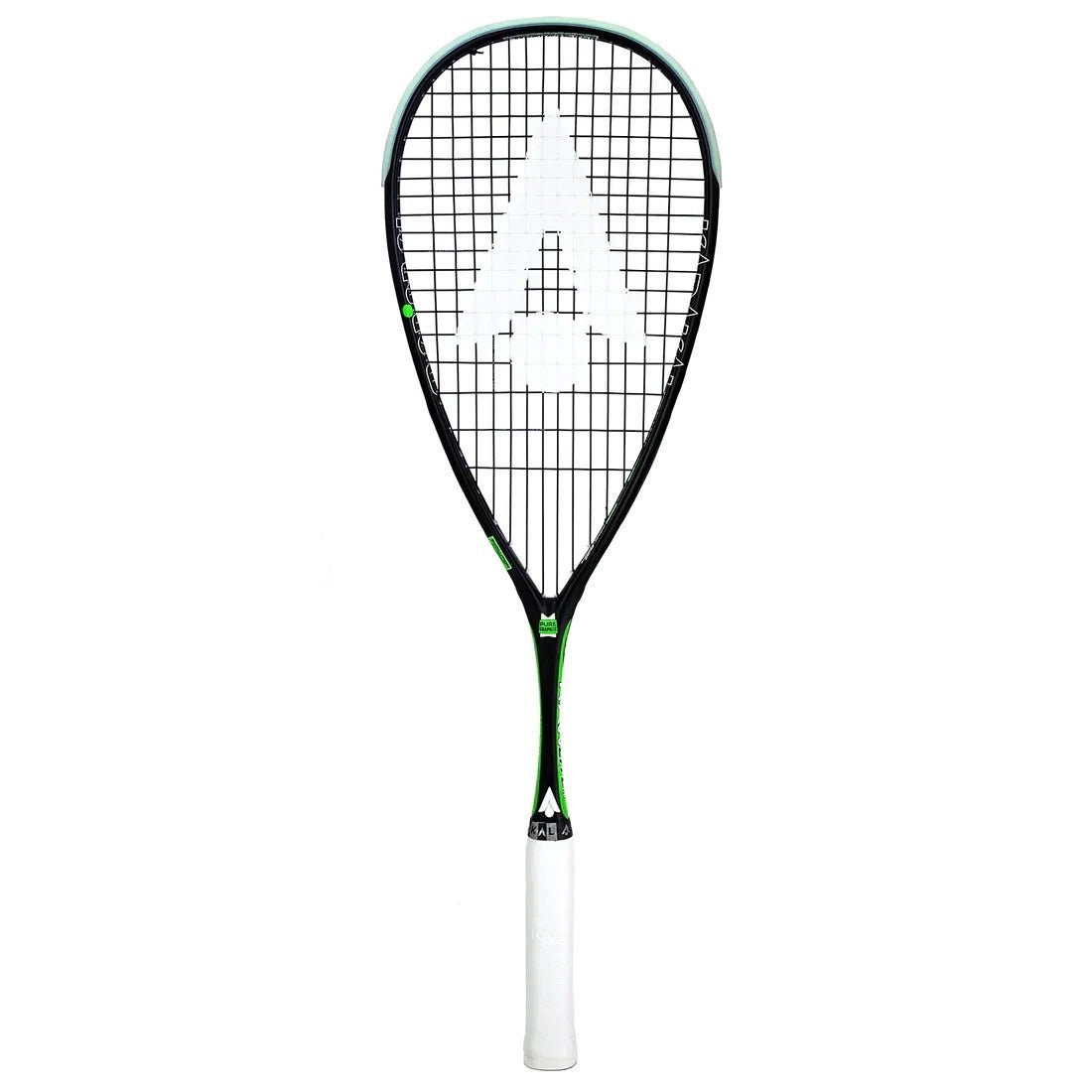
Karakal Raw Pro Lite
The lightest verified spec here: a 110 g frame weight with a 355 mm balance, in Karakal’s Raw Pro shape.
Karakal built the Raw Pro Lite as exactly what its name says: the lighter version of its Raw Pro frame. Karakal’s published specification gives the Lite a 110 g frame weight — 10 g under the standard Raw Pro — with a 355 mm balance point, a Midplus 480 cm² head and a square 14/18 string pattern, in a Pure Graphite construction. It is the lightest frame weight on any card in this guide, and the margin is not cosmetic: 110 g is a full weight class below the 120 g cluster that follows.
The grip story is the handle itself: Karakal fits the Lite with the same oval handle shape as its heavier counterpart, a shape Karakal describes as designed to the preferred specification of the tour player the Raw Pro line is built around, and finishes it with the PU Super Grip Karakal is best known for. What Karakal does not publish is a grip circumference — so this card prints none, and if grip size is the deciding factor for you, the comparison to make is against the HEAD pair below, the only cards here with a measured grip figure. Buy the Lite for the number that defines it: if you have held the standard frames in this weight class and want the lightest verified option in a proven tour shape, this is it.
What we like
- 110 g frame weight — the lightest verified figure in this guide
- Full spec published: balance, head size and pattern all stated by Karakal
- Oval handle shape carried over from the Raw Pro line
- 355 mm balance keeps the light frame around the middle, not whippy-light
Worth knowing
- No grip circumference published — the oval handle cannot be size-checked on paper
- At 110 g the swing supplies the pace; see the Slash 130 card for the opposite brief
As an Amazon Associate we earn from qualifying purchases.
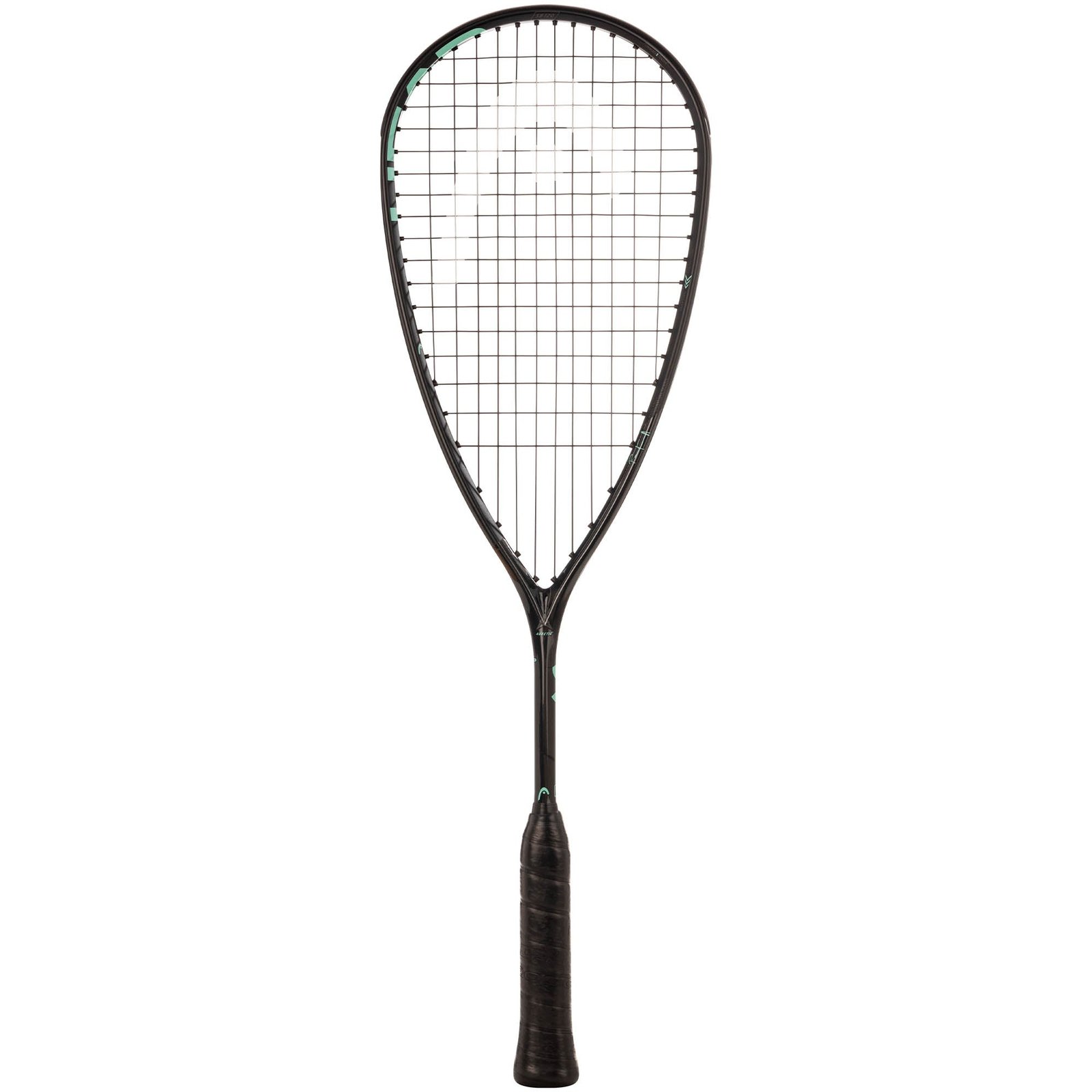
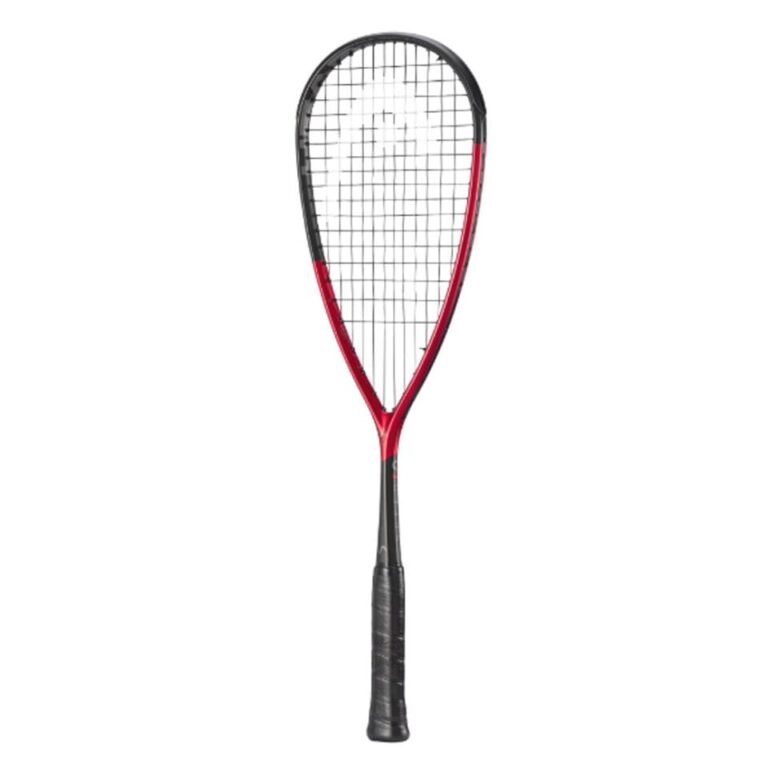
HEAD Speed 120 Slimbody
120 g, an even balance, a 500 cm² head — and one of only two published grip sizes in this guide: 3 7/8.
This is the card for the reader whose first question is the grip. HEAD’s published specification for the Speed 120 Slimbody lists its grip size as 3 7/8 — a real, checkable figure, printed in HEAD’s own spec table alongside the 120 g frame weight, the even balance, the 500 cm² head and the slim 16 mm beam. HEAD’s Adaptive Fan Pattern gives the string bed two published configurations — a straighter 12/17 pattern or the fan-shaped 16/17 — so the same frame can be strung toward power or toward control at a restring.
Set against the Karakal above, the exchange is clear: 10 g more frame weight, in return for a grip you can measure before you buy and the largest head in this guide alongside the Xamsa and the UNSQUASHABLE. It suits the player who wants the lightweight brief with the paperwork: every number on this card, grip included, is one HEAD itself prints.
What we like
- Grip size published by the maker: 3 7/8, checkable before you buy
- Slimbody 16 mm beam — HEAD’s brief is control on balls close to the wall
- Adaptive Fan Pattern: 12/17 or 16/17 from the same frame
- 500 cm² head is joint-largest in this guide
Worth knowing
- 120 g, not 110 g — the Karakal is the lighter frame
- Balance is stated as “even” only; HEAD publishes no millimetre point for it
As an Amazon Associate we earn from qualifying purchases.
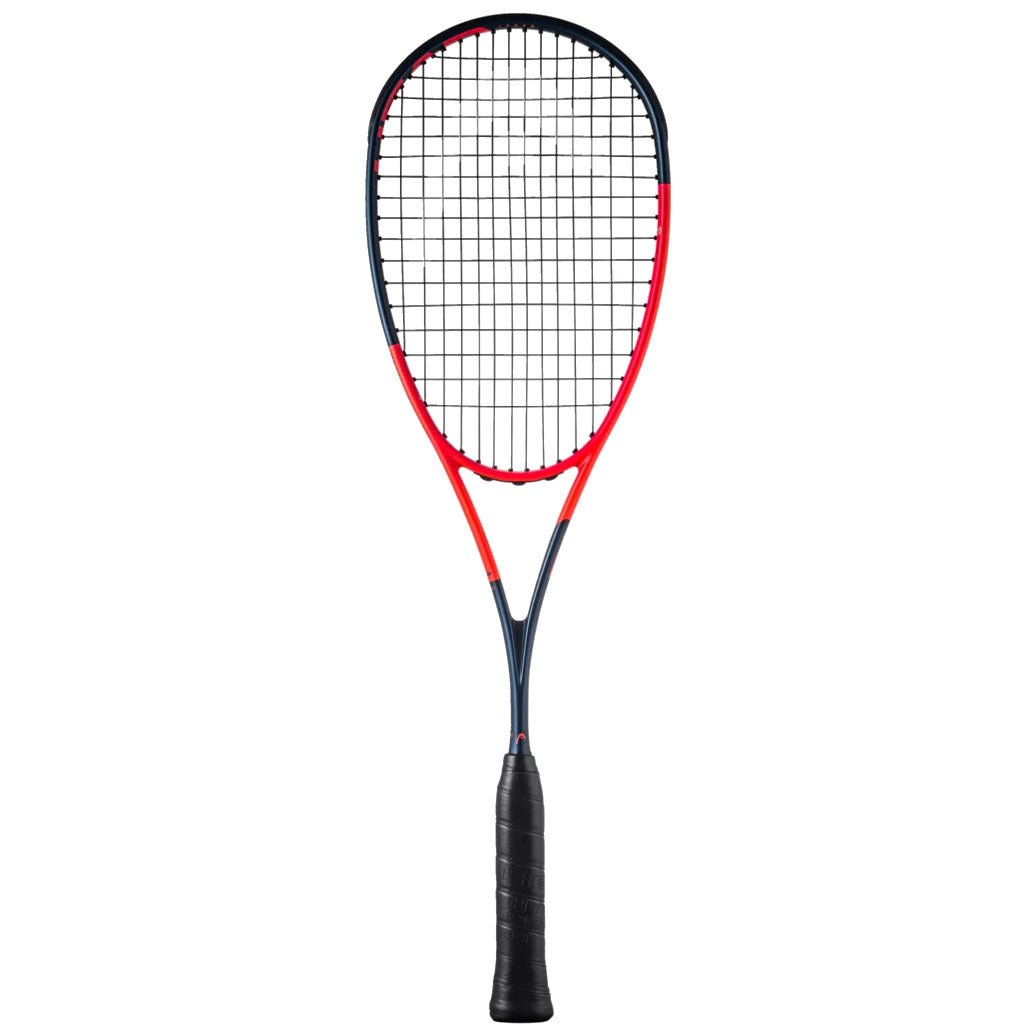
HEAD Radical 120 Slimbody
The same 120 g and the same published 3 7/8 grip as the Speed — around a smaller 475 cm² head and a denser pattern option.
Pairing this card directly after the Speed 120 is deliberate, because HEAD publishes the two frames as near-twins with opposite intentions. The shared numbers: a 120 g frame weight, an even balance, the Slimbody family’s thin 16 mm beam, and the same published grip size of 3 7/8. The differences are the head and the string bed. The Radical’s head is 475 cm² — the smallest in this guide, 25 cm² under the Speed’s — and its Adaptive Fan Pattern options run denser: 14/17 as standard, or 18/17 in the fan configuration, where the Speed offers 12/17 and 16/17. HEAD positions the Radical for advanced players wanting accuracy, with the thin beam again briefed for retrieving balls close to the wall, and its Auxetic construction for feel.
So the HEAD decision inside this guide is a clean one, and it is about the head, not the hand — the hand gets the same published grip either way. The Speed’s larger head and more open standard pattern lean toward the faster, more forgiving game; the Radical’s smaller head and denser options lean toward placing the ball. A player choosing between them on grip grounds has nothing to separate: measure once, then pick your head size.
What we like
- Published 3 7/8 grip, same as the Speed — the hand decision is settled either way
- Densest pattern options in this guide (up to 18/17 AFP) for a placement game
- 475 cm² head is a genuine control brief, not a marketing label
- Slimbody beam shared with the Speed for close-to-the-wall retrieval
Worth knowing
- Smallest head here — the least forgiving card for a developing contact
- HEAD states balance as “even” with no millimetre figure
As an Amazon Associate we earn from qualifying purchases.
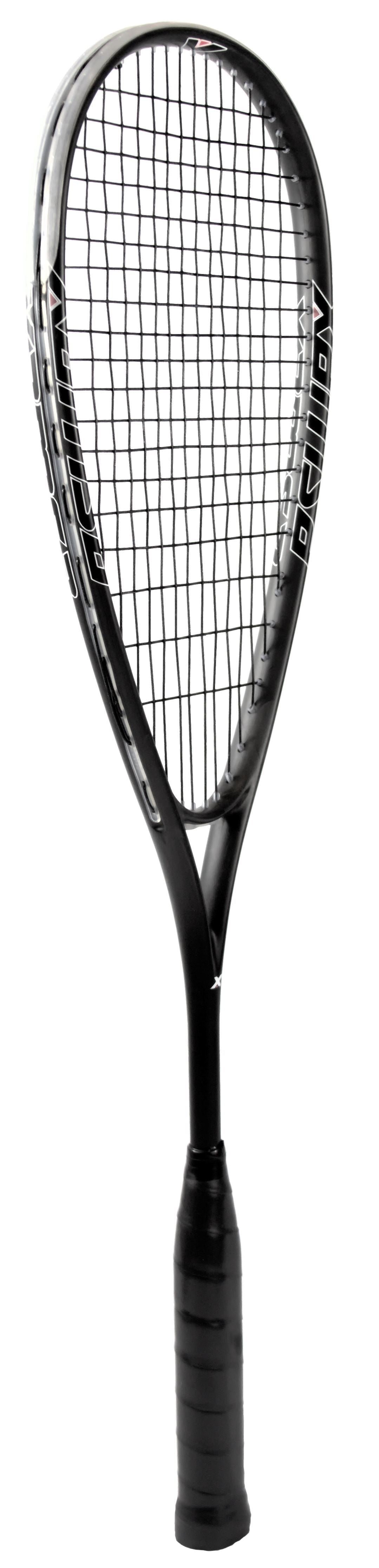
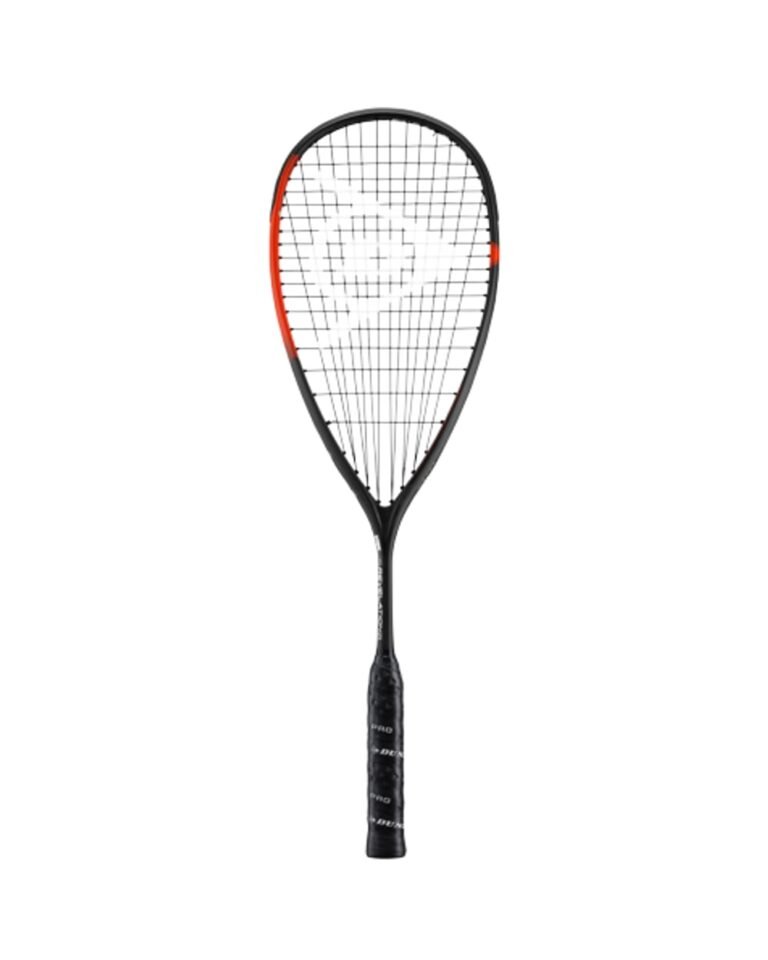
Xamsa Crucible
A 115 g net frame weight with something no other maker here does: the tolerances printed in the spec.
Xamsa publishes the most transparent specification in this guide, and that transparency is the card. The Crucible’s net frame weight is listed as 115 g ±5 g, its strung weight as 155 g ±5 g, and its strung balance as 365 mm ±5 mm — tolerances stated openly, where most makers print a single number and leave the variation unmentioned.
On the rest of the spec, the Crucible is the all-rounder of the seven: a full 500 cm² head, the guide’s only 14×19 string pattern, and a strung balance at the head-ward end of this list’s millimetre figures — balanced, in Xamsa’s own positioning, between the control of its bridged models and the power of its teardrop. Xamsa says the Crucible suits all-round players who want tight drop shots and good length while still generating pace when needed. It publishes no grip size — the grip is listed by name, Xamsa Black — so the grip caveat from the section above applies in full.
What we like
- Tolerances published (±5 g, ±5 mm) — the most honest spec sheet here
- 115 g net frame weight, second-lightest in the guide
- Both net and strung weights stated, so the comparison basis is clear
- Hybrid shape and 14×19 pattern make it the genuine all-rounder
Worth knowing
- No grip size published — grip is named, not measured
- The ± tolerances mean an individual frame can sit at the edge of the range
As an Amazon Associate we earn from qualifying purchases.
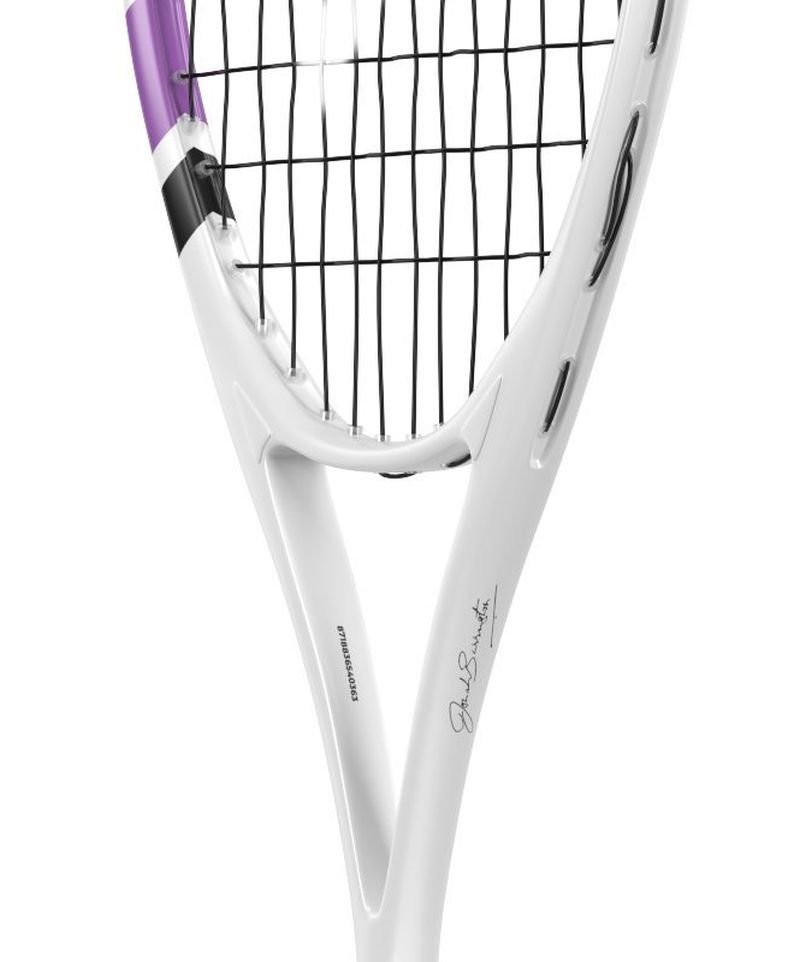
Eye X.Lite 120 Control
The counter-argument in this guide: the same 120 g as the HEAD pair, with the weight deliberately toward the head.
Every guide organised around lightness needs its control case, and Eye’s X.Lite 120 Control is it. The frame weight is the familiar 120 g, the head a slightly oversized 490 cm², and the shape a traditional closed throat rather than a teardrop. The difference is where the mass sits: Eye says this model carries a little more weight to the head, to add extra weight of shot, and its retailer specification puts the strung balance at 360–364 mm — at the head-ward end of this guide, level with the Tecnifibre’s listed point and beyond every even-balanced card. Eye strings it in its Control pattern, the 14×18 bed its retailers specify, and builds it without a conventional bumper strip, a design Eye describes as putting more graphite in the frame in place of the bumper’s weight.
What we like
- Weight toward the head at a 120 g frame weight — momentum without a heavy frame
- Strung balance range (360–364 mm) published, not just a label
- Closed-throat shape and 14×18 Control bed for players who feel the ball
- 490 cm² head keeps a generous contact area for the brief
Worth knowing
- The head-ward balance is the opposite of what a quick, short-swing player usually wants
- No grip size published by the maker
As an Amazon Associate we earn from qualifying purchases.
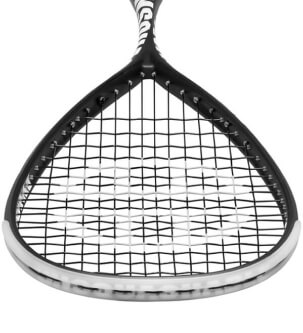
UNSQUASHABLE Y-TEC Pro
The head-light card, verified on the maker’s own site — and stated in the maker’s own weight language.
This is the one card in the guide verified directly on the manufacturer’s own website, and UNSQUASHABLE’s page is also the clearest demonstration of why this guide labels every weight so carefully. The maker lists the Y-TEC Pro at 125 gram DynamicWeight™ with a head light balance — DynamicWeight is UNSQUASHABLE’s own term, and it is not a frame weight, so this card does not pretend the 125 g lines up directly against the Karakal’s 110 g frame figure or the Xamsa’s 115 g net figure. What can be said on the maker’s own terms is the pairing: a mid-120s dynamic weight and a balance the maker describes, without a millimetre figure, as head light. The rest of the maker’s specification is complete: a 500 cm² head, a uniform 14 x 18 string pattern, its PowerCore construction, an aerodynamic tapered PowerProfile teardrop frame, and its TOUR-TEC PRO string and Performance PU grip.
The Y-TEC Pro is a tour frame — UNSQUASHABLE says it was developed with its World Tour players for players whose aggressive style asks for power — which makes its presence in a lightweight guide a balance argument rather than a weight one. Head-light tour frames are how advanced players get a heavier class of racket to move quickly, and for a progressing player who has outgrown the recreational end but still wants the racket head to come around fast, this is the specification that delivers it: mass in the overall system, quickness in the swing. No grip size is published; the maker’s grip is listed by product name only.
What we like
- Verified directly on the maker’s own site, spec for spec
- Head light balance stated plainly — the quick-swinging tour-frame brief
- Full-size 500 cm² head and a uniform 14 x 18 pattern
- The bridge pick: tour-frame intent at a mid-120s dynamic weight
Worth knowing
- DynamicWeight™ is not a frame weight — do not rank it against the 110–120 g frame figures
- No balance point in millimetres and no grip size published
As an Amazon Associate we earn from qualifying purchases.
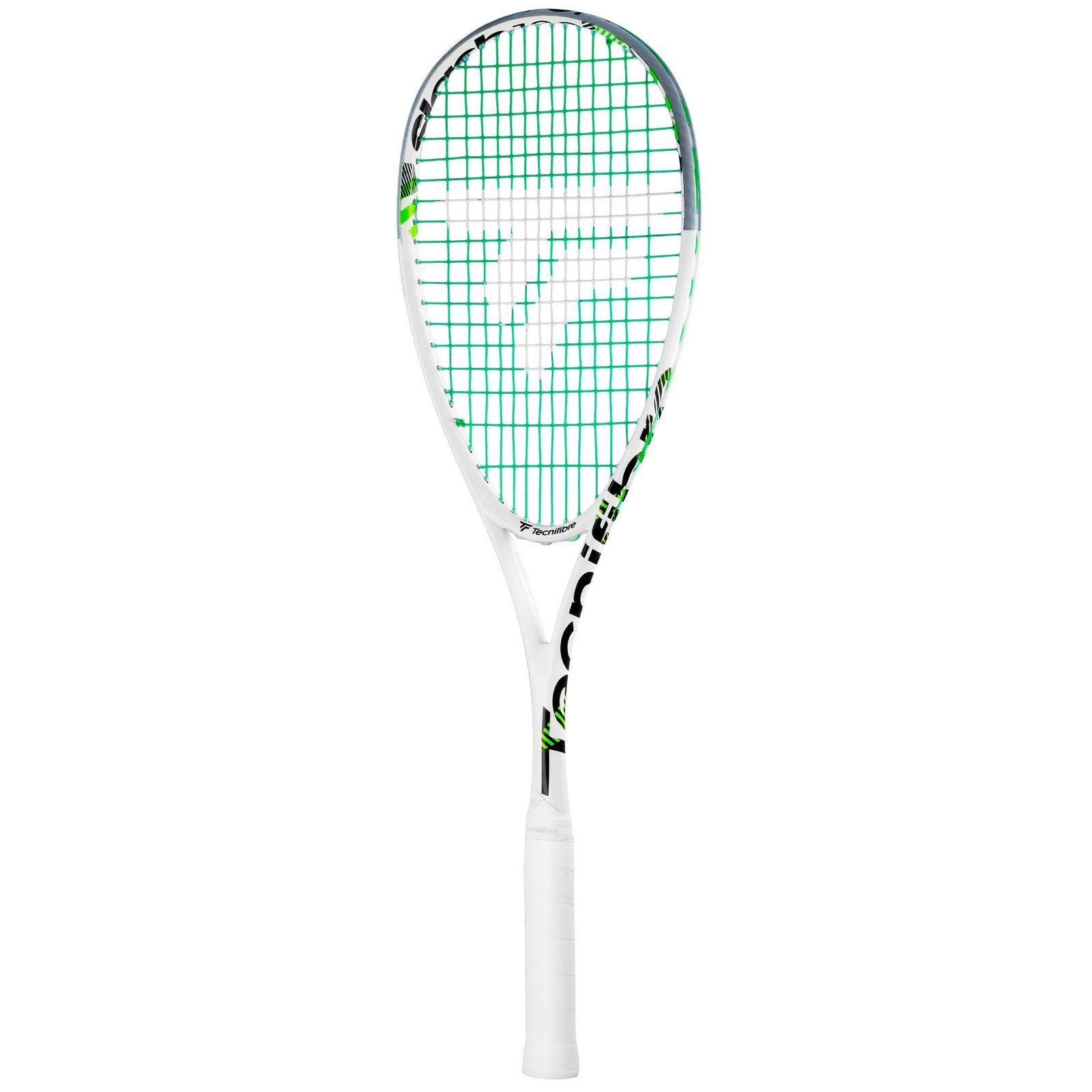
Tecnifibre Slash 130
The deliberate end of the list: 130 g, a 485 cm² head, and the point where the brief changes.
Closing a lightweight guide with its heaviest frame is not a contradiction; it is the guide’s argument completed. Tecnifibre’s published specification gives the Slash 130 a 130 g frame weight, a 485 cm² head, a 14×18 pattern and a balance Tecnifibre lists at 362 mm. The frame is graphite with Tecnifibre’s X-TOP construction — where the conventional bumper is replaced by fibre construction, a design Tecnifibre says keeps the head’s full performance — and its YOKE POWER TECHNOLOGY, which Tecnifibre describes as a larger, longer head with a narrower reinforced open core and an enlarged shaft, built for power. It arrives pre-strung with the maker’s 305 string. Tecnifibre positions the 130 for good-level competitors and regular players, as the mix of manoeuvrability and inertia in its Slash range.
Who is that for, in this guide’s audience? The player the earlier cards served a season or two ago: length game grooved, rallies now lost at the back of the court on weight of shot rather than won at the front on quickness. For her, another 110 g frame is not an upgrade — it is the same trade again — and the honest recommendation is the same weight class with more behind the ball, which is what the 130 g and the 362 mm balance describe. Tecnifibre publishes no grip size for the Slash 130 — the grip is named Squash Feel, and a name is not a size; if the narrower grip is your deciding factor, Tecnifibre’s own answer is the NS variant referenced in the grip section above and carded on the pro post.
What we like
- The progression step: 130 g and a 362 mm balance for weight of shot from the back
- X-TOP construction and YOKE POWER TECHNOLOGY from Tecnifibre’s tour range
- Full maker spec published, pre-strung with Tecnifibre 305
- Still at the light end of the standard club range — not a leap, a step
Worth knowing
- Heaviest card here — wrong buy for a player who came for the lightest brief
- No grip size published (grip named Squash Feel only)
As an Amazon Associate we earn from qualifying purchases.
Side-by-Side Comparison Table
| Model | Best For | Weight (as maker states it) | Balance (as maker states it) | Head Size | Pattern | Grip Size Published? |
|---|---|---|---|---|---|---|
| Karakal Raw Pro Lite | Lightest frame | 110 g frame weight | 355 mm | 480 cm² | 14/18 | No — grip named only |
| HEAD Speed 120 Slimbody | Published grip · speed | 120 g frame weight | Even | 500 cm² | 12/17 (AFP 16/17) | Yes — 3 7/8 |
| HEAD Radical 120 Slimbody | Published grip · control | 120 g frame weight | Even | 475 cm² | 14/17 (AFP 18/17) | Yes — 3 7/8 |
| Xamsa Crucible | All-round hybrid | 115 g net frame (±5 g) | 365 mm strung (±5 mm) | 500 cm² | 14×19 | No — grip named only |
| Eye X.Lite 120 Control | Weight to the head | 120 g frame weight | 360–364 mm strung | 490 cm² | 14×18 (Control) | No — grip named only |
| UNSQUASHABLE Y-TEC Pro | Head-light tour frame | 125 g DynamicWeight™ | Head light | 500 cm² | 14 x 18 | No — grip named only |
| Tecnifibre Slash 130 | Step beyond light | 130 g frame weight | 362 mm | 485 cm² | 14×18 | No — grip named only |
The two middle columns are the ones to read slowly, because they are not one measurement in seven costumes. Frame weight, net frame weight and DynamicWeight are three different published measures, and the balance column mixes millimetre points, a strung range and two plain descriptions — exactly as the makers state them.
Buying Guide: Reading a Squash Spec Sheet Honestly
1. Decide your weight class first — in the maker’s own terms
Before comparing brands, fix the band: roughly 110–120 g of frame weight for the manoeuvrability end, around 130 g when weight of shot starts to matter more, and the pro weight classes beyond that. Then compare only like with like inside the band. A frame weight, a strung weight and UNSQUASHABLE’s DynamicWeight are different numbers for the same racket, and Xamsa’s published ±5 g tolerances are a useful reminder that every maker’s flat figure is nominal.
2. Treat the grip as a measurement, not a feature list
A named grip — PU Super Grip, Squash Feel, a Performance PU — tells you the material, not the size. Only HEAD publishes a circumference for the frames in this guide: 3 7/8 on both Slimbody models. Measure the grip of the racket you play with now, overgrip included, and use that as your reference. If a genuinely smaller grip is the priority, the reference point in the modern game is Tecnifibre’s narrower-grip NS variant, covered on our pro post — and if a seller quotes you an exact grip size for a frame whose maker publishes none, ask what they measured it from.
3. Match balance to your swing, not to a ranking
Balance is a swing description. Head-light and even frames (the Y-TEC Pro as its maker describes it, both HEADs) suit quicker, shorter preparation; a balance point toward the head (the Eye at 360–364 mm strung, the Tecnifibre at 362 mm, the Xamsa at 365 mm strung) rewards a longer swing with momentum through the ball.
4. Know when you have outgrown the lightweight brief
The lightweight decision has a built-in expiry, and recognising it saves a wasted purchase. Stay at the light end while manoeuvrability is what your game is short of. Move up a class — here, to the Slash 130’s 130 g, and after it toward the pro range — when your length is grooved and the balls that beat you are the deep ones you cannot pressure back.
Frequently Asked Questions
What makes a squash racket a good choice for women players?
There is no separate women’s range in any major maker’s squash line — the frames are unisex, so the choice comes down to the published specifications. The players this guide is written for usually decide on two of them: frame weight, where the lightweight end of the market runs from the Karakal Raw Pro Lite at 110 g up to standard club frames around 135–145 g, and grip size, where only HEAD among the makers here publishes a figure (3 7/8 for both Slimbody frames). Choose the weight class first, then check whether the maker publishes a grip you can measure against your hand.
How light should a squash racket be?
As light as your game uses, not as light as the market sells. The seven frames in this guide run from 110 g to 130 g in maker-stated frame weight (the UNSQUASHABLE is listed by DynamicWeight instead, which is not the same measure). At 110–120 g a frame is easy to manoeuvre and reposition quickly, which suits newer and returning players. By 130 g, as on the Tecnifibre Slash 130, the frame puts more mass behind the ball. The right weight is the one where your length game stays grooved for a full match, not just a full rally.
What grip size do these rackets come in?
Only two of the seven makers’ frames in this guide have a grip size their maker publishes: HEAD lists both the Speed 120 Slimbody and the Radical 120 Slimbody at 3 7/8. Karakal, Eye, Xamsa, UNSQUASHABLE and Tecnifibre name their grips — PU Super Grip, TOUR-TEC PRO Performance PU, Squash Feel — without publishing a circumference, so this guide prints no figure for them. The best-known genuinely narrower grip in the modern game is Tecnifibre’s NS variant in its Carboflex range, which is carded in our pro squash rackets guide.
Head-light or even balance — which is better?
Neither; they are different tools at the same weight. A head-light balance, as UNSQUASHABLE describes the Y-TEC Pro, puts relatively more of the frame’s mass toward the hand, so the head comes around quickly. An even balance, as HEAD describes both Slimbody frames, splits it. And a balance point toward the head — Eye lists the X.Lite 120 Control at 360–364 mm strung and describes a little more weight to the head — adds momentum through the shot. Match it to your swing: shorter and faster, head-light or even; longer and fuller, the head-ward option earns its place.
When does a lighter racket stop suiting a progressing player?
When the rallies you lose are decided at the back of the court. A light frame asks your swing to supply the pace, and while your length game is developing that trade is usually worth it for the manoeuvrability. As your strokes groove and opponents start pinning you deep, weight of shot becomes the limiting factor, and the same player often moves up a weight class — in this guide, from the 110–120 g cards to the Tecnifibre Slash 130 at 130 g, and beyond it to the frames in our pro squash rackets guide. Move when deep balls stop reaching, not when a new model launches.
Do these rackets come pre-strung?
Yes — the frames in this guide are sold strung with their makers’ factory strings, including Karakal’s Hot Zone 120 on the Raw Pro Lite, HEAD Reflex 18 on the Slimbody pair, Xamsa’s Multifilament PM 18 on the Crucible, UNSQUASHABLE’s TOUR-TEC PRO DuraFibre on the Y-TEC Pro and Tecnifibre 305 on the Slash 130. A factory stringing is ready to play on; the choice a progressing player eventually makes is a restring — the HEAD Slimbody frames, for example, can be restrung between their two published Adaptive Fan Pattern configurations.
Are these rackets different from men’s squash rackets?
No. They are the same unisex frames, from the same ranges, that any player would buy — this guide’s selection is made on published weight, balance and grip information, not on a women’s product line, because the makers do not publish one. That is also why every figure here is quoted exactly as the maker states it, frame weight, strung balance or DynamicWeight: the honest way to shop a unisex range for a smaller hand and a lighter swing is by the numbers on the spec sheet, whichever section of the shop you found the racket in.
The Verdict
Shop the spec sheet, not the section of the shop. The Karakal Raw Pro Lite is the lightest verified frame here at 110 g, and the right start for a player whose brief really is minimum weight. If a grip you can check matters more, the HEAD Speed 120 Slimbody and HEAD Radical 120 Slimbody are the only cards whose maker publishes one — 3 7/8 on both — split by head size and intention: 500 cm² and speed, or 475 cm² and placement. The Xamsa Crucible is the transparent all-rounder, tolerances and all; the Eye X.Lite 120 Control is the same weight class pointed at the head for a fuller swing; and the UNSQUASHABLE Y-TEC Pro is the head-light tour frame, stated in its maker’s own DynamicWeight terms. When the light brief expires — and for a progressing player it does — the Tecnifibre Slash 130 is the step this guide recommends, and beyond it the frames in our pro squash rackets guide, entered via the beginners and under-100 guides that own the levels either side of this one. Light is a specification, not a category — buy the number your game actually needs.
Affiliate disclosure: AliShuttler is reader-supported. When you buy through links on this page we may earn an Amazon commission at no extra cost to you. Specifications are taken from manufacturers’ published product information and were verified at the time of writing; manufacturers revise models between seasons, so confirm the exact specification on the product page before ordering.