Your first proper pickleball shoe is the single biggest gear upgrade after your first paddle — and it is a different purchase from a running shoe. These seven beginner court shoes are compared on the specs their makers actually publish: outsole grip patterns, named cushioning systems, lateral support, stated weights read with their size basis, and real width options.
The Short Answer
Buy the Selkirk CourtStrike 2.0 if you want one shoe that does everything a new player needs: a 4-way grip outsole built for pickleball’s stop-start movement, a PureFoam midsole with a TPU shank for side-to-side support, and a maker-stated weight of 13.3 oz in a men’s size 9. On a tighter budget, the FILA Double Bounce 3 is FILA’s own opening-price-point pickleball shoe and still brings a shank, a pivot-point outsole and proper court construction. Roomy feet start with the Cypher Key211‘s naturally wider toe box. The rule underneath every pick: match the outsole to your surface first, then fit, then cushioning.
Quick Picks — Best Pickleball Shoes for Beginners at a Glance
The complete first shoe: 4-way grip, PureFoam cushioning, TPU shank and a 6-month sole warranty.
A naturally wider toe box, compression-moulded EVA and a reinforced 5.5 mm rubber outsole.
FILA’s opening-price-point pickleball shoe, with an Energized midsole and forefoot pivot circles.
Diadem’s rec-player shoe: Airweave mesh, Flo Foam cushioning and a 12.79 oz listed weight.
A Vibram outsole built for silica grit-treated courts, a wide deep toe box and a torsion shank.
High-density rubber with a 180-day outsole replacement warranty and a crash-resistant toe cap.
A Kevlar drag guard, CloudGel insole and ARK-Technology EVA midsole in a wider toe box.
In This Guide
The First-Shoe Decision: Court Shoe vs Running Shoe
Almost every new pickleball player plays their first games in whatever athletic shoes they already own — usually running shoes. That works for a trial session. The moment you start playing weekly, the running shoe becomes the weakest part of your setup, and understanding why is the whole basis for choosing your first real pair. If you are still learning the game itself, our guide to how to play pickleball covers the rules and the kitchen line; this guide covers what belongs on your feet while you learn.
Pickleball moves sideways; running shoes move forward
A running shoe is engineered around one repetitive motion: heel strike, roll forward, toe off, in a straight line. Its sole is curved to help that roll, its heel is built up and relatively narrow, and its upper is soft so nothing resists the forward flex. Pickleball asks for almost the opposite. Most of your movement is short lateral shuffles along the non-volley zone line, sudden stops from a forward charge, split steps, pivots and quick backward recoveries. A court shoe answers that with a flatter, wider-based outsole that stays stable when your weight goes sideways, a reinforced upper that holds your foot on the footbed during lateral pushes, and grip patterns designed to bite in several directions at once rather than channel water backwards like a road shoe.
The practical difference shows up in two moments every beginner recognises. The first is the quick stop at the kitchen line: a court outsole spreads the braking force across a wide, flat contact patch, while a curved running-shoe sole gives you a smaller, rounder patch that wants to keep rolling. The second is the wide defensive shuffle, where a soft running-shoe upper lets your foot slide toward the outside edge of the shoe, while a court shoe’s structured upper and lateral reinforcements keep the foot centred over the sole. None of the seven shoes below is a running shoe with a new label — each one is built, and described by its maker, around court movement.
Outsole first: outdoor acrylic vs indoor surfaces
Beginners usually play in one of two places, and the outsole you need differs between them. Outdoor pickleball is mostly played on acrylic-coated asphalt or concrete, often treated with silica grit for texture. That surface is abrasive: it rewards a harder, denser rubber compound with a tread pattern that grips in multiple directions, and it wears soft rubber down quickly. Indoor pickleball is played on gym wood, tile or sport-court tiles, where the priorities flip — a non-marking outsole is often a facility rule, and a slightly softer rubber with a finer pattern grips polished floors better than a coarse outdoor tread.
Most of the shoes in this guide are built as all-court or outdoor-first models, because that is where most beginner play happens. Where a maker states a surface intent — Tyrol’s Vibram outsole designed for grit-treated courts, Diadem’s indoor-and-outdoor non-marking rubber — we print it on the card so you can match the shoe to your venue instead of guessing. If you genuinely split your week between a gym and outdoor courts, a non-marking all-court outsole is the sensible single-pair compromise.
Your first shoe is part of your first kit
Beginners usually buy a paddle and shoes in the same month, and the two decisions support each other: a control-oriented first paddle keeps rallies alive, and a stable first shoe keeps you balanced enough to use it. If you have not chosen the paddle yet, our guide to the best pickleball paddles for beginners covers that side of the kit. Once you outgrow this beginner list — more weekly hours, faster feet, tournament play — the step-up models live in our full guide to the best pickleball shoes. Readers shopping for a partner or parent will also find dedicated guides to the best pickleball shoes for women and the best pickleball shoes for seniors, and none of the seven models below is repeated from any of them.
How to Read a Pickleball Shoe Spec Sheet
Maker spec sheets are honest but compressed. Four lines on each card below carry most of the decision, and each one has a catch a first-time buyer should know about.
Weight — never compare two numbers without their size basis
A shoe’s weight is only meaningful next to the size it was weighed in. Selkirk states 13.3 oz for the CourtStrike 2.0 based on a men’s size 9. FILA’s retailer listings put the Double Bounce 3 at 12.7 oz in a men’s 10.5 — a bigger shoe, weighed bigger, so the two numbers are not directly comparable. Diadem lists the Court Flo at 12.79 oz without stating a size basis at all, which makes it a rough guide rather than a measurement. And three makers in this guide — Cypher, Montis and Acacia — publish no weight whatsoever; their cards say so plainly rather than borrowing a number from a review site. When you compare weights anywhere, convert to the same size first, or treat the figures as approximate.
Outsole — compound and pattern beat tread depth
Look for two things: the rubber compound (high-density, high-abrasion and carbon rubber are the durability grades makers name) and the pattern’s direction logic. Pickleball-specific patterns — Selkirk’s 4-Way Grip, FILA’s forefoot pivot circles, Diadem’s grip layout on the Court Flo — are drawn for shuffles, pivots and stops rather than straight-line running. A named outsole partner is also a real spec: Tyrol’s Velocity V uses a Vibram outsole designed for grit-treated outdoor courts. Finally, check the warranty line: Selkirk and Montis both back their outsoles for six months, which tells you how the maker itself rates the rubber’s lifespan.
Cushioning — the named system is the spec
“Cushioned” on its own means nothing; the named foam is the information. In this guide you will meet EVA PureFoam (Selkirk), Flo Foam (Diadem), Energized EVA (FILA), compression-moulded EVA (Cypher), ARK-Technology EVA (Acacia) and CloudGel insoles (Acacia). EVA is the court-shoe standard because it stays stable under lateral load; softer, bouncier foams borrowed from running shoes feel plush in the shop and roll more on court. Where a maker adds a shank — Selkirk’s TPU shank, Tyrol’s torsion control shank, FILA’s TPU midfoot shank — that is the lateral-support spec, and it matters more to a beginner’s confidence than an extra millimetre of foam.
Widths — letters, not adjectives
“Roomy” is marketing; a width letter is a spec. Cypher builds the Key211 on a men’s D and women’s C last with a naturally wider toe box. Montis cuts the Drop 1.0 in wide options it says work for most feet up to 2E. Acacia gives the Tyler Signature II a wider toe box in unisex sizing. If your everyday shoes are already a wide fitting, start with those three; if you wear standard widths, the Selkirk, FILA and Diadem lasts will feel familiar — with Diadem noting its Court Flo runs moderately narrow.
The 7 Best Pickleball Shoes for Beginners
Ranked for a first-time buyer: the most complete all-round shoe first, then the specialist picks for budget, fit, surface and durability. Every spec below is taken from the maker’s own listing or spec sheet, and every gap in a maker’s published data is called out rather than filled in.
Selkirk CourtStrike 2.0
The complete beginner package from a pickleball-first brand — 4-way grip, layered cushioning and a sole warranty.
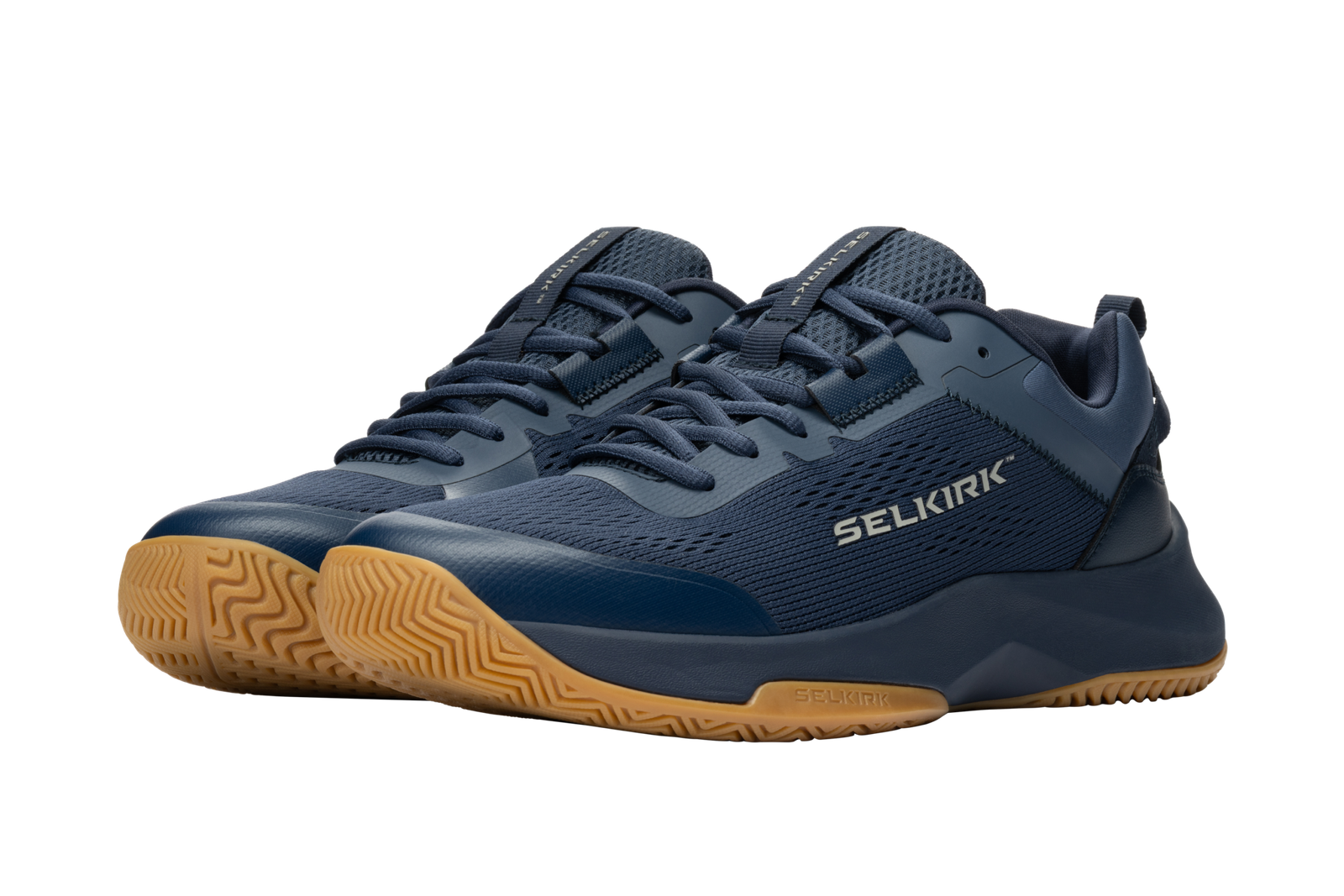
Selkirk is a pickleball company first, and the CourtStrike 2.0 is the base model in its footwear line — the shoe Selkirk itself rates for a skill level of “Beginner to Pro”. For a first purchase that positioning is exactly right: you are not buying a stripped-down trainer or a pro model with the support removed, but the all-around version of a pickleball-specific design, described by Selkirk as built for the player seeking a quick, well-balanced and comfortable shoe.
Start with the outsole, because it is the most pickleball-specific part of the shoe. Selkirk’s 4-Way Grip Design is engineered for multi-directional traction — forward, backward and both lateral directions — with an outrigger flaring at the lateral edge to widen the platform when you plant and push sideways at the kitchen line. The 2.0 update uses an upgraded rubber composition that Selkirk rates for long-lasting, abrasion-resistant play, and the company backs the sole with a six-month warranty. For a beginner playing on abrasive outdoor acrylic, that combination of a grip pattern drawn for the sport and a maker willing to warrant the rubber is the strongest outsole package in this guide.
Underfoot, the cushioning is layered rather than single-density. The midsole is Selkirk’s high-rebound EVA PureFoam, and above it sits a removable supercritical foam insole — an extra layer Selkirk credits with energy return and shock absorption. A TPU shank runs through the midfoot for torsional stability, which is the component that resists the shoe twisting when you brake and change direction. Beginners feel that as steadiness: the shoe stays flatter and more predictable underfoot while footwork is still being learned.
The upper is an engineered mesh and TPU construction moulded to the foot, with ventilation through the mesh, added protective material around the lowest lace area where drag wear starts, and a padded collar that locks the heel in. Selkirk publishes the weight honestly — 13.3 oz based on a men’s size 9 — which puts the CourtStrike 2.0 in the middle of this guide: not the lightest card here, but a fair trade for the shank, outrigger and warranty it carries.
Choose the CourtStrike 2.0 if you play mostly outdoors, want one pair that will still suit you as your game speeds up, and prefer buying the sport-specific base model from a pickleball brand over adapting a tennis shoe. It is the easiest recommendation in this guide to defend line by line.
Pros
- Pickleball-specific 4-Way Grip outsole with a lateral outrigger
- Layered cushioning: PureFoam midsole plus supercritical foam insole
- TPU shank for torsional stability during side-to-side play
- Six-month sole warranty, and an honestly stated weight with size basis
Cons
- Mid-pack weight at 13.3 oz in a men’s 9
- No dedicated wide width listed — roomier feet should look at the Key211 or Drop 1.0
- Outdoor-leaning rubber is firmer than a dedicated indoor shoe on polished wood
Cypher Key211
A comfort-first court shoe with a naturally wider toe box and a reinforced 5.5 mm rubber outsole.
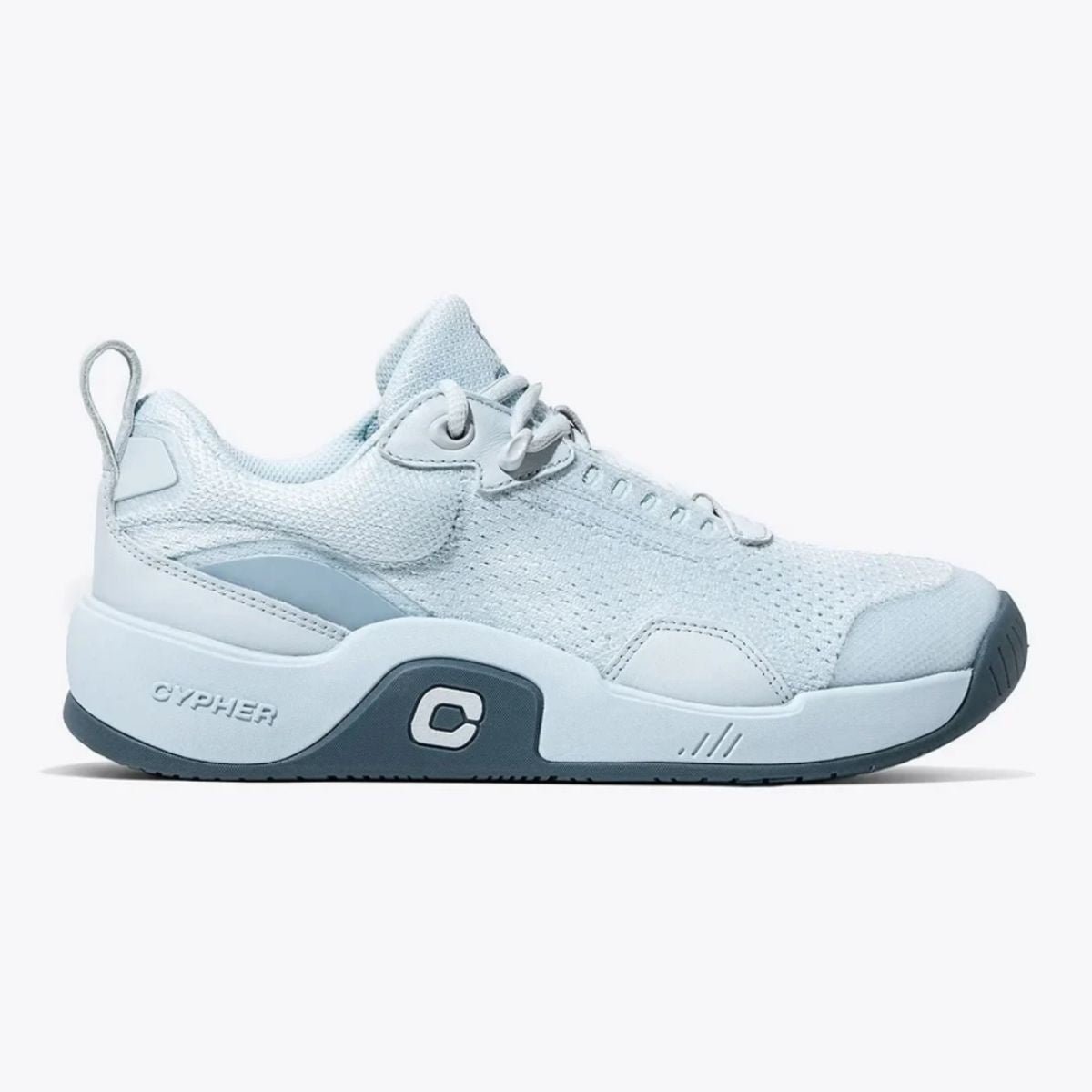
Cypher is a pickleball-only footwear brand, and the Key211 is its core shoe — described by Cypher as a comfort-first design for players who spend serious time on hard courts. For beginners whose main memory of court sports is cramped toes and a forefoot squeezed into a pointed running-shoe shape, the Key211’s starting point is different: a naturally wider toe box that lets the forefoot spread as you plant and push.
The fit details are stated in proper width terms, which is rarer than it should be. Cypher lists the men’s version at a D width and the women’s at a C width, with a 6 mm heel-to-toe drop — a moderate, middle-ground platform that neither perches you on a built-up heel like a running shoe nor drops you into a flat minimalist feel. The ghillie lacing system lets you adjust tension zone by zone, so a wider forefoot does not have to mean a loose heel: snug the rear eyelets for lockdown, leave the front softer for toe room.
The outsole is the durability story. Cypher uses 5.5 mm of carbon rubber in the high-wear areas — thicker than typical — with strategic tapering elsewhere to keep unnecessary weight down, and anatomically designed flex zones so the thicker rubber still bends naturally at the forefoot. The upper, midsole and outsole are all laterally reinforced, with edge radii on the outsole that balance stability against responsiveness when you cut. That is a thoughtful beginner package: grip and support that forgive imperfect footwork while the rubber thickness absorbs the drag wear new players inflict as they learn to move.
The cushioning is a compression-moulded EVA midsole, which Cypher pairs with the wide toe box as its all-day comfort answer for hard, jarring court surfaces, over a removable insole. The knit upper is zoned — more open where airflow matters, tighter where structure is needed — with a padded collar and tongue.
One honest gap: Cypher publishes no weight for the Key211 anywhere on its product pages, so this card will not invent one. If a stated weight is a deciding factor for you, the Selkirk and Diadem cards publish theirs. Choose the Key211 if your feet run wide or you simply refuse to play in a narrow shoe — it is the most accommodating fit in this guide, built by a brand that only makes pickleball shoes.
Pros
- Naturally wider toe box with stated width lasts (men’s D / women’s C)
- Thick 5.5 mm reinforced carbon rubber in the high-wear zones
- Lateral reinforcement across upper, midsole and outsole
- Ghillie lacing allows a wide forefoot without a loose heel
Cons
- Cypher publishes no shoe weight — impossible to compare on that spec
- Knit upper prioritises comfort and airflow over the firmest lockdown
- Moderate 6 mm drop may feel flat if you arrive from high-drop running shoes
FILA Double Bounce 3
FILA’s opening-price-point pickleball shoe — proper court construction without the flagship cost.
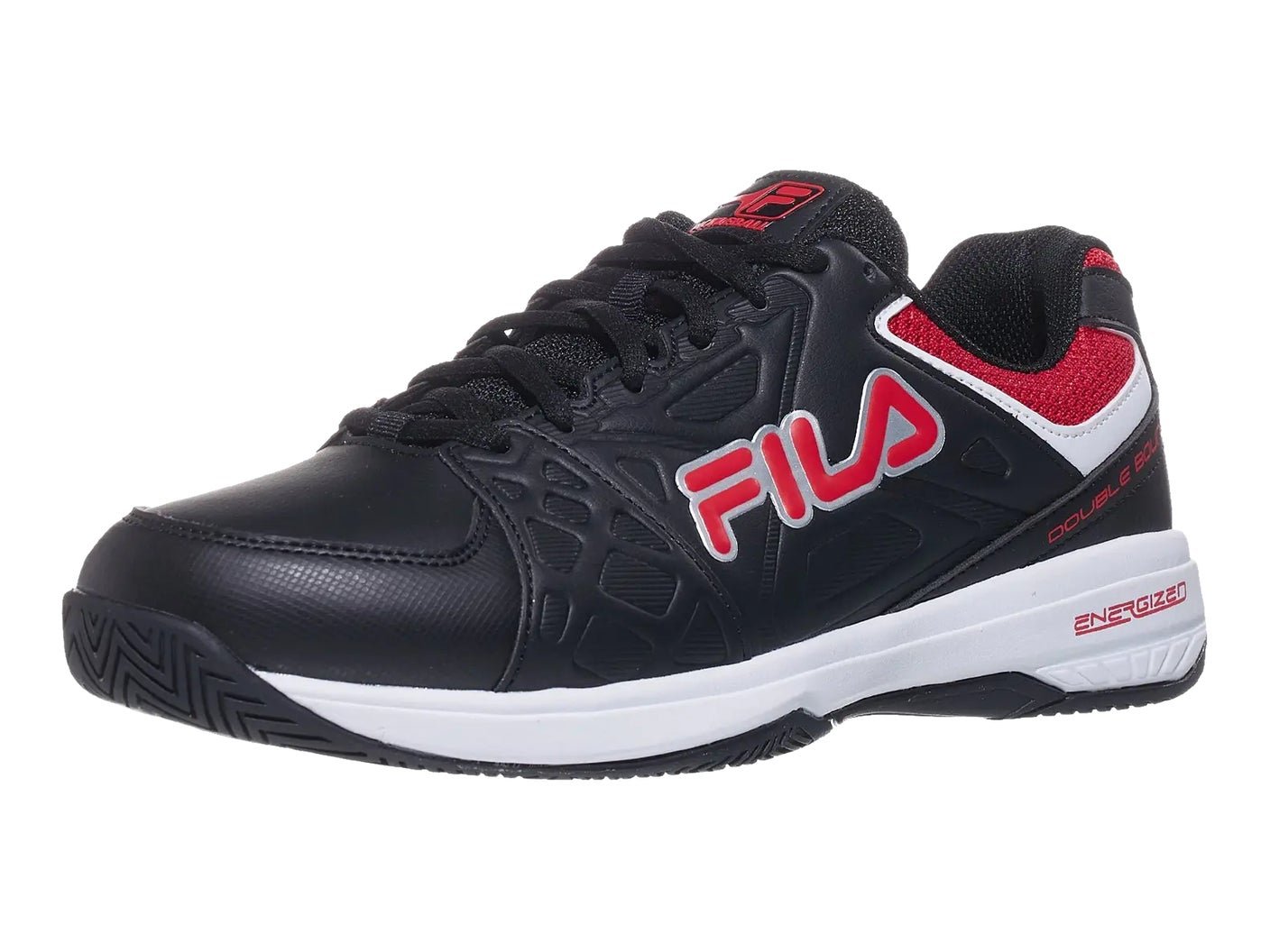
Every beginner guide needs an honest answer to “what if I am not sure I will stick with this sport?” — and FILA wrote that answer itself. When FILA launched its pickleball line, it described the Double Bounce as the brand’s opening-price-point court shoe, built with the same forefoot circle pivot areas as its flagship Volley Zone, a high-abrasion rubber outsole and mesh upper panels for breathability. The Double Bounce 3 is the current generation of that shoe: a real pickleball shoe at the entry rung of a major brand’s range, not a fashion trainer borrowing court styling.
The construction is straightforward and complete. The midsole is FILA’s Energized EVA, the brand’s shock-absorbing cushioning foam, and a TPU midfoot shank adds the torsional support that keeps the shoe stable when you move side to side — the component budget shoes most often leave out, and the one beginners benefit from most. Nothing about the Double Bounce 3’s spec sheet is a placeholder: shank, named foam, abrasion-grade outsole.
That outsole is FILA’s Evergrind rubber, with the forefoot pivot circles carried over from the Volley Zone: circular tread zones under the ball of the foot that let you rotate into a dink or a volley without the tread fighting the turn, while the surrounding pattern grips for stops and shuffles. For a new player learning kitchen-line footwork — small steps, constant direction changes, lots of pivoting — a pivot-friendly forefoot is a genuinely useful design, not a gimmick.
The upper is synthetic leather with perforations for airflow and a mesh tongue, a more traditional court-shoe build than the knit uppers elsewhere in this guide. Synthetic leather holds its shape well and shrugs off scuffs, which suits a first pair that will be dragged, scraped and stuffed into a gym bag. Retailer listings put the men’s version at 12.7 oz in a US 10.5 — read that with its size basis, as the spec section above explains, and it sits at the lighter end of this guide.
Choose the Double Bounce 3 if you want to start in a proper court shoe at the lowest commitment in this guide, or as a second pair for casual games while a premium shoe handles league nights. The trade-offs are the medium-only width and a simpler upper than the knit models — both fair exchanges at this rung of the range.
Pros
- FILA’s own entry-point pickleball shoe — court construction at starter level
- TPU midfoot shank and Energized EVA midsole, not a stripped-down trainer
- Forefoot pivot circles suit kitchen-line footwork and turns
- Durable synthetic leather upper tolerates beginner toe drag and scuffs
Cons
- Medium width only — wide feet should start with the Key211
- No outsole durability warranty, unlike the Selkirk and Montis cards
- Weight figure comes from retailer listings, not a FILA spec table
Diadem Court Flo
Diadem’s recreational-player shoe — Airweave mesh, Flo Foam and an easy court-and-lifestyle shape.
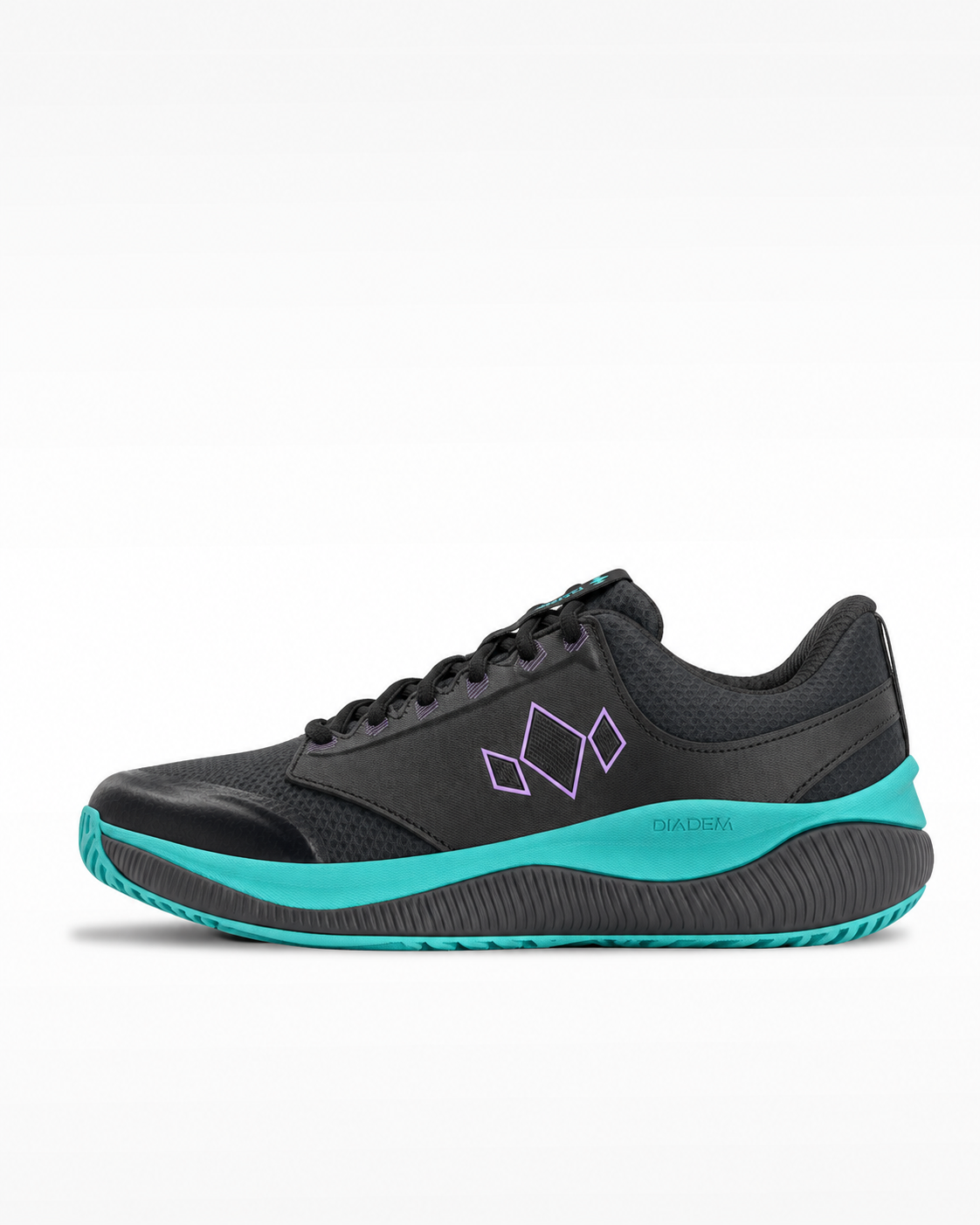
Diadem splits its footwear line cleanly: the Court Burst is the competitive shoe, and the Court Flo is the one Diadem built for recreational players — stable, cushioned and durable, without the extra hardware aimed at aggressive tournament play. That makes the Court Flo one of the most honestly positioned beginner shoes in this guide: a major pickleball brand’s deliberate answer for the rec player, rather than a pro shoe on discount.
The upper is the headline. Diadem’s Airweave is a lightweight mesh designed for dynamic movement, prioritising breathability to keep feet cool while flexing naturally with the foot — the shoe in this guide to choose if your sessions are long, your courts are hot, or enclosed uppers make your feet overheat. A reinforced zone resists scuffs and wear through slides and quick direction changes, so the mesh is not left unprotected in the drag areas.
Underfoot, the midsole is Diadem’s Flo Foam, a performance-grade foam the brand tunes for the balance beginners actually want: enough cushioning to absorb impact on hard landings, enough responsiveness to push off again without the platform feeling soft or vague. The platform geometry is an 8 mm heel-to-toe drop — closer to the training-shoe feel many beginners arrive in, which makes the transition from everyday athletic shoes less abrupt than the flatter 4–6 mm platforms elsewhere in this guide.
The outsole is a non-marking carbon rubber compound Diadem rates for both indoor and outdoor hardcourt play, built for dependable grip and smooth transitions. Non-marking matters more than beginners expect: many indoor facilities require it, so the Court Flo is the one pair in this guide that covers a gym membership and an outdoor court without a second thought. Diadem lists the weight at 12.79 oz — light for the category — while stating no size basis for the figure, so read it as approximate, in line with the guidance in the spec section above.
The fit note deserves emphasis because Diadem states it plainly: the Court Flo comes in a standard width and runs moderately narrow. Average and narrower feet will find it secure; genuinely wide feet should start with the Cypher Key211 or the Montis wide cuts instead. Choose the Court Flo if breathability, a lighter listed weight and one-pair indoor-outdoor coverage top your list.
Pros
- Designed by Diadem specifically for recreational players
- Airweave mesh is the most breathable upper in this guide
- Non-marking carbon rubber covers indoor facility rules and outdoor courts
- 8 mm drop feels familiar to players arriving from training shoes
Cons
- Runs moderately narrow — wide feet should look elsewhere in this guide
- Listed weight has no size basis stated by Diadem
- No outsole warranty, and no midfoot shank on the published spec sheet
Tyrol Velocity V
A Vibram outsole built for silica grit-treated courts, in Tyrol’s wide, stable platform.
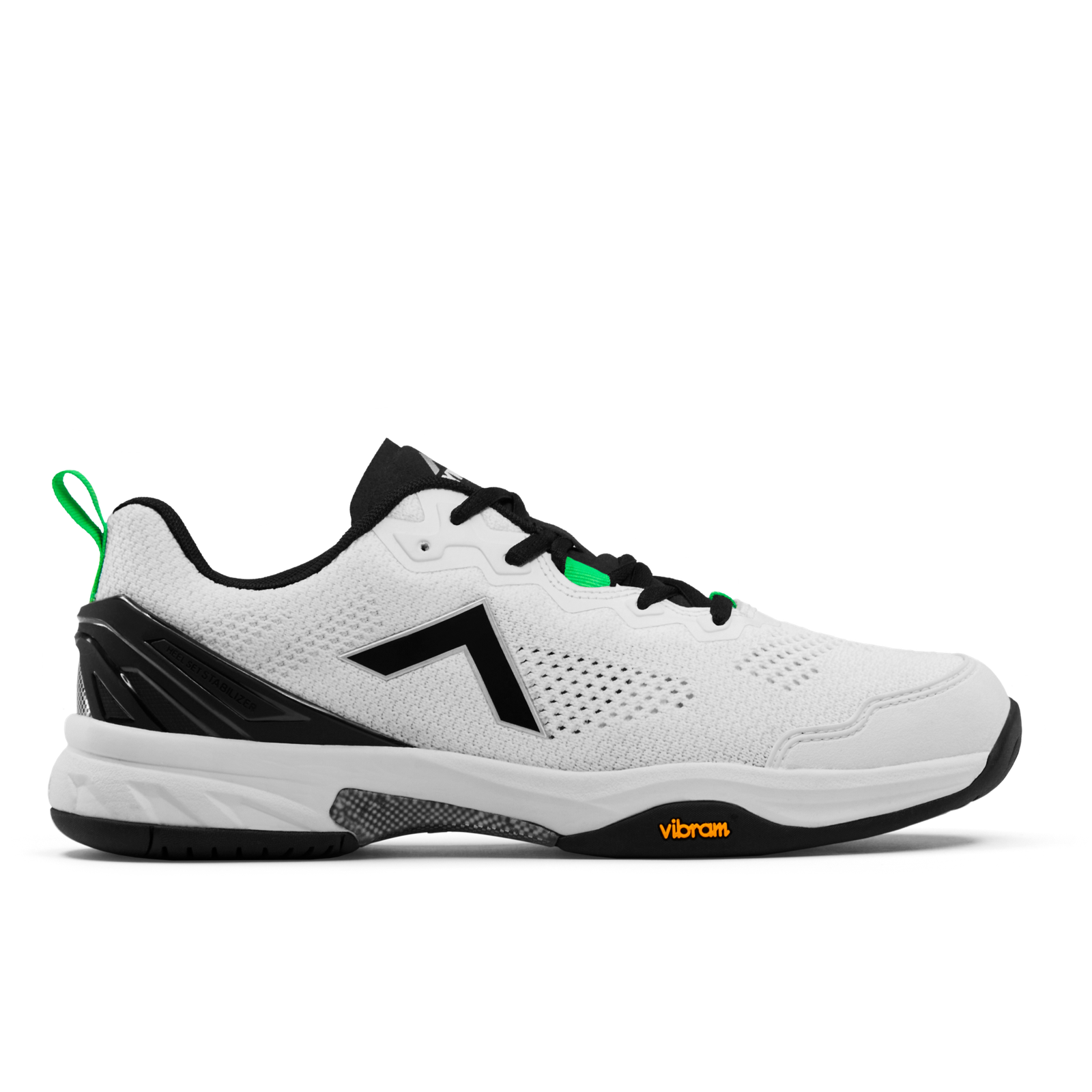
Most outdoor pickleball courts are finished with silica grit in the acrylic coating — great for grip, brutal on shoe rubber. Tyrol, a footwear-only pickleball brand, builds its V-series outsoles with Vibram and states the purpose directly: durable traction on silica grit-treated courts that holds up through repeated play across multiple surfaces. If your beginner games happen on outdoor public courts, that single spec is the reason the Velocity V is in this guide.
Tyrol describes the Velocity V as its lightweight-feeling model for an attacking game, and the upper explains the feel: a breathable knit that wraps the foot with flexible comfort instead of the structured synthetic build of the brand’s other lines. Knit uppers can sacrifice support, so the stability hardware matters — and Tyrol keeps it. A torsion control shank runs through the midfoot to resist twisting, and a curved heel stabiliser helps centre the foot during sudden cuts and recoveries, the two movements that unsettle new players most.
The fit platform is Tyrol’s signature: a wide, deep toe box that reduces toe jamming on aggressive direction changes, on a low 4 mm heel-to-toe drop — Tyrol states that all of its shoes share that 4 mm drop, which gives a flat, planted, close-to-the-court stance. Beginners coming from running shoes will feel the difference immediately: less heel perch, more ground connection, and a base that stays put when weight moves sideways. Tyrol also publishes its weights in its own shoe-spec table — the men’s line is listed at 392 g in a size 9 — which places the Velocity V mid-pack and, just as importantly, gives you the number with its basis attached.
A flow-through cooling system promotes airflow to release heat and moisture during intense points, which pairs sensibly with the knit upper for summer outdoor play. The removable sockliner across the Tyrol range also means players who use their own insoles can swap them in — Tyrol designs the shoe wide partly for that purpose.
Choose the Velocity V if your home courts are grit-treated outdoor acrylic and you want the outsole compound chosen for exactly that surface, plus a wide toe box and a flat, stable platform to learn on. Indoor-only players on polished wood are better served by the non-marking Diadem or the gum-rubber styles in this guide.
Pros
- Vibram outsole designed specifically for grit-treated outdoor courts
- Wide, deep toe box on a flat, stable 4 mm platform
- Torsion shank and curved heel stabiliser back up the knit upper
- Maker publishes its weight table with the size basis stated
Cons
- Outdoor-first outsole is not the pick for polished indoor wood
- Knit upper is more flexible than structured synthetic builds
- Tyrol does not name a midsole foam for this model
Montis Drop 1.0
A durability-first shoe from a pickleball-only brand, with a 180-day outsole replacement promise.
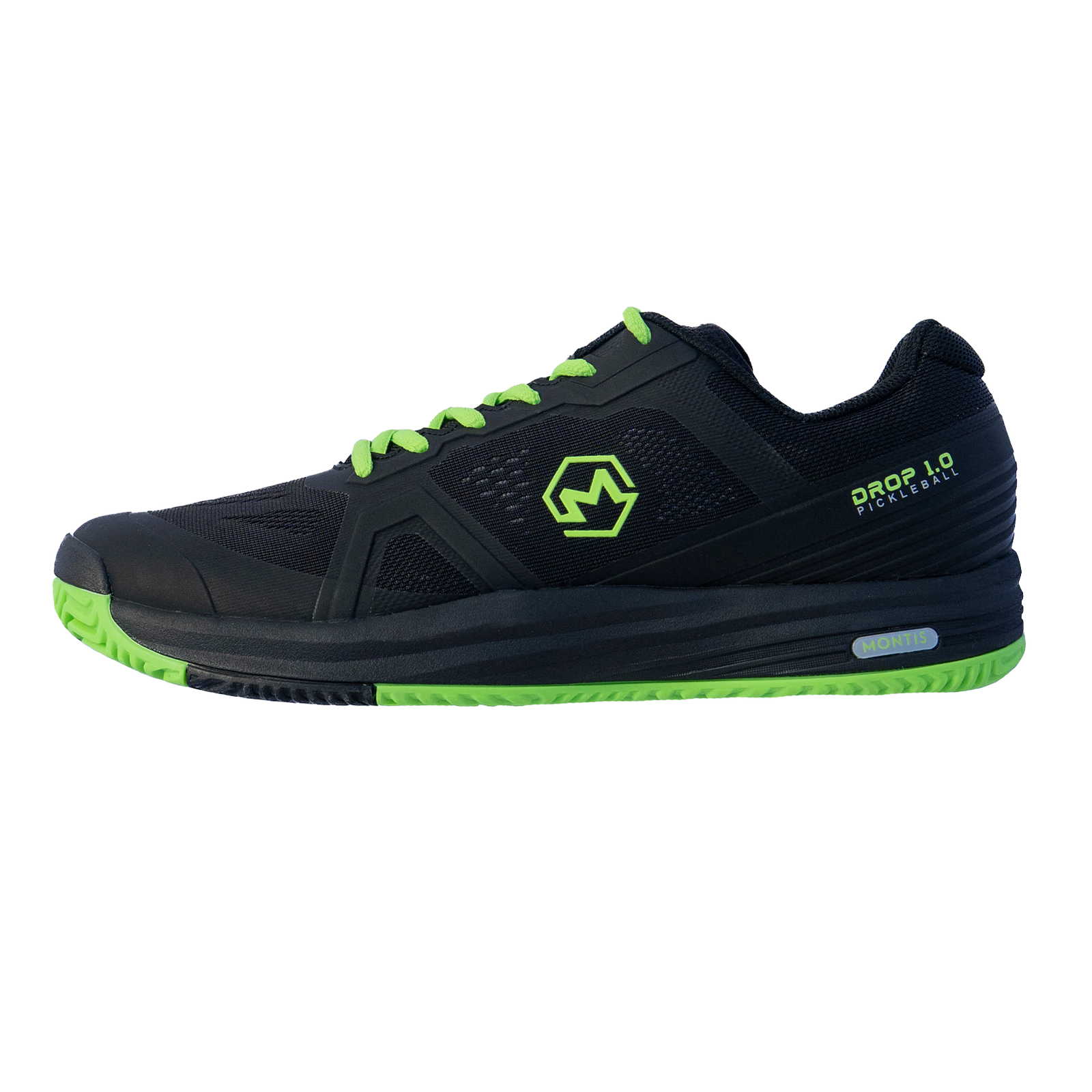
Montis makes one thing — pickleball shoes — and built its reputation on a problem every beginner meets within a few months: the first pair wears through at the ball of the foot. The Drop 1.0 answers with a high-density rubber outsole that Montis develops specifically to last longer on court, and it puts a number behind the claim: if the outsole wears down within 180 days of purchase, Montis replaces the shoes. For a first-time buyer worried about spending on a sport they have just started, that warranty is effectively a durability guarantee on the part of the shoe that fails first.
The rest of the build is reinforcement where beginners actually damage shoes. A toe-slide support patch reinforces the pressure points created when you drag a foot through a stop or a serve follow-through. A crash-resistant toe cap protects the forefoot. Heel reinforcement strengthens the shoe for lateral movement — the sideways loads that a running shoe’s heel counter is not shaped for. None of this is decorative; it maps one-to-one onto the wear patterns of a first season.
The upper is a breathable mesh with a wear-resistant 3D structure, over an inner sock structure that Montis credits with additional comfort, stability and response. The fit guidance is unusually honest and worth following exactly: Montis describes the Drop 1.0 as an athletic, snug fit, recommends that most customers go a half size up from their regular size, and offers wide cuts it says work for most customers up to a 2E — one of only two true wide options in this guide.
Two spec-sheet gaps deserve plain statements. Montis publishes no weight for the Drop 1.0, and it does not name a midsole foam on the product page, so this card claims neither a number nor a cushioning system. What Montis does publish — outsole density, reinforcement map, fit guidance, wide availability and the 180-day warranty — is the durability file, and on that file the Drop 1.0 is the strongest card here.
Choose the Drop 1.0 if you play outdoors several times a week, drag your toes, or simply want your first pair to be the pair that lasts. Size it by Montis’s own advice, not your running-shoe size.
Pros
- 180-day outsole warranty — the boldest durability promise in this guide
- Reinforcement mapped to beginner wear: toe patch, toe cap, heel
- Wide cuts available up to 2E, with honest half-size-up guidance
- High-density outsole built for abrasive outdoor courts
Cons
- Montis publishes no weight and names no midsole foam
- Snug athletic fit will catch out anyone who orders their usual size blind
- Durability-first build is firmer underfoot than the comfort-led cards
Acacia Tyler Signature II
A signature model with a Kevlar drag guard, CloudGel insole and a wider toe box — the buy-once pick.
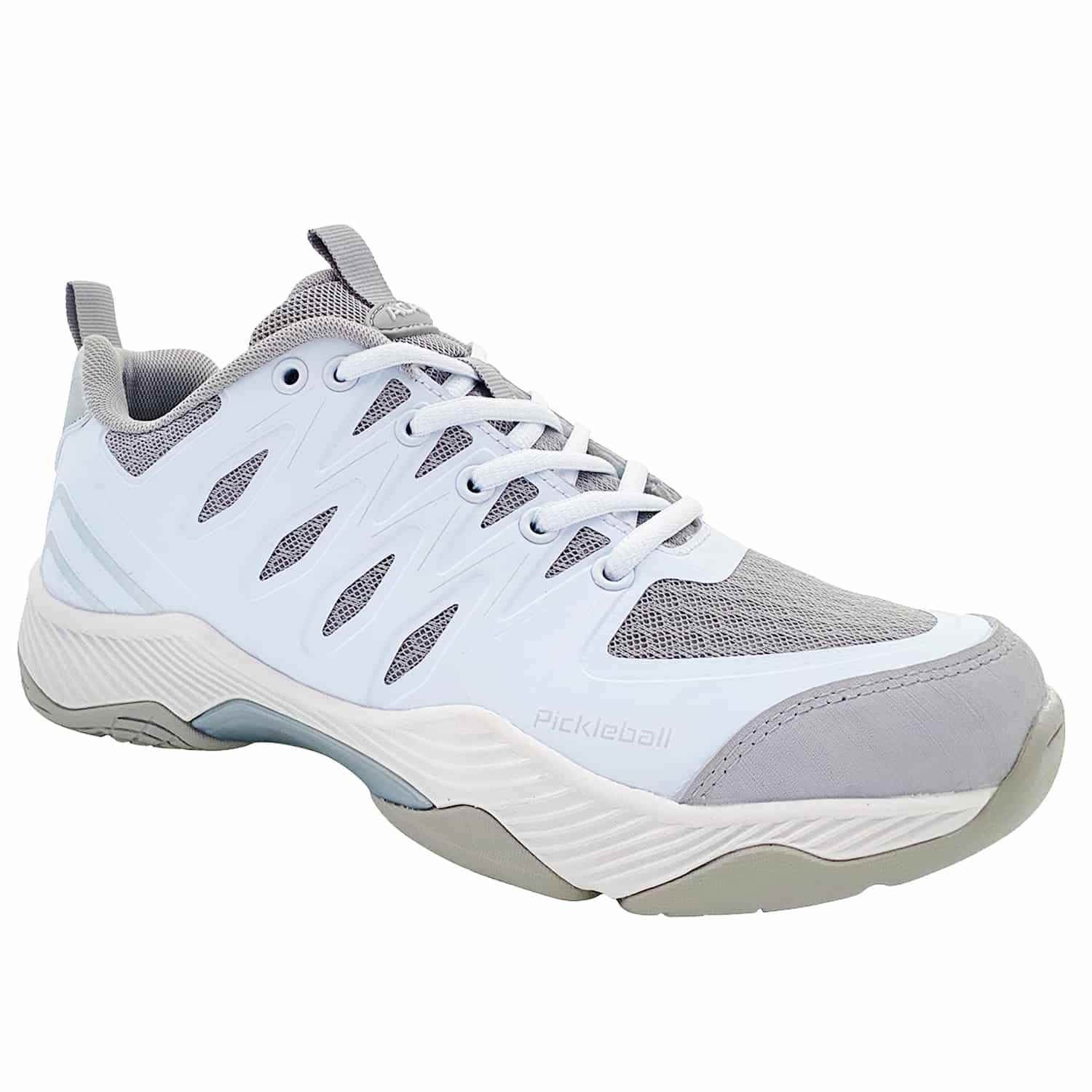
Every guide needs one “buy once, properly” option, and this is it. The Tyler Signature II is Acacia’s flagship — developed with professional player Tyler Loong — and it earns its place in a beginner guide not through its signature but through three things first-time players genuinely need: the strongest toe-drag protection in this guide, a wider toe box, and support hardware that keeps the foot centred while footwork is still clumsy.
Start with the drag guard, because beginner shoe wear is dominated by one habit: dragging the trailing toe through serves, stops and recoveries. Acacia wraps the Signature II in a Kevlar drag guard for abrasion protection, over a ProFlex elasto-polymer upper with micro-honeycomb mesh for airflow and a ballistic nylon inner lining. Acacia calls this its most durable shoe, and the materials list backs the claim better than any adjective could.
Support comes from the Heel Control Stability system — an exceptionally strong heel counter in Acacia’s description, built to ground the foot during rapid lateral movements — and from the PlusLace offset eyelet, which lets you create a tighter connection at the top of the foot and lock the heel down while loosening the lower laces if the forefoot needs room. That lacing trick is one beginners rarely know, and this shoe is built for it.
Underfoot, the midsole is Acacia’s ARK-Technology EVA foam, which the brand describes as water-resistant and providing elevation and structure, with a CloudGel ergonomic insole above it for shock absorption. The outsole is a non-marking, contoured rubber with an elevated heel that Acacia says increases leverage, control and balance — and the non-marking compound means the Signature II is cleared for indoor facilities as well as outdoor courts. Sizing is unisex, in men’s 6–14 and women’s 7.5–12, around a wider toe box.
The honest gaps: Acacia itself lists the weight as “Not specified”, and a signature flagship is the highest-commitment card in this guide. Choose the Tyler Signature II if you already know pickleball has you hooked, you drag your toes, and you would rather buy the durable shoe once than the cheap shoe twice.
Pros
- Kevlar drag guard — the strongest toe protection in this guide
- HCS heel counter and PlusLace eyelet give real lateral lockdown
- Wider toe box in unisex sizing, non-marking outsole for indoor play
- CloudGel insole over a named ARK-Technology EVA midsole
Cons
- Acacia publishes no weight for the shoe
- Signature flagship — the biggest commitment in this guide
- Elevated-heel design feels different from the flat platforms above
Side-by-Side: Beginner Pickleball Shoes Compared
| Shoe | Best For | Outsole | Cushioning (Maker-Named) | Stated Weight & Basis | Fit & Widths |
|---|---|---|---|---|---|
| Selkirk CourtStrike 2.0 | Best overall first shoe | 4-Way Grip + outrigger, upgraded abrasion-resistant rubber | EVA PureFoam + supercritical foam insole; TPU shank | 13.3 oz — men’s US 9 | Standard last; padded collar |
| Cypher Key211 | Roomy toe box & comfort | 5.5 mm reinforced carbon rubber | Compression-moulded EVA | Not published by Cypher | Wider toe box; men’s D / women’s C; 6 mm drop |
| FILA Double Bounce 3 | Budget starter | Evergrind rubber, forefoot pivot circles | Energized EVA; TPU midfoot shank | 12.7 oz — men’s US 10.5 (retailer listing) | Medium width |
| Diadem Court Flo | Light & breathable rec play | Non-marking carbon rubber, indoor & outdoor | Flo Foam | 12.79 oz — no size basis stated | Standard width; runs moderately narrow; 8 mm drop |
| Tyrol Velocity V | Outdoor grit-treated courts | Vibram, designed for silica grit courts | Foam not named; torsion control shank | 392 g — men’s US 9 (Tyrol table) | Wide, deep toe box; 4 mm drop |
| Montis Drop 1.0 | Outsole durability & warranty | High-density rubber; 180-day warranty | Not named by Montis | Not published by Montis | Snug athletic fit (+½ size advised); wide cuts to 2E |
| Acacia Tyler Signature II | Toe-drag protection | Non-marking contoured rubber; Kevlar drag guard | ARK-Technology EVA; CloudGel insole | Not specified by Acacia | Wider toe box; unisex sizing |
Read the weight column the way the spec section taught: only compare figures with the same size basis, and treat “not published” as a data gap the maker chose — not a number to fill in from a review roundup.
Beginner Buying Guide: Fit, Surface and Care
Fit comes before features
Order your first court shoes with a fitting plan, not just a size. Try them at the end of the day or after a walk, when your feet are at their largest, wearing the socks you play in. You want roughly a thumb’s width between your longest toe and the end of the shoe, a heel that does not lift when you shuffle sideways across the room, and a forefoot that feels held rather than squeezed when you push off laterally. Court shoes should feel secure from the first wear — unlike leather trainers, the models in this guide are not designed to be “broken in” by stretching a size too small.
Use each maker’s own fit notes rather than generic advice: Montis explicitly recommends a half size up in the Drop 1.0 and calls the fit athletic and snug; Diadem warns that the Court Flo runs moderately narrow; Cypher builds the Key211 on a naturally wider toe box with stated D and C lasts. If you are between widths in everyday shoes, start your search with the Key211, the Velocity V’s wide deep toe box, or Montis’s wide cuts — a size up in a narrow shoe is a poor substitute for a genuinely wider last, because the length grows but the shape does not.
Match the outsole to your home court
Decide where most of your first hundred games will happen and buy for that surface. Outdoor acrylic with silica grit: prioritise compound hardness and warranty — the Montis high-density outsole, Tyrol’s Vibram designed for grit-treated courts, or Selkirk’s upgraded abrasion-resistant rubber with its six-month sole warranty. Indoor gym or sport-court: prioritise non-marking rubber — the Diadem Court Flo and the Acacia Tyler Signature II state non-marking outsoles outright, and facilities can and do turn away marking soles. Mixed play on a single pair points to the non-marking all-court options, accepting slightly faster wear outdoors as the price of versatility.
Make the first pair last
Two habits double the useful life of a beginner’s shoes. First, keep them for court only: walking to the venue on asphalt, driving in them and wearing them as everyday trainers all spend outsole rubber and midsole life that should be spent on play. Second, learn the wear signs. When the tread under the ball of the foot goes smooth, when the pattern at the pivot point disappears, or when the midsole feels flat and dead rather than springy, grip and cushioning are spent — that is the replacement moment, and it arrives months before the upper looks worn. Selkirk’s and Montis’s six-month outsole warranties exist precisely because the outsole is the wear item; check the tread monthly if you play outdoors twice a week or more.
Let shoes dry at room temperature between sessions, loosen the laces fully when you take them off so the heel counter keeps its shape, and never leave them in a hot car — heat ages EVA foam faster than play does. None of this requires products or rituals; it is simply how a first pair survives to become the backup pair when you eventually step up to the advanced models in our pillar guide.
Beginner Pickleball Shoe FAQs
Can I play pickleball in running shoes?
For a first trial session, yes — but running shoes are built for straight-line forward motion, with curved soles, built-up narrow heels and soft uppers. Pickleball is mostly lateral shuffles, quick stops and pivots, and a court shoe’s flatter, wider outsole, structured upper and multi-directional grip are built for exactly that. Once you play weekly, a proper court shoe like the seven in this guide is the right purchase; Selkirk makes the same point in its own CourtStrike 2.0 listing.
What is the difference between indoor and outdoor pickleball shoes?
Outdoor shoes use harder, denser rubber — high-density, high-abrasion or carbon compounds, and outsoles like Tyrol’s Vibram built for silica grit-treated acrylic — because outdoor surfaces are abrasive. Indoor shoes use non-marking rubber with grip tuned for wood and sport-court floors, and many facilities require non-marking soles. The Diadem Court Flo and Acacia Tyler Signature II state non-marking outsoles for indoor and outdoor hardcourt use.
How should my first pickleball shoes fit?
Aim for a thumb’s width of space at the toes, a heel that does not lift during a sideways shuffle, and a forefoot that feels held, not squeezed. Follow the maker’s own notes: Montis advises a half size up in the snug-fitting Drop 1.0, Diadem says the Court Flo runs moderately narrow, and Cypher’s Key211 is built on a naturally wider toe box. A wide last beats a longer size for wide feet.
Why do pickleball shoe weights differ between listings?
Because weight depends on the size weighed. Selkirk states 13.3 oz for the CourtStrike 2.0 based on a men’s size 9; FILA’s Double Bounce 3 is listed at 12.7 oz in a men’s 10.5 — a larger shoe — so the two figures are not directly comparable. Diadem lists the Court Flo at 12.79 oz with no size basis stated, and Cypher, Montis and Acacia publish no weight at all. Always compare weights at the same size, or treat them as approximate.
Do beginner pickleball shoes need a midfoot shank?
A shank is the stiff plate in the midfoot that resists twisting when you brake and change direction — the lateral-support spec beginners feel as steadiness. Several shoes here include one: Selkirk’s TPU shank in the CourtStrike 2.0, FILA’s TPU midfoot shank in the Double Bounce 3 and Tyrol’s torsion control shank in the Velocity V. It is not mandatory, but for a first shoe it is one of the most useful lines on the spec sheet.
How long should a first pair of pickleball shoes last?
The outsole is the wear item: on abrasive outdoor acrylic it goes first, especially under the ball of the foot and at the pivot point. Check the tread monthly; when the pattern smooths out, grip is spent even if the upper looks new. Selkirk and Montis both warrant their outsoles for six months, which is a useful benchmark for how the makers themselves rate outdoor rubber life. Keeping the shoes for court use only extends that life significantly.
Are wide pickleball shoes worth it for beginners?
Only if your feet are actually wide — a wide shoe on a narrow foot allows the sliding you are trying to avoid. If your everyday shoes are wide fittings, start with the genuinely wide options here: the Cypher Key211’s wider toe box on a men’s D / women’s C last, Tyrol’s wide, deep toe box, Montis’s wide cuts rated to 2E, or the Acacia Tyler Signature II’s wider toe box. Width letters and last shapes are specs; “roomy” on its own is not.
The Verdict: Your First Pair, Decided
For most beginners the decision ends quickly: the Selkirk CourtStrike 2.0 is the most complete first pickleball shoe in this guide — a pickleball-specific 4-way grip outsole, layered PureFoam cushioning with a TPU shank, an honestly stated weight and a six-month sole warranty, from a brand that builds nothing but pickleball gear. Buy it in your normal size and play.
Start elsewhere only if your feet or your courts say so. Wide feet: the Cypher Key211 or Montis’s wide-cut Drop 1.0, which also carries the strongest outsole warranty here. Grit-treated outdoor courts: the Tyrol Velocity V‘s Vibram outsole was designed for them. Tightest budget: FILA’s own starter shoe, the Double Bounce 3. Hot courts and indoor-outdoor weeks: the breathable, non-marking Diadem Court Flo. Toe-draggers who already know they are hooked: the Kevlar-guarded Acacia Tyler Signature II. Whichever you choose, you are choosing a shoe built to move sideways — and that, more than any single spec, is what makes it a pickleball shoe.
Affiliate Disclosure: Ali Shuttler is a participant in the Amazon Services LLC Associates Program, an affiliate advertising program designed to provide a means for sites to earn advertising fees by advertising and linking to Amazon.com. Product specifications are taken from manufacturer listings and were checked at the time of writing; manufacturers may update models and specs without notice.