Both games are played in a walled box, both are booming in the UAE, and both will leave you drenched — but they could hardly feel more different. One is a social doubles game built on glass rebounds; the other is the purest one-on-one duel in racket sport. This guide compares them honestly so you can pick your game.
TL;DR — The short answer
Pick padel if you want a social doubles sport: four players, long tactical rallies, walls that rescue your defence, tennis-style scoring you may already know, and a club scene on every corner in the UAE. Pick squash if you want a head-to-head contest: one opponent, one shared box, every shot aimed at the same front wall, and arguably the most intense workout in racket sport. Padel is easier to start with friends; squash is easier to play alone, to practise alone, and to find a fiercely competitive ladder for. Neither needs the other’s permission — but they suit very different players, and this guide shows you exactly where they separate.
On this page
- The 60-second verdict
- Quick comparison table
- The courts: glass cage vs four-wall box
- The walls: rebounds vs the front wall
- Racket and ball: solid bat vs strung frame
- Scoring and rally shape, side by side
- How a rally actually feels
- Learning curve: first hour, first month
- Physical demand: which suits your body?
- Cost and access in the UAE
- Which one should you choose?
- Frequently asked questions
The 60-Second Verdict
Padel and squash are the two walled racket sports, and newcomers constantly assume they are cousins. They are not — they are opposites that happen to share an enclosure. Padel takes the walls of squash, moves them behind the players, surrounds them with a net game borrowed from tennis, and hands the box to four people. Squash strips everything back: two players, one court, one target wall, and a tiny rubber ball that rewards precision and punishes hesitation. Padel is a game of patience and positioning played with company. Squash is a game of pressure and movement played against a single opponent who is standing in your way — literally, since you share the same floor.
You play sport to be with people. Doubles is the standard format, the walls forgive your mistakes, rallies run long from your very first session, and the UAE club scene makes booking a court with three friends effortless. Once you are playing regularly, our guide to the best padel rackets will sort your first proper racket.
You want a duel. Singles is the standard format, the court is yours and your opponent’s alone, solo practice is a real training method, and the movement — lunging into corners, recovering to the T — is the hardest in racket sport. Start with our best squash rackets for beginners guide when you are ready for your own frame.
The sections below unpack every row of the comparison — courts, walls, gear, scoring, feel, fitness and cost — and finish with a player-by-player verdict. If you only read two, read the walls section and the rally section: that is where these sports truly divide.
Padel vs Squash: Quick Comparison
Every key difference on one screen. The sections that follow unpack the rows that matter most.
| Factor | Padel | Squash |
|---|---|---|
| Court size | 20 × 10 m (65.6 × 32.8 ft) | 9.75 × 6.4 m (32 × 21 ft) |
| Court layout | Net across the middle; two halves, two pairs | No net — both players share one box and aim at the same front wall |
| Enclosure | Glass back walls (3 m) and mesh, up to 4 m — rebounds are part of play | Four solid walls, all in play; front wall is the target on every shot |
| Playing surface | Artificial turf with sand dressing | Sprung wooden floor |
| Standard format | Doubles (4 players) | Singles (2 players); doubles exists on wider courts |
| Implement | Solid foam-core racket, perforated face, max 45.5 cm, wrist strap compulsory | Strung racket, max 68.6 cm long, head up to 500 cm² |
| Ball | Pressurised felt ball, 6.35–6.77 cm — like a softer tennis ball | Hollow rubber ball, about 40 mm — small, low-bouncing, warms up as you play |
| Net / target | Net 88 cm at centre, 92 cm at the posts | Front wall 4.57 m high; the tin at 48 cm is the line every shot must clear |
| Serve | Underarm, off a bounce, at or below waist height, diagonal box; two attempts | Struck from a service box; must hit the front wall between the service line and the out line, then land in the back quarter |
| Scoring | Tennis system: 15–30–40, games, sets to 6; golden point common in social and pro play | Point-a-rally to 11, win by 2; matches best of 5 games (best of 3 in much club play) |
| Space per player | 50 m² (doubles) | About 31 m² (singles) |
| Rally character | Long, tactical, net battles and lob resets; points won by pressure | Fast, repetitive drives to length, drops and boasts; points won by movement pressure |
| Solo practice | Hard — the game needs four players (some wall drills aside) | Built in — solo drilling is a core part of squash training |
| Learning curve | Gentle start, deep tactical ceiling | Simple concept, demanding execution; movement takes time |
The Courts: Glass Cage vs Four-Wall Box
Both sports lock you in a box with walls, which is where the resemblance ends. One box is a cage you defend from inside; the other is a room you share with your opponent.
The padel court
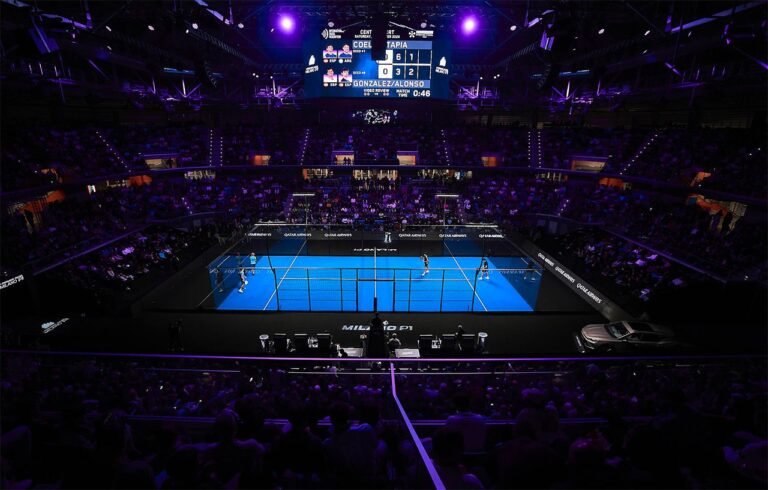
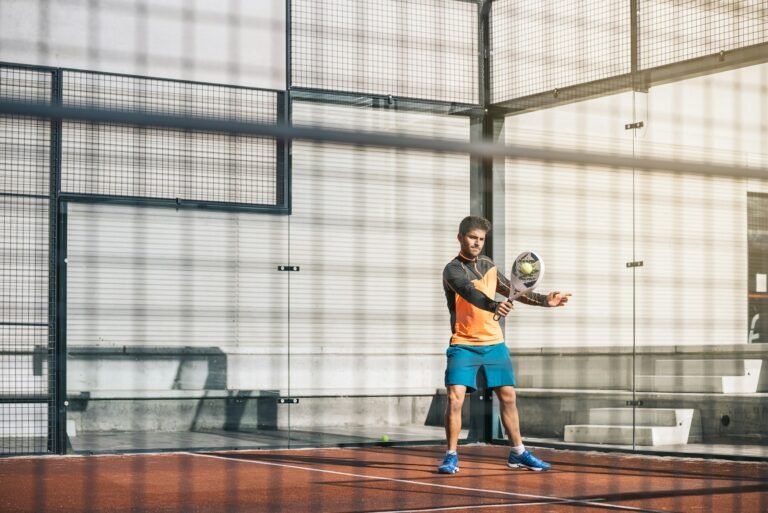
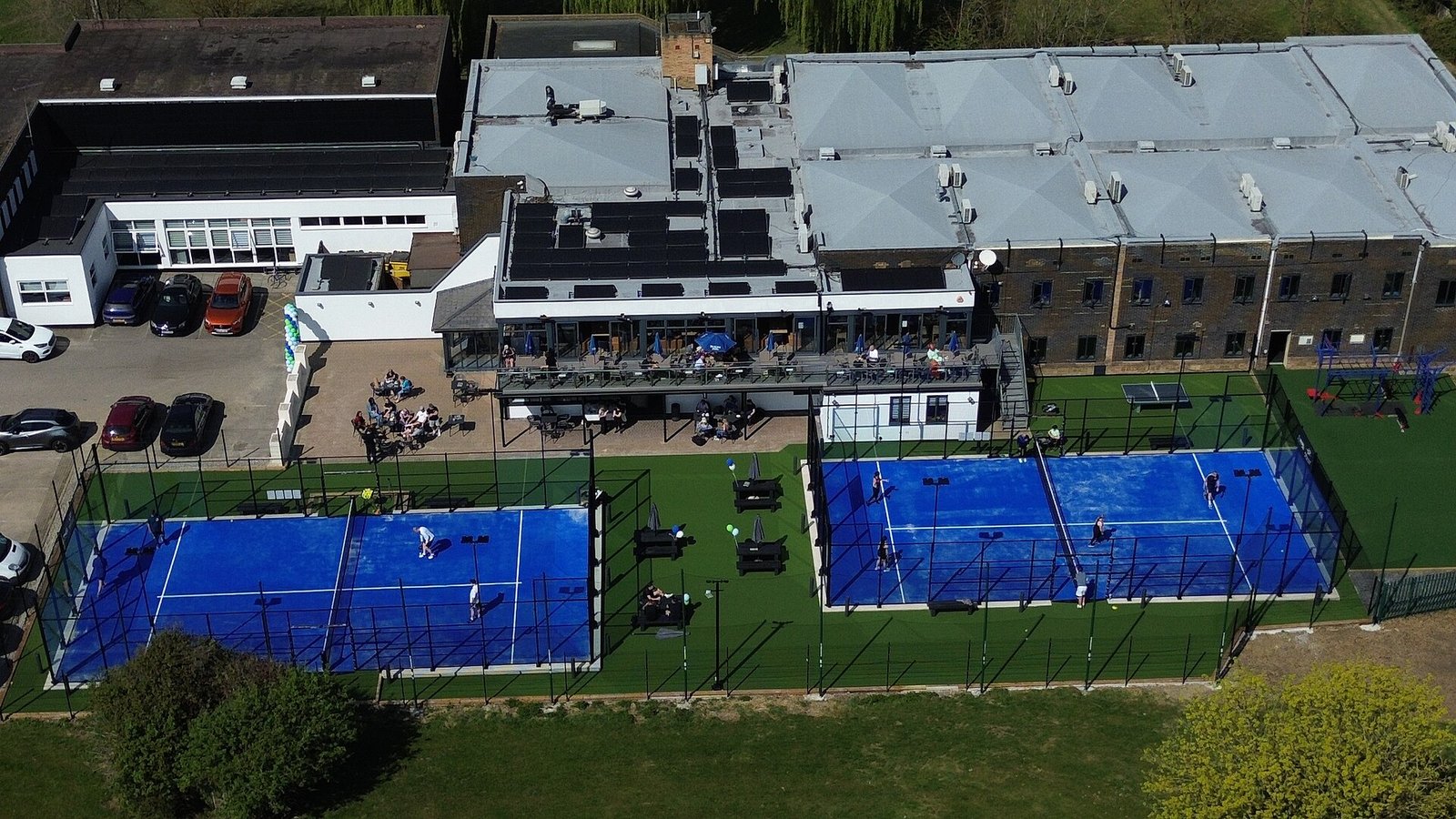
A padel court measures 20 metres long by 10 metres wide, split by a net into two halves, and fully enclosed: glass panels 3 metres high close off each end, with mesh fencing above and along the upper sides taking the enclosure to 4 metres. The floor is artificial turf dressed with sand, which grips your shoes, softens the bounce and is kind underfoot. Crucially, the enclosure sits behind and beside your own half — it is your safety net. Balls that pass you are not dead; they meet the glass and come back into play. The full layout, service boxes and wall rules are set out in our how to play padel guide.
The squash court
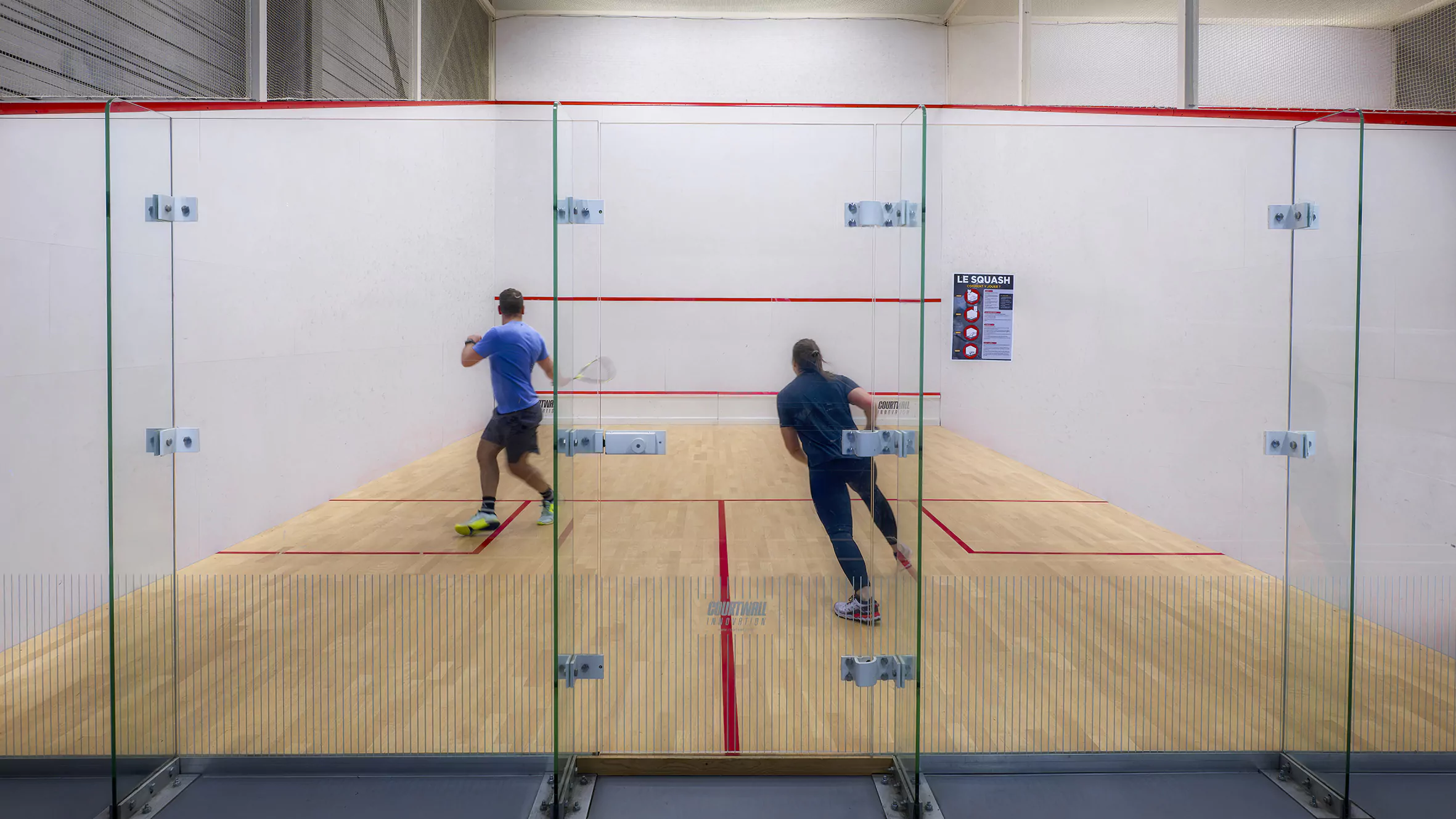
A squash court is a single room, 9.75 metres long by 6.4 metres wide, with a sprung wooden floor and four walls that are all live. There is no net and no halfway territory — both players occupy the same space and every shot travels to the same front wall. The front wall rises 4.57 metres to the out line; near the floor sits the tin, a 48 cm strip that every shot must clear. The back wall is often glass on show courts, so spectators can watch from behind, but at club level you will usually find four solid walls and a door in the back. The markings, service boxes and lines are explained in our how to play squash guide.
The practical difference: padel’s box protects you — the glass behind you is a defender. Squash’s box confronts you — the walls are the target, the boundaries and occasionally the thing you are sprinting away from. Padel gives you a partner and a safety net; squash gives you nowhere to hide, which is precisely its appeal.
The Walls: Rebounds vs the Front Wall
This is the section that decides the comparison, because the two sports use their walls for opposite jobs.
Padel: the walls give the ball back to you
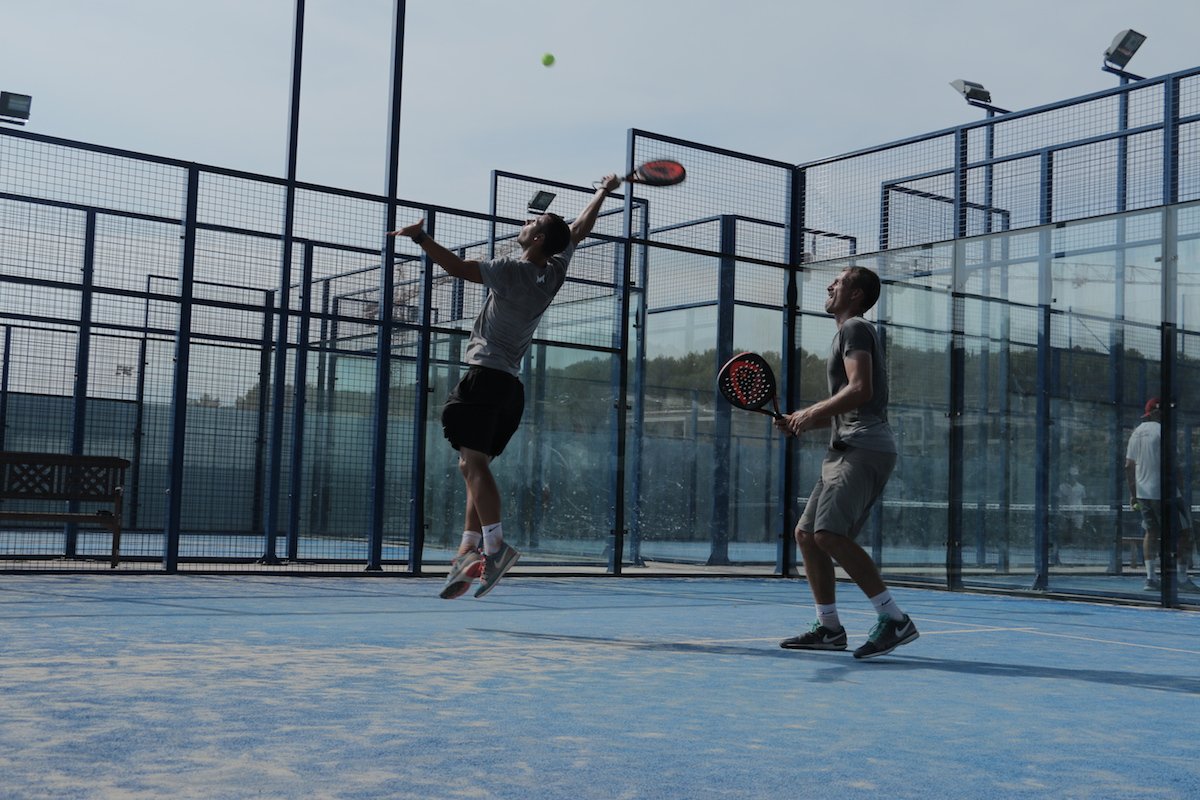
In padel, the walls work after the bounce. A shot that has bounced on your floor may rebound off your back glass or side mesh and still be played — so defence is never truly beaten until the ball bounces twice. Good padel is built on this generosity: you retreat, let deep balls come off the glass, and reset rallies that tennis would have ended. The attacking geometry grows from the same rule — smashes are angled so the rebound carries the ball out of reach, and the lob exists to push net players back toward their glass. Learn to use the walls and padel opens up; ignore them and you are playing half the sport.
Squash: the walls are where every shot must go
In squash, the walls work before everything else. Every single shot — serve, drive, drop, boast — must strike the front wall above the tin and below the out line, or the rally is lost. The side and back walls are not safety nets; they are tools. A boast deliberately plays the ball into the side wall so it angles across the front; a straight drive is judged by how tightly it hugs the side wall on its way back; a ball that dies in the back corners forces your opponent to dig it out with the wall inches behind their swing. Where padel’s walls forgive, squash’s walls judge: the same four surfaces are target, obstacle and weapon at once.
The contrast in one line: in padel you play off the walls behind you; in squash you play at the wall in front of you. One rescues defence, the other defines attack — and it is why a padel player dropped into a squash court keeps waiting for rebounds that are not coming, while a squash player on a padel court keeps trying to finish rallies that the glass refuses to end.
Racket and Ball: Solid Bat vs Strung Frame
The rackets
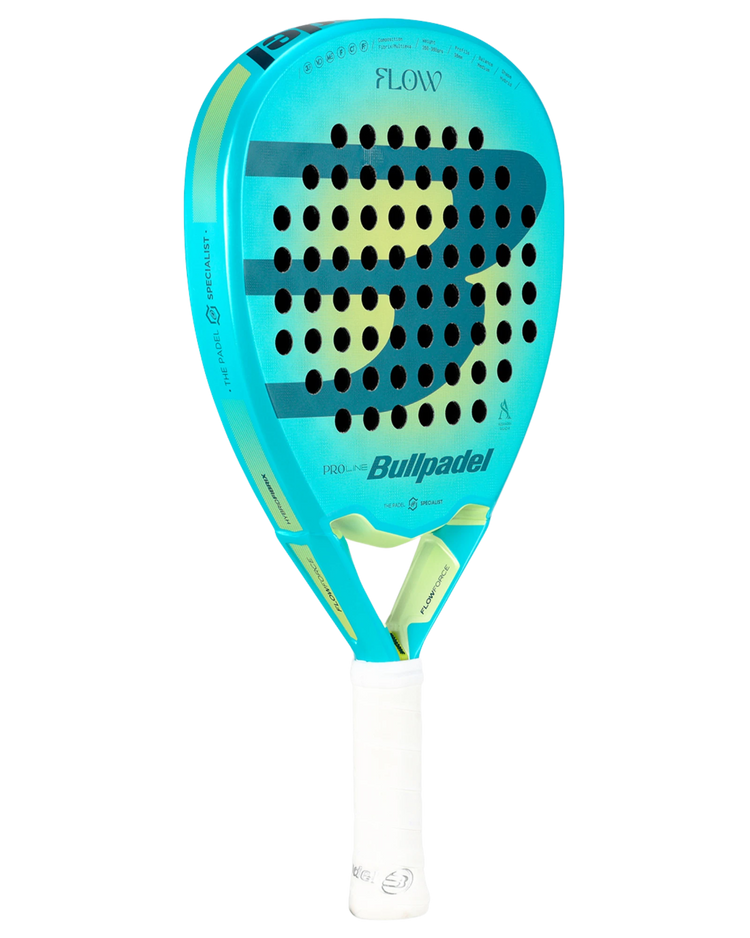
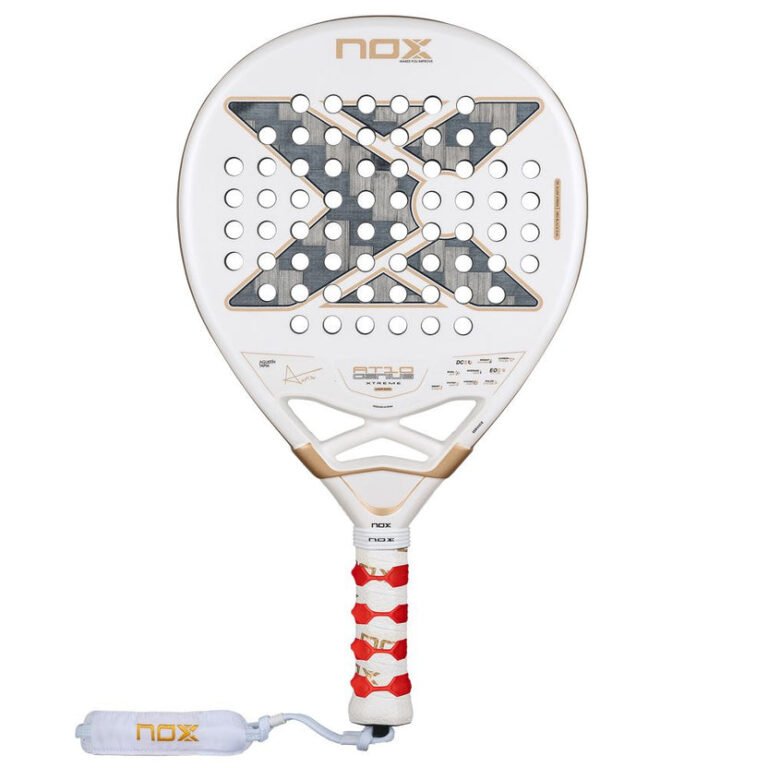
The implements look like they belong to different sports families, because they do. A padel racket is a solid, stringless bat: a foam core between fibreglass or carbon faces, drilled with holes, at most 45.5 cm long, with a wrist strap the rules oblige you to wear. It is swung with compact strokes, close to the body, and its short length is why padel technique feels contained and wrist-led. Shape and weight change its character a great deal — which is why our best padel rackets guide exists.
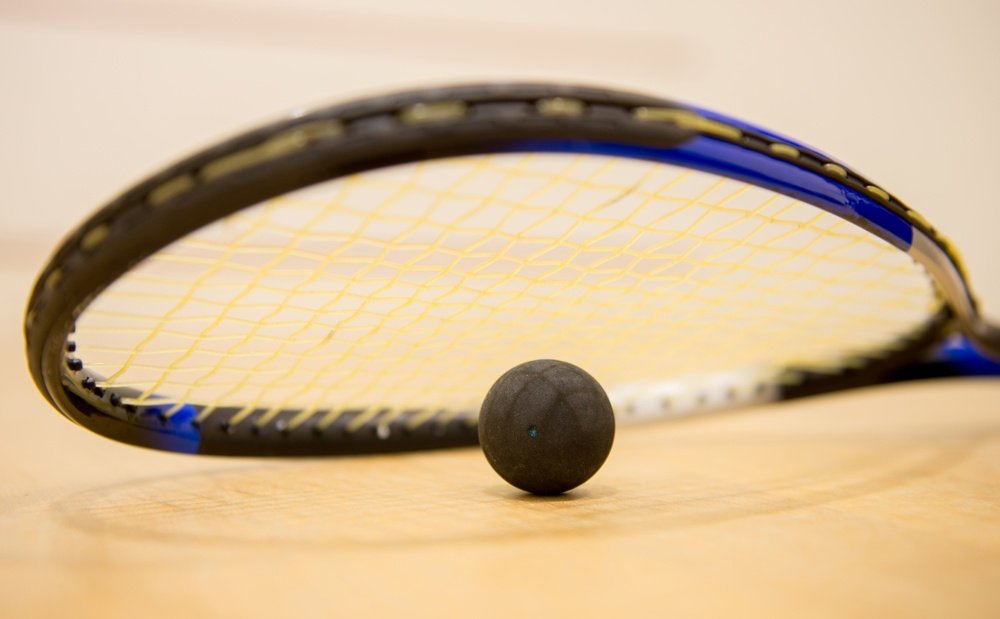
A squash racket is a true strung racket — the longest in mainstream racket sport relative to its game, up to 68.6 cm, with a head of up to 500 cm² strung in an open pattern. It is light, whippy and swung with a full, grooved stroke; the strings, not a foam face, are what generate its bite on a small ball. Squash players talk about their frames the way tennis players do — head shapes, string patterns, balance points — and our beginner squash racket guide decodes the specs before you buy.
The balls
Here the gap is even wider. The padel ball is a familiar object — a pressurised felt ball of 6.35–6.77 cm, essentially a slightly softer tennis ball. It bounces predictably, behaves the way your instincts expect, and comes with a running cost: pressurised balls flatten over a few matches and are replaced constantly.
The squash ball is a stranger object: a hollow rubber sphere of about 40 mm that, cold, barely bounces at all. Squash balls are graded by dots — double yellow is the slow competition standard, while single yellow, red and blue balls bounce progressively livelier for club players and beginners. Every squash rally begins with a warm-up ritual, knocking the ball until heat makes it lively, and choosing the right dot for your level is the cheapest improvement in the sport. The two balls sum up their games: padel’s is social and familiar; squash’s is technical and rewards those who learn its behaviour.
Scoring and Rally Shape, Side by Side
Full rulebooks live in our how to play padel and how to play squash guides — here is the summary that matters for choosing between them.
| Element | Padel | Squash |
|---|---|---|
| Point scoring | 15 – 30 – 40 – game, with deuce; a single golden point at deuce is standard in much social and professional play | Point-a-rally: every rally scores, first to 11, win by 2 (at 10–10, play continues until someone leads by two) |
| Match target | Best of 3 sets; a set is first to 6 games, tiebreak at 6–6 | Best of 5 games at professional level; best of 3 is common in club play |
| Serve | Underarm after a bounce, struck at or below waist height into the diagonal box; two attempts; after the bounce the ball may touch the glass but not the mesh | Struck from inside a service box with at least one foot in it; the ball must hit the front wall between the service line and the out line and land in the opposite back quarter |
| Who you face | A pair: you attack and defend as a unit of two | One opponent, sharing your court and your space |
| How points end | Second bounce, a shot into the net, a wall struck before the bounce, or a smash driven out of the cage | Ball hits the tin or floor first, fails to reach the front wall, or goes above the out lines |
| Match feel | Long sessions: a social booking is typically 60–90 minutes of near-continuous play | Short, sharp sessions: a court booking is typically 40–45 minutes, and that is plenty |
Two contrasts decide the experience. First, time: padel’s tennis scoring and long rallies stretch a match out — you settle in, build tactics over games, and mistakes are diluted across a long afternoon. Squash’s point-a-rally sprint to 11 is brutally compact: every rally counts immediately, momentum swings fast, and a best-of-five match is an interval workout wearing a scoreboard. Second, company: in padel a weak rally is shared — your partner covers, resets, rescues. In squash every ball is yours. There is no one to blame, borrow time from, or hide behind, which is either the sport’s cruelty or its purity, depending on your temperament.
How a Rally Actually Feels
A padel rally
Padel rallies are construction projects. Serve, return taken deep, both pairs manoeuvring for the net; a lob sends the attackers retreating to their glass, a bandeja — a controlled, sliced overhead — holds the position rather than ending the point, and the exchange resets. Points are usually won by accumulation: a slightly rushed volley, a lob half a metre short, pressure that finally cracks a defence rather than a single spectacular winner. The glass means the rally is rarely over when it looks over, and the defining sensation is time — time to think, reposition, talk to your partner mid-court, and play one more ball.
A squash rally
Squash rallies are arguments conducted at sprint pace. The pattern is hypnotically repetitive from the stands and utterly absorbing inside the box: drive tight to the side wall, deep to the back corner; retrieve from behind your body; recover to the T; repeat — until someone injects a drop shot, a boast angles the ball across the front wall, and both players are lunging for the front corners. The ball is small and fast, the space is shared, and you are constantly negotiating the same few square metres as your opponent — moving them, reading them, occasionally colliding with them. The defining sensation is pressure: physical, tactical and personal, all at once.
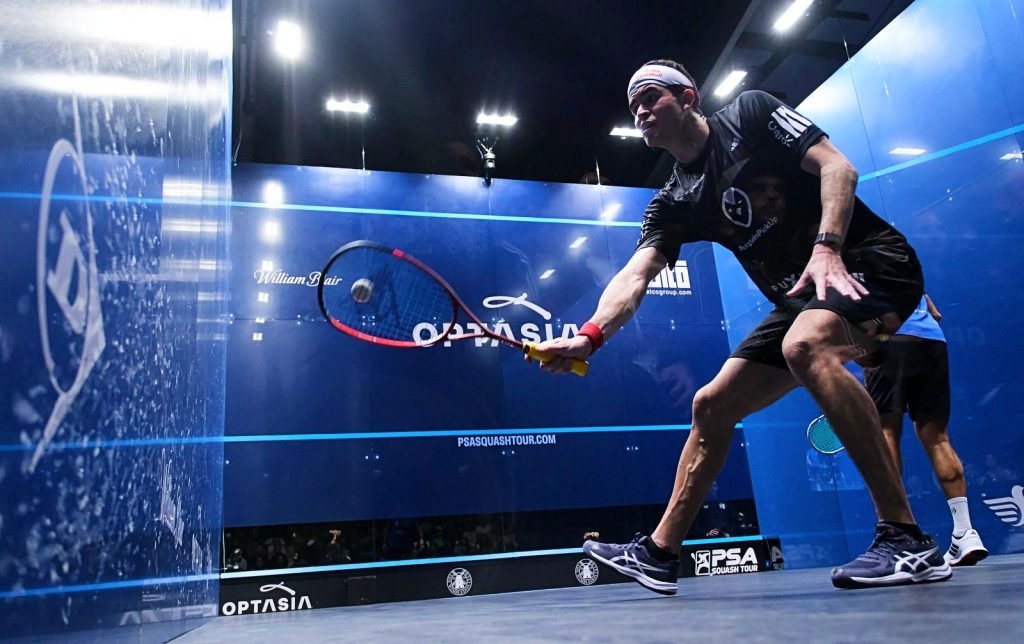
In short: padel feels like doubles chess at rally pace — social, layered, forgiving of a bad shot. Squash feels like a footrace and a fencing match sharing one small room — intense, personal, and utterly unforgiving of a loose one.
Learning Curve: First Hour, First Month
The first hour
Padel wins the first hour comfortably. The ball is familiar, the scoring is tennis, your partner covers half your mistakes, and the walls hand you second chances — a complete beginner can play a recognisable match in their first session, which is exactly why group bookings convert so many first-timers. The only genuinely new skill is the glass itself, and even that arrives as a pleasant surprise rather than a barrier.
Squash’s first hour is humbler. The concept could not be simpler — hit the front wall, above the tin — but the ball is dead until it warms, your early drives dribble into the tin or balloon off the back wall, and the movement pattern (lunge, recover, lunge) is unlike anything in social sport. Rallies are short, stoppages frequent, and your legs file a formal complaint. Almost everyone still enjoys it — the satisfaction of your first tight drive down the wall is real — but the game reveals itself over weeks, not minutes.
The first month
By week four the curves converge. The padel beginner is learning that the sport’s depth is positional: net discipline, lob selection, when to let the glass defend, how a pair moves as one unit — a tactical ceiling that keeps revealing itself for years. The squash beginner, meanwhile, has warmed the ball into life, grooved a drive, and discovered the sport’s hidden gift: solo practice. A squash court and a ball are a complete training session — drives, boasts and ghosting drills that build your game alone, on your own schedule, with no partner to coordinate. Padel simply cannot offer that; its learning happens at match pace, with three other people’s diaries attached.
Switching codes?
These two sports sit inside a wider family, and the transfer routes are well mapped on this site. Tennis players weighing padel should read our padel vs tennis comparison; padel players curious about the other indoor wall game should read padel vs pickleball for the open-court alternative; and squash players who have met its North American cousin can settle that argument in our squash vs racquetball guide. The one-line transfer summary for this pairing: padel borrows squash’s walls but tennis’s structure; squash borrows nothing — it is the original wall game, and it plays like it.
Physical Demand: Which Suits Your Body?
| Demand | Padel | Squash |
|---|---|---|
| Movement pattern | Constant repositioning with a partner: short sprints, side-steps, backpedalling for lobs, overhead reaching | Explosive lunges into all four corners, deep knee bends at full stretch, rapid recovery to the T — repeated every rally |
| Intensity shape | Steady and sustained: long rallies at moderate-to-high effort across a long session | Interval-like: fierce bursts inside rallies, short rests between games; the highest peaks of any mainstream racket sport |
| Surface forgiveness | Sanded artificial turf — softer landings, a little give on turns | Sprung wooden floor — responsive and reasonably kind, but the lunging load is the sport’s own |
| Serve strain | Underarm serve: minimal shoulder load | Full overhead-style swing on most shots, but the racket is light; shoulder load moderate |
| Common strain points | Calves and knees from coverage; elbow if technique gets wristy with a heavy racket | Glutes, quads and lower back from lunging; knees and Achilles under repeated explosive load |
| Contact and traffic | Partners share space but opponents stay across the net — contact is rare | You share the court with your opponent: lets and strokes (interference calls) are part of the game, and awareness matters |
The honest summary: squash is the harder workout, padel is the bigger one. Per minute of play, nothing in mainstream racket sport loads the legs like squash’s lunge-and-recover cycle, and the sport’s intensity ceiling is why it is so often recommended to time-poor athletes. But padel sessions run longer, rallies keep you moving almost continuously, and the load is shared across a pair — many players find a 90-minute padel match leaves them more thoroughly exercised than a stop-start first month of squash. If you are returning from injury or managing your knees, padel’s turf and shared court are the gentler entry; if you are fit, mobile and chasing intensity, squash will find your limits faster.
Cost and Access in the UAE
In the Emirates, this comparison is lopsided in availability and surprisingly even in cost shape.
Finding a game
Padel in the UAE is simply everywhere: purpose-built clubs across Dubai, Abu Dhabi and Sharjah, the majority indoor or shaded against the summer, with app-based booking, racket rental and coaching as standard. Arranging a game is a same-day activity — the barrier is finding three friends, not a court. Squash in the UAE is older, quieter and more club-bound: courts live mainly inside hotels, sports and leisure clubs and long-established multi-sport centres, many tied to memberships rather than open pay-and-play booking. There are fewer of them, and prime-time slots at popular clubs are genuinely contested — but the players who hold them are loyal, leagues and ladders are well run, and you will never need to assemble a group of four to justify a booking: one opponent, or even just you and a ball, is a complete session.
What you actually spend
Without quoting prices — they vary by club and season — the shape of the spend differs in an interesting way. Both sports rest on court hire, but padel’s fee is split four ways while squash’s is split two, so the per-player gap is narrower than the headline rates suggest. Gear tilts the other way: a padel racket is a mid-range purchase with strings nowhere in sight, but its pressurised balls are a constant consumable, replaced every few matches. A squash racket costs a similar amount, its strings need occasional replacing, and its balls — bought a few at a time and played until they shine — are one of the cheapest consumables in sport. Coaching, shoes and club socials exist in both worlds. The realistic verdict: squash is marginally cheaper to run week to week; padel is dramatically easier to start, because rental rackets and open bookings remove every excuse.
Which One Should You Choose?
Match the sport to the player, not the trend. Work down this list and stop at the first description that sounds like you:
- The social doubles player: Padel, and it is not close. Doubles is the game’s standard format, the four of you share every rally, the walls keep mismatched abilities in the same point, and the UAE club scene is built around group bookings and post-match socials. Squash doubles exists but needs a wider court and is a niche within a niche.
- The solo-competitive athlete: Squash. Singles is the standard, ladders and leagues are fiercely contested, rankings give you a number to chase, and solo drilling means your improvement never waits on anyone else’s availability. Padel’s competitive scene is real but it is a partnership — your ceiling is partly someone else’s diary and form.
- The tennis convert: Padel. The scoring is identical, the overheads and volleys transfer, and your groundstroke instincts mostly survive once the swings shorten — the only genuinely new skill is the glass. Squash will feel more foreign: the target is a wall, the ball is tiny and dead-cold at first, and your tennis footwork needs rebuilding around the T. Plenty of tennis players end up loving squash’s intensity, but padel is the shorter bridge.
- The fitness-first beginner: Squash, if intensity is the whole point — nothing legal burns like a squash rally once you can sustain one, and a 40-minute booking is a complete workout. The honest caveat: in your first month, short rallies mean padel may actually move you more per session. Choose squash for where your fitness ends up; choose padel if you want the workout to feel good from week one.
- You are short on people: Squash. One opponent is a match, and even alone you can train properly. Padel needs four diaries aligned.
- You are short on time: Squash again — the sport is an interval session by design. Padel rewards those who can give it an evening.
- You want the gentlest route back into sport: Padel. Softer surface, shared load, an underarm serve and a partner to carry your rusty first month.
- You love one-on-one rivalry: Squash. There is no more personal contest in racket sport than sharing a box with the person trying to beat you.
The Verdict
Padel is the better social sport; squash is the better duel. If your ideal session is four friends, long rallies, a scoreboard borrowed from tennis and a cold drink afterwards, padel was designed for you — and in the UAE it is the easiest sport in the country to start. If your ideal session is one opponent, one small room, and a workout that tests your legs and your nerve in equal measure, squash remains the purest contest racket sport has ever produced. Try both once if you can: a padel group booking and a squash taster session cost little, and within an hour of each you will know which box you belong in.
Frequently Asked Questions
Padel. The ball behaves like a tennis ball, the scoring is the tennis system, your partner covers half the court, and the glass walls give you second chances on defence — a complete beginner can play a recognisable match in their first session. Squash’s idea is simpler (hit the front wall above the tin) but its execution is harder: the ball barely bounces until it warms up, and the lunge-and-recover movement takes weeks to feel natural.
Squash, at equal skill levels. Its lunge-and-recover cycle over roughly 31 square metres per player produces fierce, interval-style effort, and a 40-minute match is a complete workout. Padel is a bigger but steadier load: rallies keep four players moving almost continuously across 50 square metres each for 60 to 90 minutes, so a full padel session can burn as much in total — it just peaks lower per minute.
It has the strongest claim. Squash combines the smallest ball, the most explosive movement pattern — repeated deep lunges with instant recovery — and an opponent sharing your space, all at rally speeds that leave no hiding place. Padel is more forgiving in every one of those dimensions: a bigger, livelier ball, a partner, and walls that rescue defence. Players who find padel too gentle usually find squash anything but.
Yes — and it is one of squash’s biggest practical advantages. Solo drilling (drives, boasts, volleys and movement ghosting against the front wall) is a standard part of squash training at every level, so a court, a ball and 30 minutes is a complete session with no partner required. Padel cannot offer this: the game needs four players, and even its practice drills are built around pairs.
No — they are different implements entirely. A padel racket is a short, solid, stringless bat with a foam core and a perforated face, at most 45.5 cm long. A squash racket is a long strung racket, up to 68.6 cm, with a head of up to 500 square centimetres. Neither is legal or sensible in the other’s game: the padel bat has no strings to bite a small rubber ball, and the squash racket’s strings and length are built for a ball a third of the padel ball’s size.
Squash, marginally, week to week. Both sports are built on court hire, but padel courts are usually split four ways and squash courts two ways, which narrows the per-player gap considerably. Squash then edges ahead on consumables: its rubber balls are cheap and long-lived, while pressurised padel balls need replacing every few matches. Padel is cheaper to try, though — club rental rackets and open group bookings mean your first games need no equipment purchase at all.
Padel, for most people. Its sanded artificial turf is the softer landing surface, the running load is shared with a partner, and the underarm serve spares the shoulder. Squash is played on a sprung wooden floor, which is reasonably kind, but the sport’s defining movement — deep lunges at full stretch, repeated every rally — loads knees, Achilles and lower back harder than anything in padel. Players managing joint issues usually start with padel.
Padel is the shorter bridge: identical scoring, familiar overheads and volleys, and groundstroke instincts that transfer once you shorten the swing — the glass is the only genuinely new skill. Squash asks more of a tennis player: a wall instead of a net as the target, a much smaller and deader ball, and footwork rebuilt around recovering to the T. Choose padel for a fast, social conversion; choose squash if you want a completely new and more physical challenge.