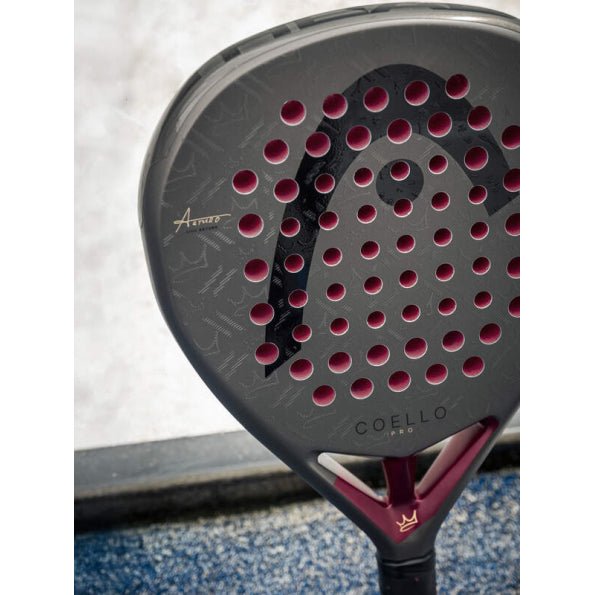
The senior player’s padel shoe decision is a specifications decision. Padel footwork is short, lateral and rotational — stops against the glass, pivots under the bandeja, quick shuffles at the net — and the shoes that fit that game are published with honest weights, named stability structures, named cushioning systems and outsoles patterned for sand-dressed artificial turf. This guide compares seven of them on exactly what their makers publish — overall weight as each maker states it, lateral-support features as each maker describes them, cushioning systems by the names each maker gives them, outsole patterns as each maker states them, and fit options as each maker offers them — and nothing else. No health claims, no promises: just the spec sheets, read properly.
⚡ TL;DR — The Short Answer
For the best all-round senior pick, buy the Mizuno Wave Exceed Tour 6 — the lightest published weight in this guide at 330 grams, a padel-specific outsole, and Mizuno’s Wave Plate doing the stability work. The Babolat Movea 2 Men is the lateral-lockdown pick, with a STRAP-LOCK belt over an Omni Michelin sole at 345 grams. The ASICS Gel-Challenger 14 Padel is the sidewall-stability pick, built around ASICS’s DYNAWING structure. The Wilson Rush Pro Ace Clay is the wide-fit pick — the only published 2E generous fit here. The Wilson Bela Pro Padel is the pivot pick, with a circular vortex outsole designed for rotation. The Bullpadel Hack Vibram 25I is the maximum-support build at 360 grams, and the HEAD Motion Team Padel is the Mondo-tested grip pick, its outsole pattern developed with the World Padel Tour’s surface provider.
Quick Picks — Best Padel Shoes for Seniors at a Glance
330 g published weight, a padel-specific outsole and a Wave Plate — the lightest complete spec here.
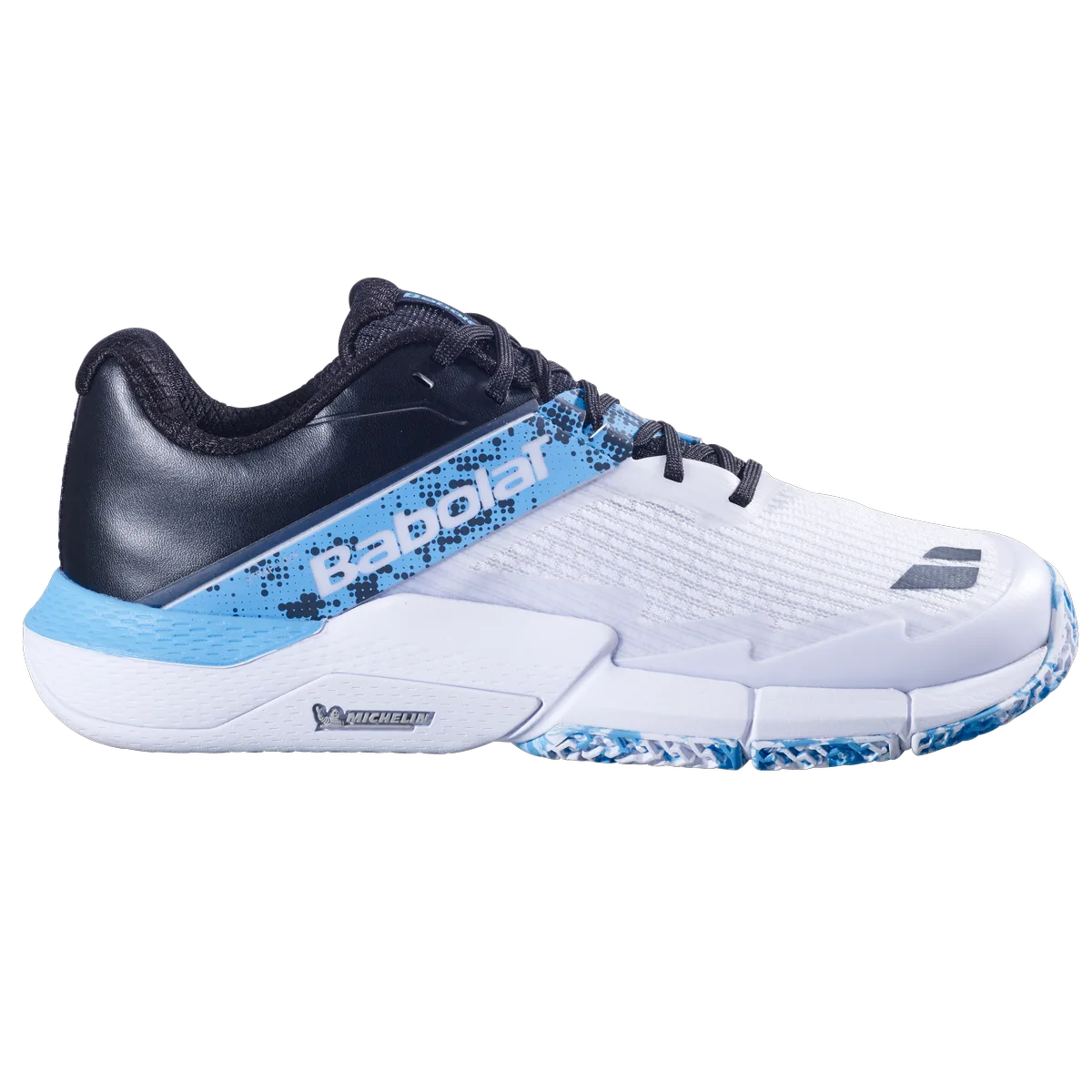
A STRAP-LOCK belt and a raised midsole wall over an Omni Michelin sole — 345 g, per Babolat.
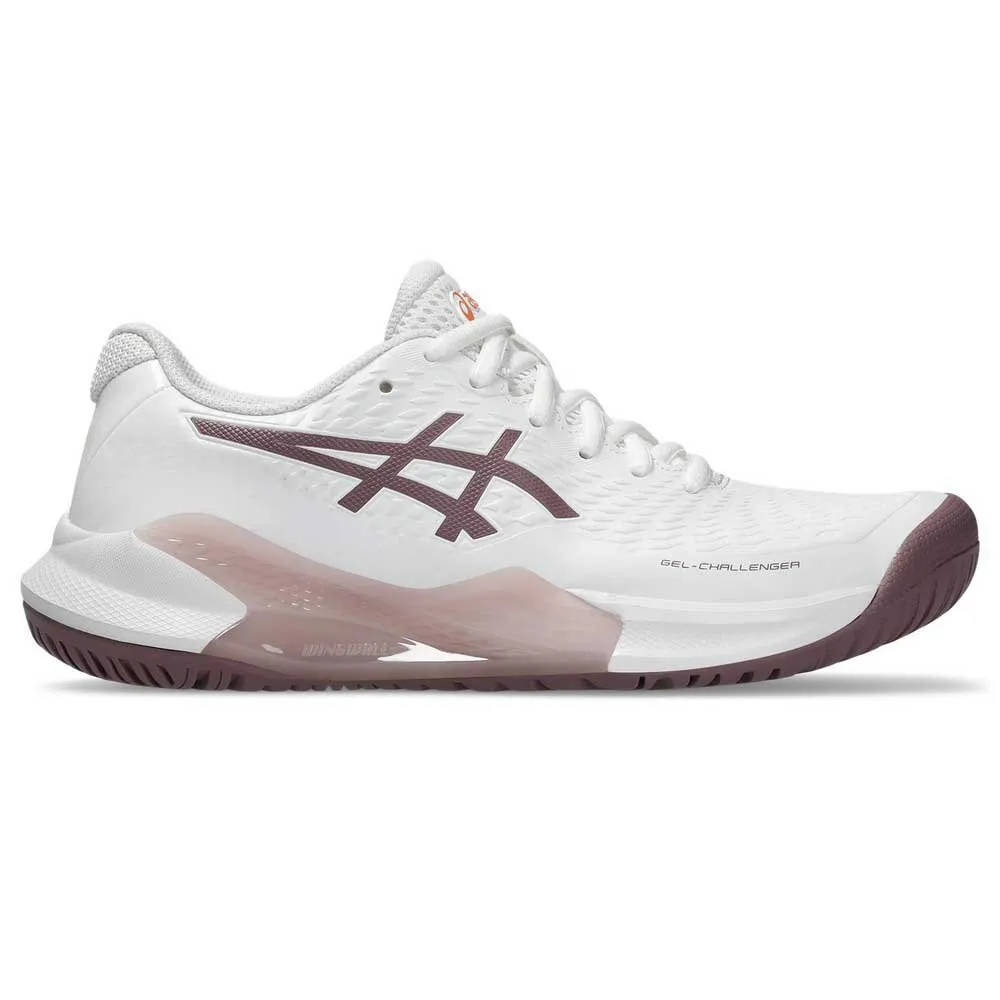
DYNAWING sidewall structure and GEL cushioning in ASICS’s padel-specific Challenger.
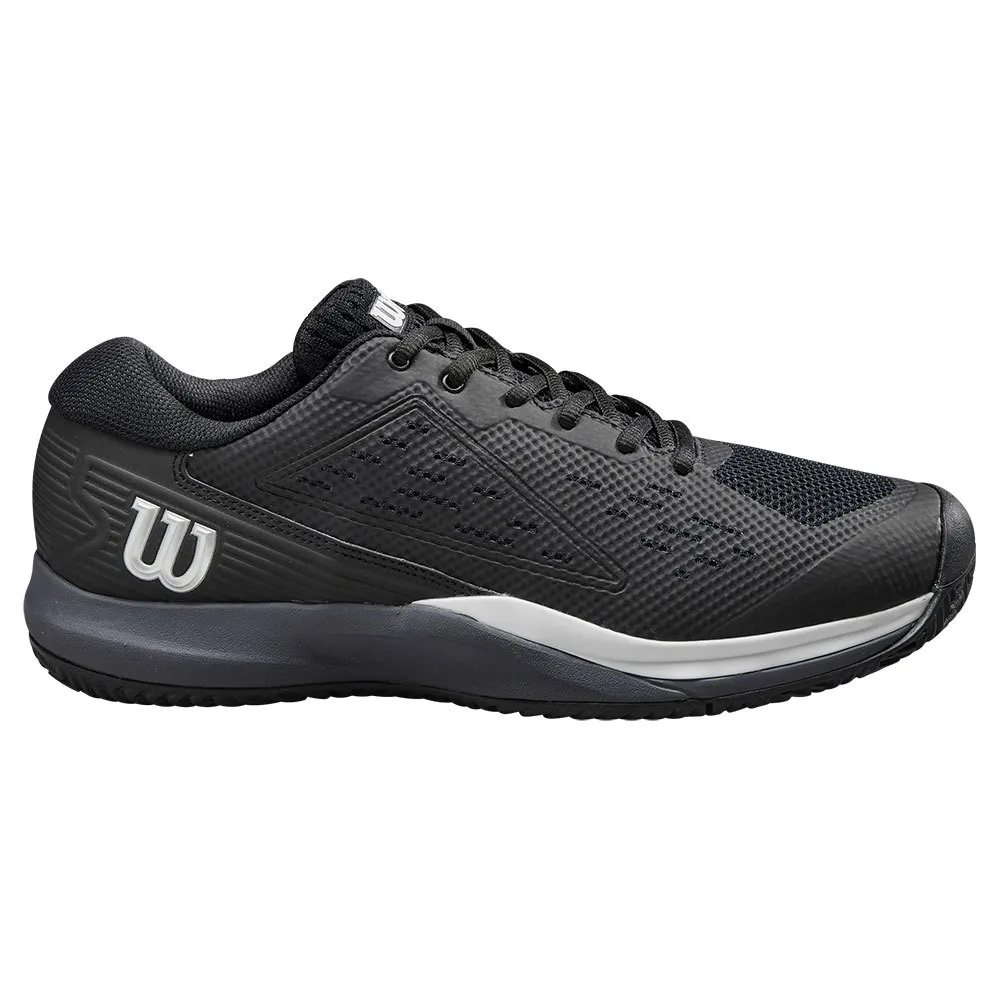
The only published 2E generous fit in the guide — Wilson’s widest Rush Pro last, on a clay sole.
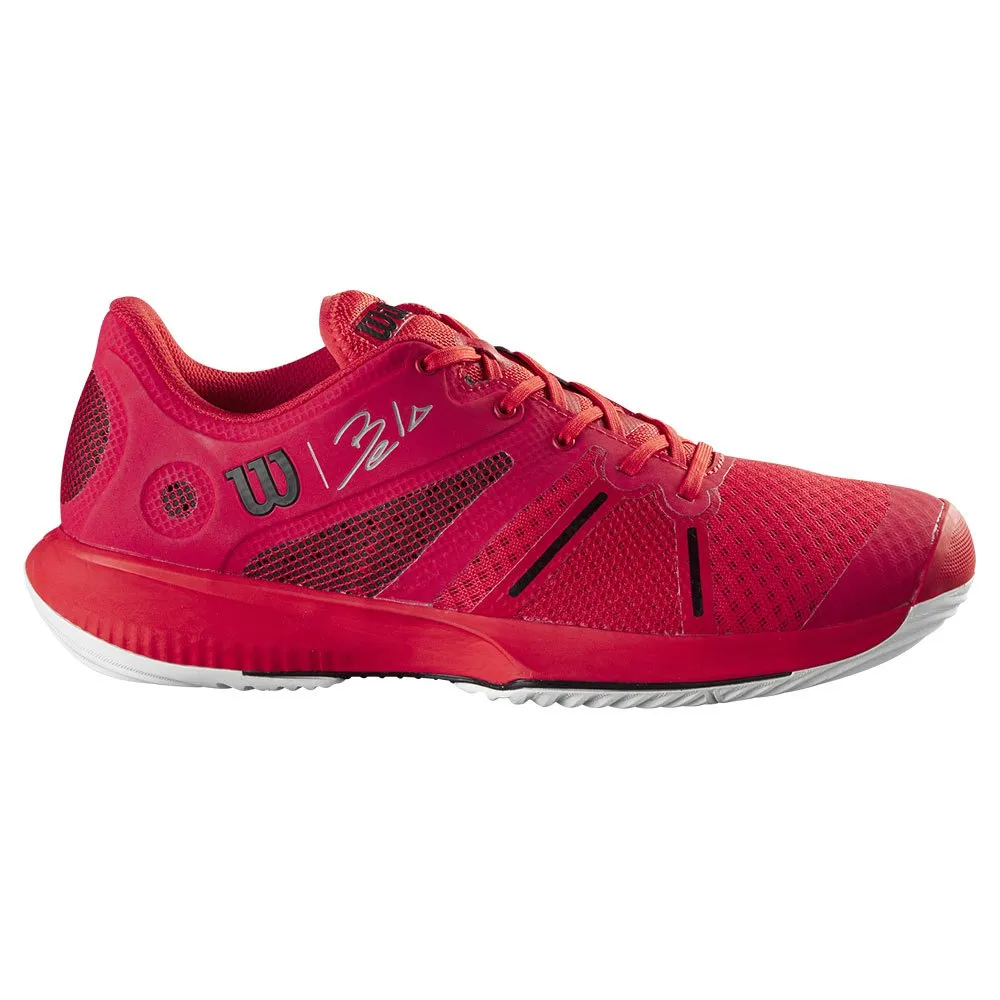
A circular Optimum Grip outsole with vortex grooves, engineered for rotation, per Wilson.
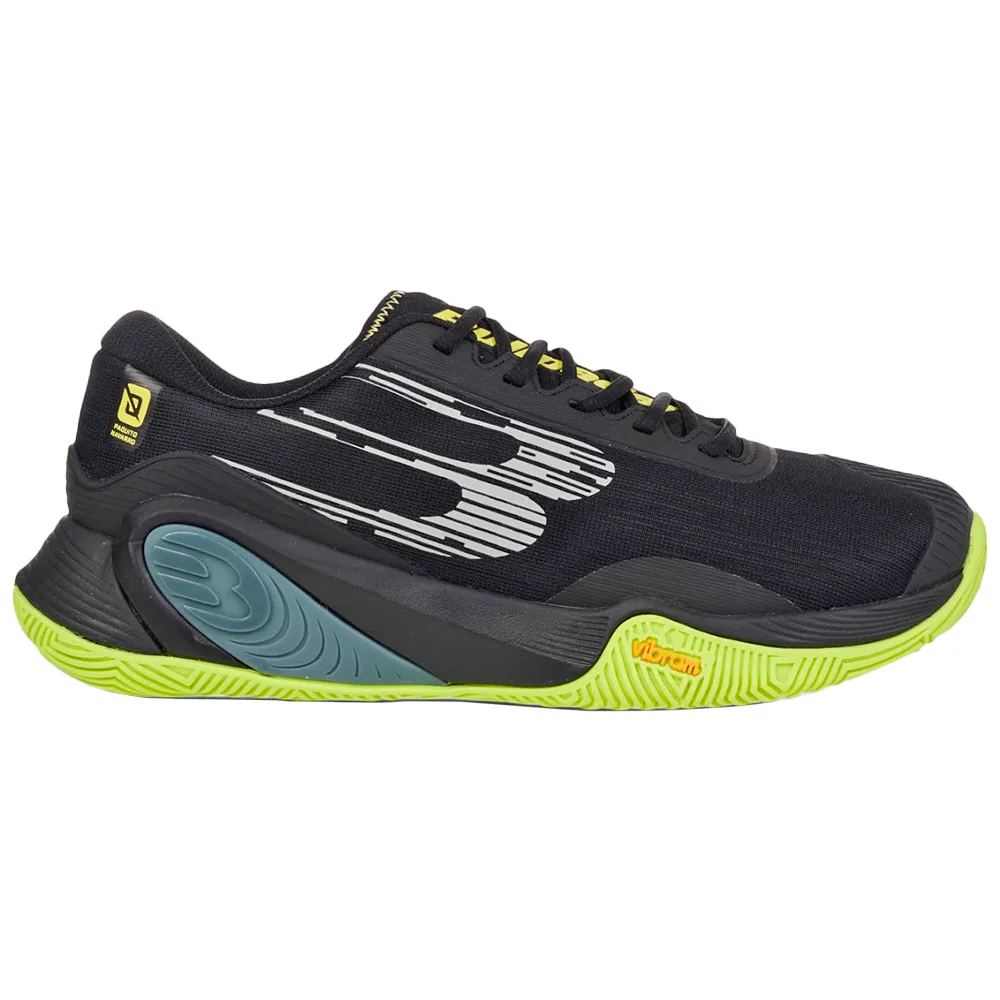
360 g of structure: X-Trabase fin, rear stabilizer and a Vibram Hybrid 360º sole.
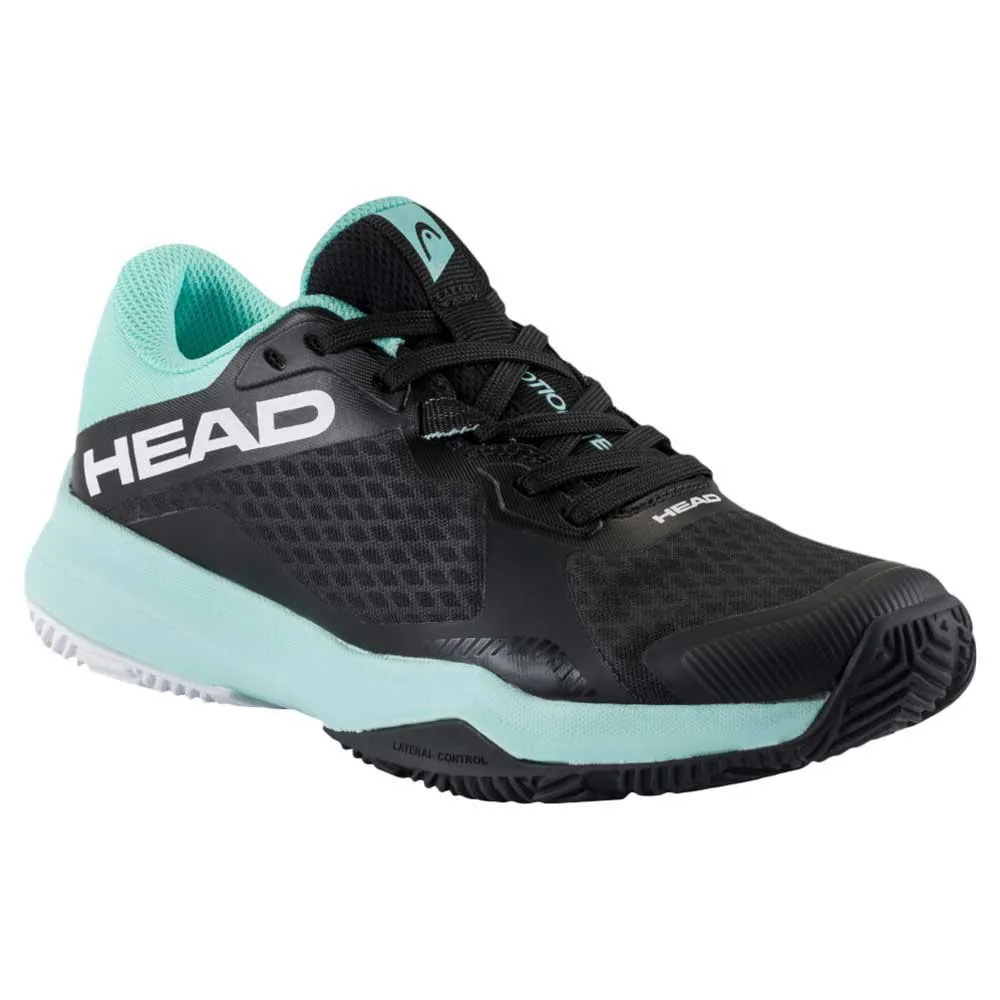
An outsole pattern tested with MONDO, plus Lateral Control and a Lockdown Strap.
In This Guide
The Senior Padel Shoe Decision: Weight, Lateral Support and Grip, As Makers State Them
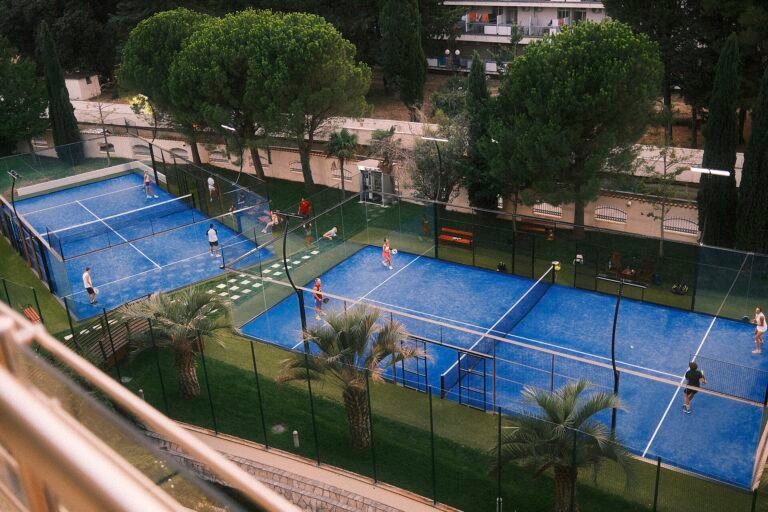
Padel is not tennis on a smaller court, and its footwear proves it. The game is played on sand-dressed artificial turf inside glass walls, and the movement pattern is a loop of short lateral shuffles, hard two-foot stops, pivots under overheads and quick forward steps to the net. Makers build for that loop with a recognisable toolkit: an omni or clay-style outsole — small studs or a herringbone pattern that grips turf without locking solid on it — a lateral support structure that holds the foot on the shoe’s platform when it stops sideways, and a named cushioning system in the midsole. Every card in this guide is a padel shoe, or a clay-court version retailed for padel, that publishes all three. That is the entry ticket, and it is a specification fact, not a marketing label.
Within that shared brief, the senior player’s version of the decision has a distinct shape, and it is written in the makers’ own catalogues. Overall weight matters more when the game is built on hundreds of short steps rather than long baseline rallies, so this guide prints every weight exactly as its maker states it — with the size basis where the maker publishes one, a measured figure labelled as measured where the maker publishes none but a specialist source has weighed the shoe, and an honest “not published” where neither exists. Stability matters in a specific, mechanical sense: the features to compare are the ones makers describe — a sidewall structure, a midfoot shank, a strap or chassis — because those are the parts of the shoe that resist the sideways roll of a hard stop. And fit matters as sizing: most padel shoes are published in a standard fit only, so the guide flags the one card here with a published wide option and says plainly which cards have none.
What this guide does not do is just as deliberate. Cushioning systems are reported by the names their makers give them — GEL, KPRS-X, ENERZY NXT, R-DST+ — as construction and specification. Stability features are reported as the structures their makers describe. Nothing in these pages presents a shoe as anything other than footwear, because a spec sheet is a specification — and this guide will not dress one up as anything else. Read the numbers, compare the structures, match the outsole to your club’s courts and the fit to your foot: that is the whole method.
One boundary before the picks. This page owns the senior padel-shoe decision only. The full all-player field belongs to our pillar guide to the best padel shoes; the women’s fit and size-range decision belongs to our guide to the best padel shoes for women; and junior sizing has its own guide, written around the junior size ranges makers actually publish. None of their models is re-carded here. The same spec-first method runs through the rest of this set: our guide to the best padel rackets for seniors compares lightweight frames on published weights and balances, and our guide to the best tennis shoes for seniors applies the same reading to the tennis shoe market. If you are returning to the game itself, our how to play padel guide covers the footwork these shoes are built to serve.
How to Read a Padel Shoe Spec Sheet: Weights, Outsoles and Fit Labels
Weight is the first spec to interrogate — and the least standardised. Some makers publish a weight in their own product data: Babolat publishes the Movea 2 at 345 grams, Bullpadel the Hack Vibram 25I at 360 grams, Mizuno the Wave Exceed Tour 6 at 330 grams. Others publish none at all, and for those cards this guide either prints a measured figure from a specialist source that weighs the shoes it tests — labelled measured, with the size it was measured in — or states plainly that no weight is published. What you should never do is compare one maker’s published figure against another listing’s shipping weight or a retailer’s rounded guess. Read the basis on each card, compare like with like, and the seven cards sort cleanly: the Mizuno at the light end, the Bullpadel at the structured end, and a 30-gram published band between them that is the real senior market.
The outsole pattern is the padel-specific spec. Makers describe three families of pattern in this guide. The omni pattern — small circular studs, as on the Movea 2’s Michelin sole and Bullpadel’s micro-stud areas — is designed for sand-dressed turf: the studs bite through the sand layer to the turf beneath and clear sand as you move. The herringbone or clay pattern — the Rush Pro Ace Clay’s Duralast sole and the herringbone half of Bullpadel’s Hybrid 360º — channels loose surface material out of the tread so the shoe can grip and then release into a controlled slide. And the rotational pattern — the Bela Pro’s circular vortex grooves, Mizuno’s padel-specific outsole — is built around the pivot: padel players turn under the ball constantly, and a circular pattern under the forefoot is the makers’ mechanical answer. None of the three is universally best; the buying guide below matches each to the courts you actually play on.
Stability and cushioning are vocabularies, not scores. Each maker names its own systems, and the names are not interchangeable: ASICS’s DYNAWING is a sidewall structure, HEAD’s Lateral Control is a stability element on the outer side of the sole, Babolat’s STRAP-LOCK is a belt that wraps the foot, Wilson’s Kaos Chassis and 4D Support Chassis are underfoot frames, Bullpadel’s X-Trabase is an outer fin on the sole. Cushioning names work the same way — GEL, KPRS-X, ENERZY NXT, R-DST+, phylon are different materials and placements, not grades of the same thing. The cards print each system as its maker describes it, attributed, so you can compare structures rather than slogans. Fit labels complete the sheet: “standard” on Babolat’s data, “generous 2E” on Wilson’s, a sock construction on HEAD’s and Bullpadel’s builds. Those labels are the sizing facts of each shoe, and for a senior buyer choosing between two otherwise equal cards, they are often the deciding ones.
The 7 Best Padel Shoes for Seniors, Compared
Seven shoes, one shared brief — padel outsoles, named stability structures and published weights, read the way a senior player actually uses them. Start with the card that matches your game.
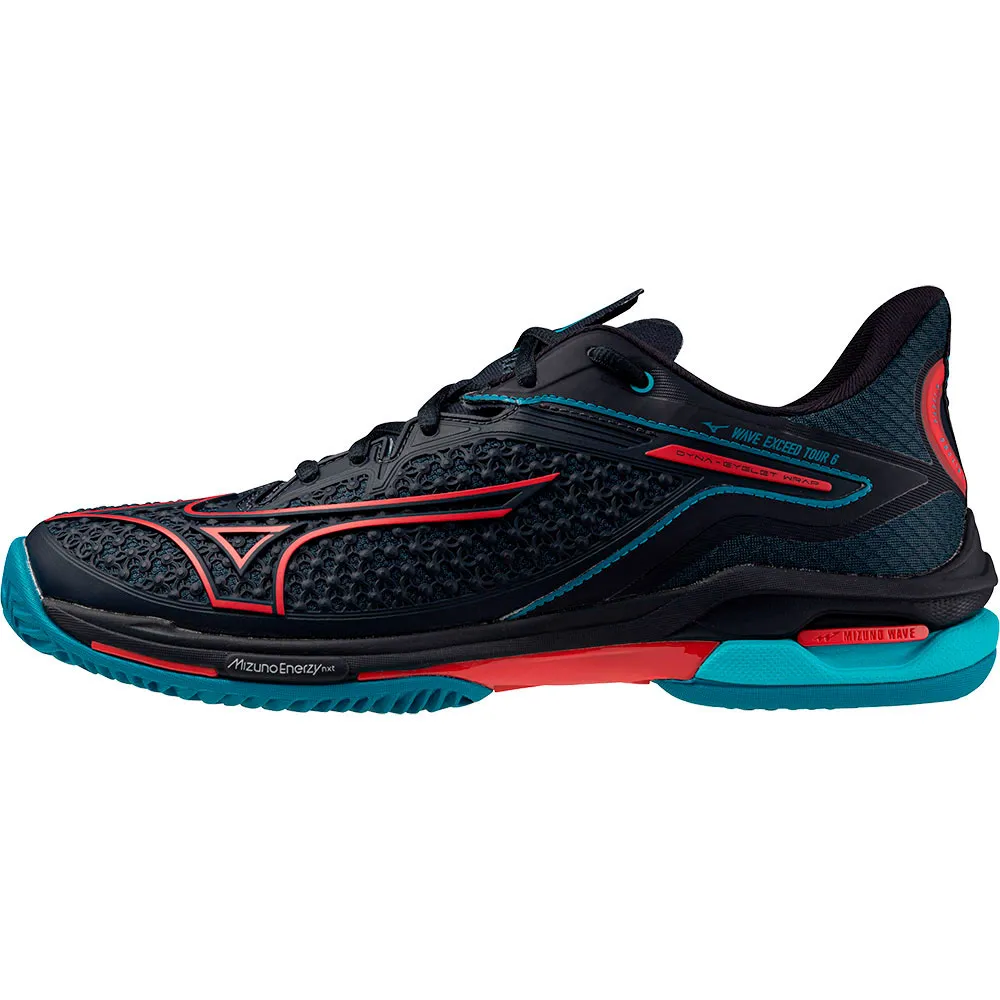
Mizuno Wave Exceed Tour 6
The lightest complete senior specification here — 330 grams as Mizuno publishes it, a padel-specific outsole, and a Wave Plate doing the stability work.
Start with the number, because it decides this card’s rank: 330 grams, Mizuno’s published specification weight for the Wave Exceed Tour 6, is the lightest maker-published figure in this guide — and it is not a stripped-down shoe that bought its weight by giving up structure. Mizuno’s padel version of the Tour 6 is built around a newly developed padel-specific outsole that Mizuno says is designed for better grip on the latest generation of padel courts, and around the midsole pairing of MIZUNO ENERZY NXT with a MIZUNO ENERZY INSOLE at the ball of the foot, which Mizuno positions for the quick starts and turns a speed model is built for. For a senior player whose game is hundreds of short steps, the lightest published shoe that still carries a full stability structure is the natural #1.
The stability structure is the Wave Plate, updated for this generation: Mizuno describes the update as an extension of the plate to the forefoot on the outside only, with the D-Flex Groove design adapted into it — the groove being Mizuno’s diagonal midfoot channel for turning movements. Mizuno describes its Wave technology itself as a midsole shape that provides both cushioning and stability, and the PoWnCe material in the midsole is Mizuno’s lightweight cushioning layer. The fit story is the Dyna-Eyelet Wrap, an eyelet structure with large cut-outs that Mizuno says wraps the whole foot, over a softened tongue and a 3D-SOLID upper with extra coverage on the inner instep where wear concentrates. One transparency note, in this guide’s standard form: the 330-gram figure is Mizuno’s specification, and RunRepeat, which weighs the shoes it tests, measured 332 grams in a men’s US 9 — the two figures agree, and both are printed so the comparison stays honest.
What we like
- The lightest maker-published weight here — 330 g, confirmed at 332 g measured
- A padel-specific outsole, developed for padel courts, per Mizuno
- Wave Plate stability and ENERZY NXT cushioning in one light build
- Dyna-Eyelet Wrap gives a published wrap-fit lacing system
Worth knowing
- Mizuno positions it for advanced, speed-minded players — the brief is agility first
- Standard fit only — no wide option is published for this model
As an Amazon Associate we earn from qualifying purchases.
Babolat Movea 2 Men
Lockdown by construction — a belt that wraps the foot, a raised midsole wall, and an Omni Michelin sole, at 345 grams per Babolat.
Every figure on this card comes from Babolat’s own product data, and the data describes the most deliberately locked-down shoe in the guide. The weight is 345 grams, the fit standard, the drop 10 mm, the surface type Omni. The stability story is two-part, as Babolat tells it. First, the STRAP-LOCK: a belt that wraps around the foot, including over the tongue, which Babolat says provides the shoe’s stability by holding the foot in place. Second, the sole unit itself: Babolat equipped the Movea 2 with a new sole whose midsole rises externally on the side, which Babolat describes as lateral reinforcement for defensive and offensive positions alike. A senior player whose priority is that the foot stays centred on the platform through hard sideways stops is this card’s audience — the preference is a construction preference, stated as such.
Underneath sits the Michelin Padel sole, the long-running Babolat–Michelin collaboration: Babolat describes its studs as adapted to the sand and synthetic turf of padel courts, and the Omni classification in its own data is the clay-style pattern family this guide’s decision is built on. 360° Flex grooves in the outsole are Babolat’s published route to forefoot flexibility. The cushioning system is KPRS-X, which Babolat describes as a highly cushioning EVA insert positioned beneath the heel, inside a moulded EVA midsole; the COMF+ insole adds what Babolat calls extra cushioning at the heel, in a foam it states is 83% recycled. The upper is a breathable mesh — 70% recycled, per Babolat — with its MCS Mesh Cooling System. It is the most completely documented card here: every claim traces to the maker’s own listing, which is exactly what a spec-first guide wants at #2.
What we like
- Two published lockdown systems: STRAP-LOCK belt plus a raised midsole wall
- Every spec verified on Babolat’s own product data — weight, Omni type, drop, fit
- Michelin Padel sole with studs specced for sand and synthetic turf, per Babolat
- KPRS-X heel insert and COMF+ insole give a named, layered cushioning spec
Worth knowing
- Standard fit only — Babolat publishes no wide version of the Movea 2
- The 10 mm drop is the highest published here; players who prefer a flatter shoe should note it
As an Amazon Associate we earn from qualifying purchases.
ASICS Gel-Challenger 14 Padel
ASICS’s stability brief in its padel-specific Challenger — a DYNAWING sidewall, GEL cushioning and a full-length padel outsole.
This card stands on ASICS’s own padel product page, and the page’s brief is stability from the first line: ASICS says the Gel-Challenger 14 Padel creates the stability a player needs when covering the baseline, with a supportive upper that keeps the foot locked in on the shoe’s platform and a reinforced feel when dropping back for deep balls. The named structure is DYNAWING, placed in the sidewall, which ASICS says improves stability during side-to-side movements — a physical sidewall element you can see in the product photography, doing its work exactly where a lateral stop loads the shoe. Against the strap-based lockdown of the Movea 2 above, this is the other honest route to the same decision: build the wall into the shoe rather than belt the foot down inside it.
ASICS completes the published picture with a separated heel construction in the outsole, which ASICS says helps produce a more stable platform during abrupt landings, and its standard feature list for the model: rearfoot GEL technology cushioning, a PGUARD toe protector, an OrthoLite sockliner and an AHARPLUS outsole compound. ASICS’s padel listings describe the padel version’s outsole as a full-length, padel-specific design — the full-length layout increases the contact area with the court, in the padel listings’ description. The weight needs this guide’s standard transparency: ASICS publishes no weight for this SKU, so the card prints the figure from a source that weighs what it tests — RunRepeat measured the model at 354 grams in a men’s US 9, labelled measured wherever it appears. That puts it mid-pack here: not the light card, but the sidewall card.
What we like
- DYNAWING is a visible, published sidewall structure — stability by construction
- A genuinely padel-specific ASICS SKU, verified on ASICS’s own pages
- Separated heel construction addresses the landing platform, per ASICS
- Full-length padel outsole maximises court contact, per ASICS padel listings
Worth knowing
- ASICS publishes no weight — the 354 g figure is measured, not a maker spec
- Standard fit only — no wide version of the padel SKU is published
As an Amazon Associate we earn from qualifying purchases.
Wilson Rush Pro Ace Clay
The wide-fit card — Wilson’s published 2E generous last, a 4D Support Chassis and a clay-pattern Duralast sole retailed for padel.
This card is reported with deliberate transparency, because its value is a fit fact and its positioning needs one honest sentence. Wilson positions the Rush Pro Ace as its generous-fit all-court model — Wilson calls it the most generous fit in the Rush Pro line, built on a 2E width last — and the Clay version, with its clay-pattern sole, is the version padel specialists retail for padel courts, where a clay-style herringbone is one of the two classic padel outsole families. It is carded here for one decisive reason: it is the only shoe in this guide with a published wide fit. Every other card is a standard last. For the senior player who has spent years squeezing into standard padel shoes, that single published fact outweighs any technology name in this guide — width is a sizing specification, and this is the card that publishes it.
The rest of the spec sheet is Wilson’s established Rush Pro toolkit, published in full. The 4D Support Chassis is a symmetrical heel-toe chassis that Wilson says delivers stability and control over pivot movements. R-DST+ is Wilson’s midsole foam, which Wilson describes as its best combination of cushioning and rebound, over an OrthoLite EVA Molded sockliner. The DF2 geometry sets a 9 mm heel-toe drop, the Sensifeel upper is Wilson’s minimally layered construction, and the outsole is Duralast, Wilson’s high-density rubber compound, in the full herringbone tread of the Clay version. Wilson publishes no weight for the model; RunRepeat measured it at 357 grams, printed here labelled as measured. Buy it for the last, and the rest of the sheet is a competent, fully published supporting cast.
What we like
- The only published wide fit here — a genuine 2E last, per Wilson
- A complete Wilson spec sheet: chassis, foam, drop and compound all named
- The Clay version’s herringbone is a classic padel outsole family
- Generous forefoot room is a sizing fact, not a comfort slogan
Worth knowing
- Wilson’s own positioning is all-court; the Clay version is the padel-retail one — check “Clay” on the listing
- Wilson publishes no weight — the 357 g figure is measured, not a maker spec
- The herringbone is a clay pattern, not an outsole developed specifically for padel
As an Amazon Associate we earn from qualifying purchases.
Wilson Bela Pro Padel
The rotation specialist — a circular vortex outsole and a double chassis, developed with Fernando Belasteguín, per Wilson.
Padel’s signature footwork moment is the turn: the pivot under a bandeja, the rotation out of a back-wall defence, the spin on the spot at the net. Wilson built the Bela Pro around that moment, and its own padel footwear guide describes the design plainly — a circular outsole that provides grip in all playing conditions with maximum flexibility at the front. Wilson calls the system Optimum Grip: a biomechanically engineered outsole with vortex grooves in the forefoot and heel, with rubber removed in strategic places, which Wilson says is designed to optimise rotation and pivot movement in all directions on the padel court. The shoe was developed in collaboration with Fernando Belasteguín and is, per Wilson, his shoe of choice on court — a veteran player’s own match shoe, which is as relevant a senior credential as a spec sheet can carry, reported here exactly as Wilson publishes it.
The underfoot frame is the Kaos Chassis, a double chassis construction that Wilson describes as working through two mechanisms: a flexible arch support for agility, and a lateral support for torsional control and overall stability. Cushioning is R-DST+ midsole foam with an OrthoLite EVA Molded layer, the drop is DF2 9 mm, the compound is Duralast, and the upper is Sensifeel 2.0, Wilson’s minimally layered engineered mesh. The honest counterweight is this guide’s recurring one: Wilson publishes no weight for the Bela Pro, so this card cannot be weight-shopped against the Mizuno or the Babolat — if the published-weight column is your first filter, those cards answer it and this one, by its maker’s choice, does not. Buy it for the outsole’s published brief: rotation.
What we like
- The only circular, rotation-first outsole brief in the guide, per Wilson
- Kaos Chassis publishes both halves of its design: arch flex and lateral support
- Developed with Belasteguín and his match shoe, per Wilson
- A full Wilson technology sheet: R-DST+, DF2, Duralast, Sensifeel 2.0
Worth knowing
- Wilson publishes no weight for this model — none is claimed here
- A rotational outsole is a preference: players who want stud or herringbone bite should read the Movea 2 and Hack cards
As an Amazon Associate we earn from qualifying purchases.
Bullpadel Hack Vibram 25I
The structure anchor — 360 grams of published stability hardware: an X-Trabase fin, a rear stabilizer and a Vibram hybrid sole.
Every guide needs its honest heavyweight, and this is ours: at 360 grams, the Hack Vibram 25I is the heaviest published shoe here, and Bullpadel’s own specification shows exactly what the grams buy. The stability hardware is the longest list in the guide. The X-Trabase is an outer fin on the sole that Bullpadel says is there for greater stability. A rear stabilizer sits in the heel area. And the Lateral Movement system is a central channel in the sole that Bullpadel says offers cushioning and a larger support surface to the heel during side movements, with a TPU heel piece that helps the phylon midsole re-establish its initial shape. This is the shoe Bullpadel lists for Paquito Navarro, positioned by its maker for professional and advanced players who use a shoe intensively — a brief this guide reports as positioning, and whose published hardware you can inspect item by item.
The outsole is a Vibram sole in Bullpadel’s Hybrid 360º pattern, and Bullpadel splits its duties explicitly: the herringbone area provides the grip, while the micro-stud area provides grip plus the release for lateral movements and turns — the two classic padel pattern families combined in one sole, which makes this the most versatile published outsole here for players who move between sand-heavy and cleaner courts. The midsole is phylon, with an OrthoLite removable insole and a Stitch Insole of EVA rubber with textile reinforcement that Bullpadel says enhances cushioning. The upper is a seamless Thermo Sealed technical mesh over a Sock Fit lycra inner that Bullpadel describes as a slim, second-skin fit, with a Toughtoe injected rubber toe cap and Sole Shield raised sole sides. The trade is printed without apology: the most support hardware here, at the highest published weight, in the slimmest fit — read all three facts and choose with open eyes.
What we like
- The most published stability hardware in the guide: fin, stabilizer and channel
- Hybrid 360º combines both classic padel patterns in one Vibram sole
- A complete Bullpadel spec, weight included — 360 g as published
- Toughtoe and Sole Shield address the shoe’s own wear points, per Bullpadel
Worth knowing
- The heaviest published shoe here — a deliberate stability trade
- The Sock Fit is a slim fit, per Bullpadel — the opposite end from the 2E card above
- Bullpadel positions it for intensive, advanced use; casual players are over-buying structure
As an Amazon Associate we earn from qualifying purchases.
HEAD Motion Team Padel
Grip developed with the tour’s own surface provider — a MONDO-tested outsole, Lateral Control and a Lockdown Strap.
HEAD’s Motion Team Padel carries the most credentialled outsole story in this guide. HEAD says the shoe was designed specifically for the fast, 360-degree movement of a padel court, and that its advanced outsole pattern was tested with MONDO — the official surface provider of the World Padel Tour — to provide multi-directional grip that lets a player change direction with confidence. That is a development claim with a named partner who makes the actual surfaces the pattern runs on, and it is reported here exactly as HEAD publishes it. For a senior player whose home club runs sand-heavy courts and whose game is built on reliable footing rather than outright speed, an outsole developed against the tour’s own turf is a rational first filter.
The stability build is a published trio. Lateral Control is HEAD’s stability technology on the outer side of the sole. A 3D TPU midfoot shank provides the torsional structure through the middle of the shoe. And the Lockdown Strap is integrated into the lacing system to hold the midfoot in place — HEAD’s strap-based answer to the same lockdown decision Babolat answers with a belt. The midsole is a cushioned EVA, the upper uses soft synthetic materials with comfortable lining, and Drift Defense protects the toe and medial areas, per HEAD. Two honest limits close the card. HEAD publishes no weight for the Motion Team Padel in the sources checked, so — like the Bela Pro — it cannot be weight-shopped against the published figures above. And its cushioning specification is the plainest here: a cushioned EVA midsole, without the named multi-part systems of the Mizuno or Babolat cards. Grip and lockdown are this shoe’s published strengths; buy it on those.
What we like
- An outsole pattern tested with MONDO, the tour’s surface provider, per HEAD
- A complete published stability trio: Lateral Control, TPU shank, Lockdown Strap
- A padel-specific HEAD model, distinct from the Motion Pro flagship
- Drift Defense covers the toe and medial wear zones, per HEAD
Worth knowing
- HEAD publishes no weight for this model — none is claimed here
- The cushioning spec is plain EVA — the least elaborated system in the guide
As an Amazon Associate we earn from qualifying purchases.
Side-by-Side Comparison Table
| Shoe | Weight | Outsole, As Maker States | Stability Tech | Cushioning | Fit |
|---|---|---|---|---|---|
| Mizuno Wave Exceed Tour 6 Best Overall | 330 g (published) | Padel-specific rubber | Wave Plate · D-Flex Groove | ENERZY NXT · PoWnCe | Standard |
| Babolat Movea 2 Men Best Lateral Lockdown | 345 g (published) | Omni — Michelin Padel | STRAP-LOCK · Raised midsole wall | KPRS-X EVA insert | Standard |
| ASICS Gel-Challenger 14 Padel Best Sidewall Stability | 354 g (measured, US 9) | Padel-specific, full-length | DYNAWING sidewall | Rearfoot GEL | Standard |
| Wilson Rush Pro Ace Clay Best Wide Fit | 357 g (measured) | Duralast clay herringbone | 4D Support Chassis | R-DST+ | 2E generous |
| Wilson Bela Pro Padel Best for Pivots & Turns | Not published | Optimum Grip circular vortex | Kaos Chassis | R-DST+ | Standard |
| Bullpadel Hack Vibram 25I Best Maximum-Support Build | 360 g (published) | Vibram Hybrid 360º (herringbone + micro studs) | X-Trabase fin · Rear stabilizer | Phylon · OrthoLite | Slim sock fit |
| HEAD Motion Team Padel Best Mondo-Tested Grip | Not published | Advanced pattern, MONDO-tested | Lateral Control · 3D TPU shank | Cushioned EVA | Standard |
Read honestly, the table sorts into three groups. The published-weight group — Mizuno 330 g, Babolat 345 g, Bullpadel 360 g — is the only column-to-column weight comparison in the guide, and it tells a clean story: the lightest card and the most structured card are 30 published grams apart, with the Movea 2’s lockdown build between them. The measured group — the Challenger at 354 g and the Rush Pro Ace at 357 g, both weighed by a specialist source in a men’s US 9 — slots credibly into the same band, but those figures come from a scale, not a spec sheet, and are labelled accordingly. The unpublished group — the Bela Pro and the Motion Team — cannot be weight-compared at all, because their makers have not published a figure; they stand or fall on their outsole briefs, which are the two most distinctive in the guide. The fit column is the quietest and, for many senior buyers, the most decisive: six standard lasts, one slim sock fit, and a single published 2E. If width has ever been your problem, the table has one row for you, and it is not close.
Buying Guide: Matching the Spec Sheet to Your Game
1. Start With the Weight Column — and Read Its Basis
Weight is this guide’s first filter because padel footwork multiplies it: hundreds of short steps and stops per match make a 30-gram published difference a real spec difference, not a rounding error. But only compare figures with the same basis. Published against published — the Mizuno at 330 grams against the Babolat at 345 and the Bullpadel at 360 — is a fair comparison. Measured against measured is fair. A published figure against a measured one is approximate, and this guide labels every figure so you always know which you are holding. Where a maker publishes nothing, the honest options are a labelled measured figure or no figure at all — and this guide uses both, card by card, rather than inventing a number to complete the table.
2. Match the Outsole Pattern to Your Club’s Courts
Ask one question at your club: how much sand sits on the turf? On sand-heavy courts, stud and herringbone patterns earn their place — the Movea 2’s Omni Michelin studs bite through the sand layer, the Rush Pro Ace Clay’s herringbone channels it, and the Hack’s Hybrid 360º runs both systems in one sole. On cleaner, newer courts, the rotational briefs come into their own: the Bela Pro’s circular vortex pattern is Wilson’s published design for pivoting, and Mizuno’s padel-specific outsole is its answer for the latest-generation surfaces. The Motion Team’s MONDO-tested pattern is the hedge: developed with the World Padel Tour’s own surface provider, it is HEAD’s published attempt at multi-directional grip across conditions rather than a specialist in any one of them.
3. Decide How You Want the Lockdown Done
Every card holds the foot on its platform — they just publish different machinery for the job, and the choice is a genuine preference. Straps and belts (Babolat’s STRAP-LOCK, HEAD’s Lockdown Strap) wrap the foot from outside. Sidewalls and walls (ASICS’s DYNAWING, Babolat’s raised midsole) build the containment into the shoe’s structure. Chassis and fins (Wilson’s 4D Support and Kaos chassis, Bullpadel’s X-Trabase fin and rear stabilizer) work underfoot, controlling the platform itself. None of these routes is a health claim and none is presented as one anywhere in this guide: they are three published engineering answers to one mechanical question — how does the shoe keep foot and platform aligned through a lateral stop — and your own history in lace-up versus structured shoes is the best guide to which you will prefer.
4. Fit Is a Specification: Standard Lasts, One Wide Card
Six of the seven cards publish a standard fit. One publishes a wide: the Wilson Rush Pro Ace Clay’s 2E generous last, which Wilson calls the most generous fit in its Rush Pro line. One publishes a slim fit: Bullpadel describes the Hack’s Sock Fit as a slim, second-skin construction. Those three labels — wide, standard, slim — are the real sizing map of this guide, and they matter more than half a size up or down in the wrong last. If standard padel shoes have always pinched, do not solve it by sizing up into a longer shoe that lets the foot travel; solve it with the published wide card. If you prefer a close, wrapped fit, the sock constructions on the Bullpadel and the Movea 2’s belt are the published routes to it.
5. Cross-Check the Surface Before You Buy
Padel shoes are bought by name and played by SKU, and the SKU details decide whether you get the shoe this guide carded. Check for the surface word in the listing: the Rush Pro Ace must be the Clay version, the Challenger must be the Padel version (ASICS sells a same-named all-court shoe), and the Movea 2’s own data classifies it Omni. Check the weight basis the same way: if a listing quotes a weight its maker does not publish, treat it as the retailer’s figure, not the maker’s. And if you are new to the sport’s footwork demands entirely, read our guide on how to play padel first — the movement patterns it teaches are the ones every outsole and stability structure above was designed around.
Frequently Asked Questions
What makes a padel shoe right for a senior player, on the spec sheet?
Three published things: an overall weight you can compare honestly, a lateral support structure the maker describes, and an outsole patterned for sand-dressed turf. This guide compares shoes on weight as makers state it, stability and cushioning systems by the names makers give them, outsole patterns as makers state them, and fit options as makers offer them — construction facts, not health claims.
How much do these padel shoes weigh?
The maker-published weights run from 330 grams for the Mizuno Wave Exceed Tour 6 to 345 grams for the Babolat Movea 2 Men and 360 grams for the Bullpadel Hack Vibram 25I. ASICS and Wilson publish no weight for the Challenger 14 Padel and the Rush Pro Ace Clay, so those cards print measured figures instead — 354 and 357 grams in a men’s US 9, labelled measured. Wilson and HEAD publish no weight for the Bela Pro Padel and the Motion Team Padel, and none is claimed for them.
Which of these padel shoes comes in a wide fit?
Only one publishes a wide option: the Wilson Rush Pro Ace Clay, built on what Wilson calls the most generous fit in the Rush Pro line, a 2E last. The other six cards are standard fits. At the narrow end, Bullpadel describes the Hack Vibram 25I’s Sock Fit as a slim, second-skin fit.
Omni, herringbone or circular — which outsole pattern should I choose?
Match the pattern to your courts and your footwork. Omni stud patterns, like the Movea 2’s Michelin sole, bite through the sand layer on sand-dressed turf. Herringbone clay patterns, like the Rush Pro Ace Clay’s sole and half of the Hack’s Hybrid 360 sole, channel loose surface material and allow a controlled slide. Circular patterns, like the Bela Pro’s vortex outsole, are designed by their makers for pivoting and rotation. Sand-heavy courts reward stud and herringbone bite; a pivot-heavy game rewards the circular brief.
Can I play padel in tennis shoes?
Some clay-court tennis shoes are retailed for padel, and one is carded in this guide with its positioning stated openly: the Wilson Rush Pro Ace Clay, whose clay herringbone pattern belongs to one of the two classic padel outsole families. The test is the maker’s own published data — outsole pattern, stability structure and fit — not the retailer’s shelf label. A hard-court tennis outsole is a different pattern family from anything carded here.
How does this guide relate to your other padel shoe guides?
This page owns the senior decision only: weight, lateral support features, cushioning systems, outsole patterns and wider fits as makers publish them. The all-player field is covered in our best padel shoes pillar guide, the women’s fit decision in our best padel shoes for women guide, and junior sizing in our kids guide. None of their models is re-carded here.
How should a padel shoe fit for a senior player?
Fit is a sizing question, and the published facts are the fit labels: six standard lasts and one 2E generous last in this guide. A padel shoe should hold the foot centred on the platform for lateral stops, with the lockdown system — strap, belt, sidewall or chassis — doing the holding rather than overtightened laces. If your current shoes let your foot slide sideways inside them, read the standard-versus-wide labels on these cards before you read anything else.
The Verdict
Buy the Mizuno Wave Exceed Tour 6 if you want the complete senior specification in one shoe: the lightest maker-published weight in the guide at 330 grams, a padel-specific outsole, Wave Plate stability and ENERZY NXT cushioning — the strongest all-round card here by the numbers its maker publishes. Buy the Babolat Movea 2 Men if lockdown is your first filter: the STRAP-LOCK belt and raised midsole wall are the most explicit lateral-holding construction in the guide, and every figure on its card comes from Babolat’s own data. Buy the ASICS Gel-Challenger 14 Padel if you prefer stability built into the shoe’s wall rather than strapped on — DYNAWING is a structure you can see. Buy the Wilson Rush Pro Ace Clay if fit width has always been the compromise: it is the only published 2E here, and that fact outranks every technology name for the player it fits. Buy the Wilson Bela Pro Padel if your game turns on pivots, accepting that Wilson publishes no weight for it. Buy the Bullpadel Hack Vibram 25I if you want the maximum published support hardware and accept the guide’s heaviest published weight as its price. Buy the HEAD Motion Team Padel if grip confidence on sand-dressed courts is the decision: a MONDO-tested outsole and a three-part lockdown build are its published case. Seven shoes, seven different first filters — read the spec column that matches yours, and the right card chooses itself.
Affiliate disclosure: Ali Shuttler is a participant in the Amazon Associates Program. Product links on this page are affiliate links — if you buy through them we may earn a commission, at no additional cost to you. Rankings are editorial: they follow the manufacturers’ published specifications checked at build time, not commission rates. Specifications, weights and fit options can change between model years; always confirm the current listing’s spec sheet before buying. This guide reports construction and specification facts only and makes no health claims of any kind.