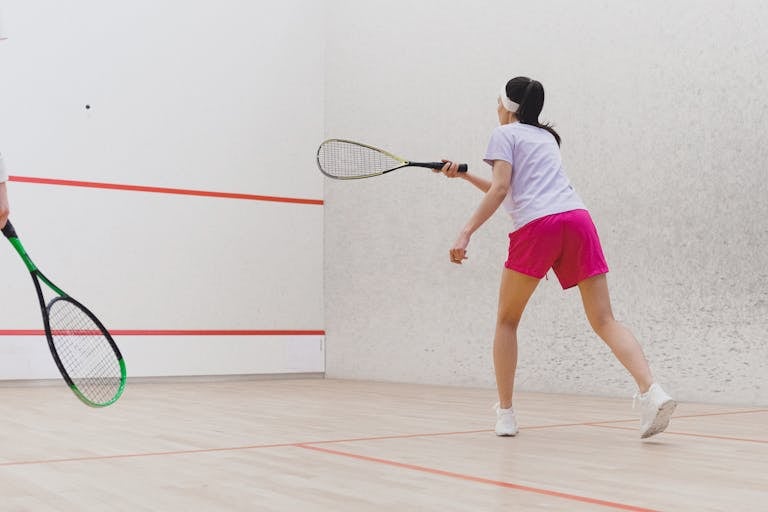
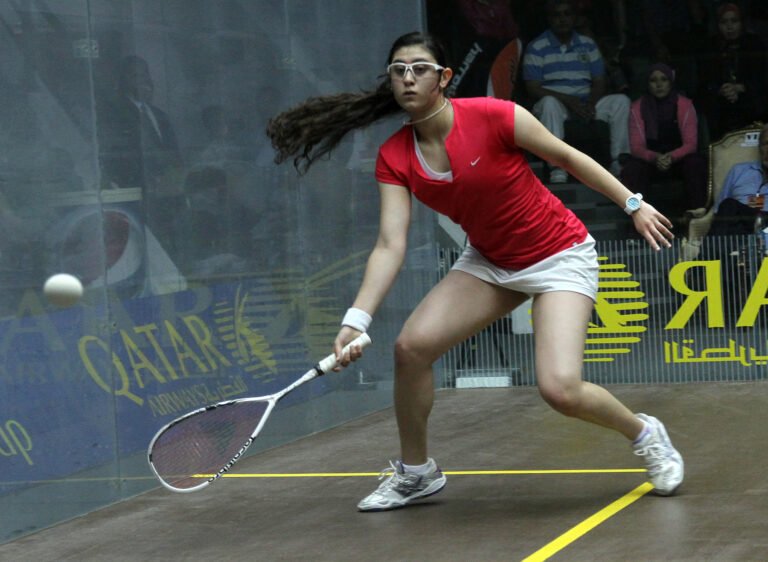
Squash asks more of a shoe than any other racket sport: repeated lunges to the front corners, hard lateral cuts at the T, and a heel that has to stay seated through all of it. This guide ranks seven court shoes for the senior player on the specifications their makers actually publish — stated weights with their size basis, named cushioning and stability systems, real width options, and outsole descriptions in the makers’ own terms.
⚡ TL;DR — The Short Answer
For the best all-round senior pick, buy the Mizuno Wave Claw 3 — 305 g as Mizuno states it, a Men’s-E wide width on Mizuno’s own listing, MIZUNO WAVE stability with ENERZY NXT forefoot cushioning, and a Dyna-Eyelet Wrap fit system. The lightest published shoe here is the Babolat Shadow Tour 5 Men Wide at 280 g in an EU 42.5, and Babolat publishes it in a dedicated Wide version. The maximum-support build is the Victor P9200 III, whose Drop-In Midsole combines Tri-Arch support, a lifted outer rim and a heel-stabilising cup. The widest fit ladder belongs to the Yonex Power Cushion 65 Z3 Wide, listed in Wide and Double Extra Wide. The squash-native system pick is the Salming Eagle 2, and ASICS fields two very different answers: the Blast FF 3 stability flagship and the light, pivot-friendly Gel-Court Hunter 3.
Quick Picks — Best Squash Shoes for Seniors at a Glance
305 g as Mizuno states it, in a Men’s-E wide width, with MIZUNO WAVE, ENERZY NXT cushioning and XG Rubber grip.
280 g in EU 42.5 per Babolat, a dedicated Wide version, Power Straps lateral support and a Michelin indoor outsole.
Victor’s Support/Stability flagship: a Drop-In Midsole with Tri-Arch, a lifted outer rim and a heel-stabilising cup.
TURNTRUSS hardware spanning midsole and outsole, a MONO-SOCK mid-top upper and FLYTEFOAM Propel cushioning.
Power Cushion+ in Wide and Double Extra Wide listings, with a Lateral Shell and Power Graphite Sheet per Yonex.
A squash-native brand’s full system shoe: TGS 62/75, LMS+ torsion unit, D3O insert and a Hexagrip outsole.
Forefoot GEL, a wrap-up forefoot and a pivot zone, in a separated outsole ASICS says is lighter than the last version.
In This Guide
The Senior Decision: Stability, Heel Hold and Room, As Makers Describe Them
Every squash shoe decision is really three decisions wearing one shoe. The first is stability under lateral load: squash movement is built on the split-step, the explosive sideways cut and the long lunge, so the shoe has to hold the foot centred over the sole when the body is moving sideways at full stretch. The second is heel hold: a heel that lifts or shifts inside the shoe on the recovery step costs you the next shot, so heel counters, cups and collar constructions matter as much as cushioning names. The third is room where the foot needs it: space at the forefoot for the lunge, in a shoe that still locks the midfoot down. For the senior player, those three decisions simply carry more weight than raw speed — a shoe that feels planted and predictable rally after rally beats a featherweight that has to be thought about.
This guide is deliberately narrower than our all-player ranking. The best squash shoes pillar owns the full selection — every level, every budget, ranked for all players — and the best squash shoes for women guide owns its segment in the same way. Both are summarised here and linked, and none of their models is re-carded below. What this page owns is the senior stability-and-fit decision only: seven shoes chosen because their makers publish something specific for it — a stated weight, a named stability system, a genuine width option, a heel construction described in engineering terms. If you are still learning the movement these shoes are built for, start with our guide on how to play squash, and if your racket is also due an upgrade, the companion seniors ranking of best squash rackets for seniors applies the same maker-spec discipline to frames. The footwear half of the seniors lane continues in our best tennis shoes for seniors guide, built to the same standard.
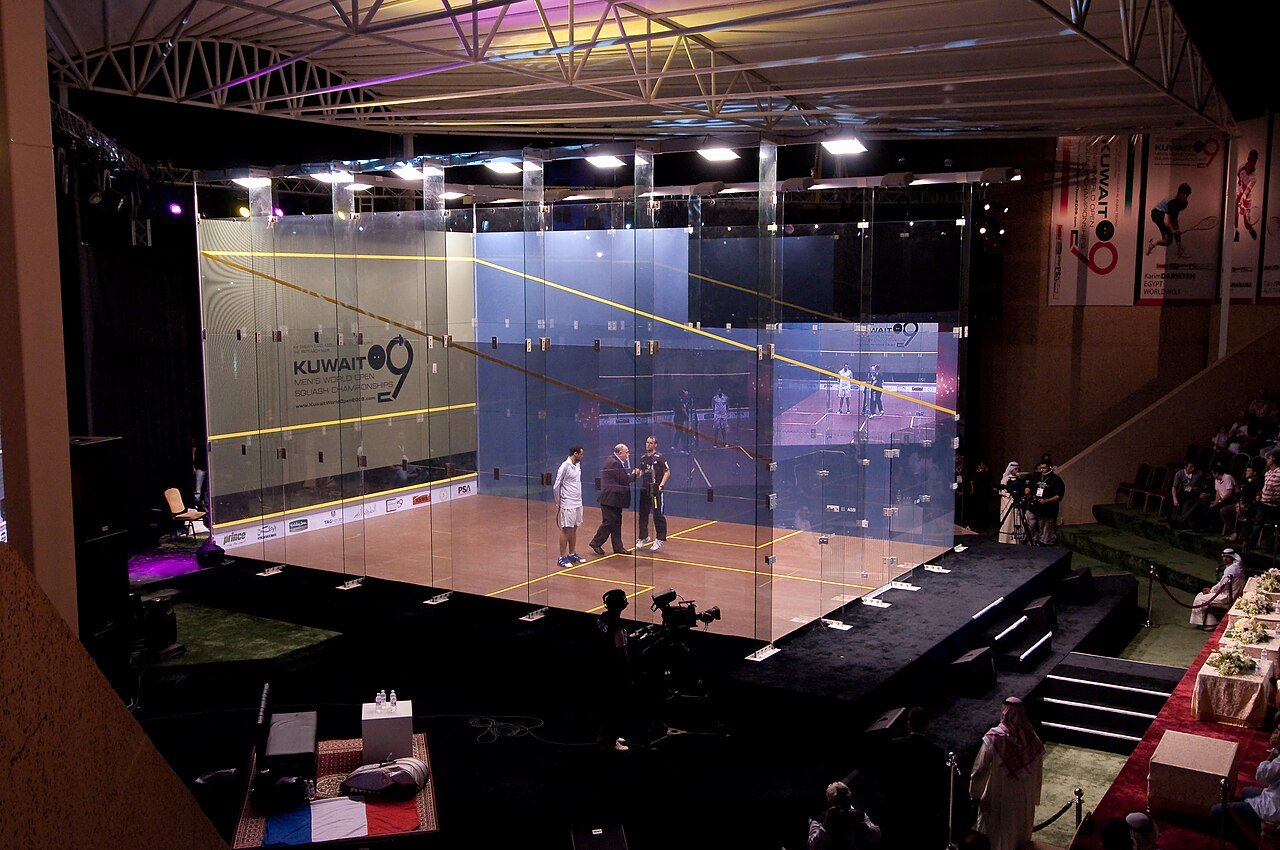
One honest word on crossovers, because it shapes this whole list. Squash is a small footwear market, and most of the world’s best indoor-court shoe engineering is published under badminton and all-court indoor lines. ASICS, to take the clearest example, sells no dedicated squash line at all — the specialist squash source SquashChamps makes exactly this point in its ASICS model comparison, noting that several of the brand’s indoor court shoes are the ones squash players actually wear, up to professionals in the Blast FF line. Four of the seven cards below come from badminton or all-court indoor lines (Mizuno, Babolat, Victor and Yonex), one is a squash-native system shoe (Salming), and two are ASICS indoor court models with long squash followings. What qualifies a shoe for this guide is not the sport printed on the box — it is whether the maker publishes the construction squash demands: a grippy indoor rubber outsole described in the maker’s own terms, lateral support systems, a stable heel, and a fit menu that includes real room. Each card prints exactly what its maker states, and nothing the maker does not.
Reading the Spec Sheet: Weights, Widths and Outsole Wording
Weight, with its basis. A shoe weight is only comparable when you know the size it was weighed in and who published it. Makers state weights on different bases — Babolat’s 280 g is for an EU 42.5, Mizuno states 305 g on its listing without naming a size, and Racquet World lists the Salming at 12.1 oz without a stated basis either. Two makers here, Victor and ASICS, publish no weight at all for these models; where that happens the card says so plainly, and any number printed comes from a named specialist source, labelled as measured or estimated. Treat any two weights as comparable only when their bases match.
Widths are a menu, not an adjective. “Roomy” is marketing; a published width option is a fact. The strongest fit stories in this guide are literal menu items: Babolat publishes a dedicated Wide version of the Shadow Tour 5, Racquet Network lists the Yonex 65 Z3 in Wide and Double Extra Wide, Mizuno lists the Wave Claw 3 in a Men’s-E wide width, and Victor builds the P9200 III on a choice of lasts, including the wider U-Shape 3.5. When a card offers no width option, the card says that too.
Outsole wording is the maker’s, word for word in substance. Indoor courts require non-marking soles, and makers describe their compounds in their own language — Michelin’s indoor-court rubber (Babolat), XG Rubber (Mizuno), VSR Rubber (Victor), Hexagrip (Salming), a pivot-zone design (ASICS). Read the card’s outsole chip as the maker’s own description, because that is what it is; where a maker does not use the words “non-marking” on a given listing, we do not add them. Before buying any indoor shoe, confirm the current listing’s outsole description matches your court’s rules — compounds and colourways change between production runs.
Stability is a system, not a foam. Cushioning names (ENERZY NXT, Power Cushion+, FLYTEFOAM Propel, HYPEREVA) describe what is under the foot. Stability for squash’s lateral cuts comes from structures: TURNTRUSS hardware spanning the sole (ASICS), a lifted outer rim on a drop-in midsole (Victor), an LMS+ torsion unit and TGS guide geometry (Salming), Power Straps over the midfoot (Babolat), a Lateral Shell and graphite sheet (Yonex), a wave-shaped plate (Mizuno). The cards separate the two, so you can see which part of each shoe does which job.
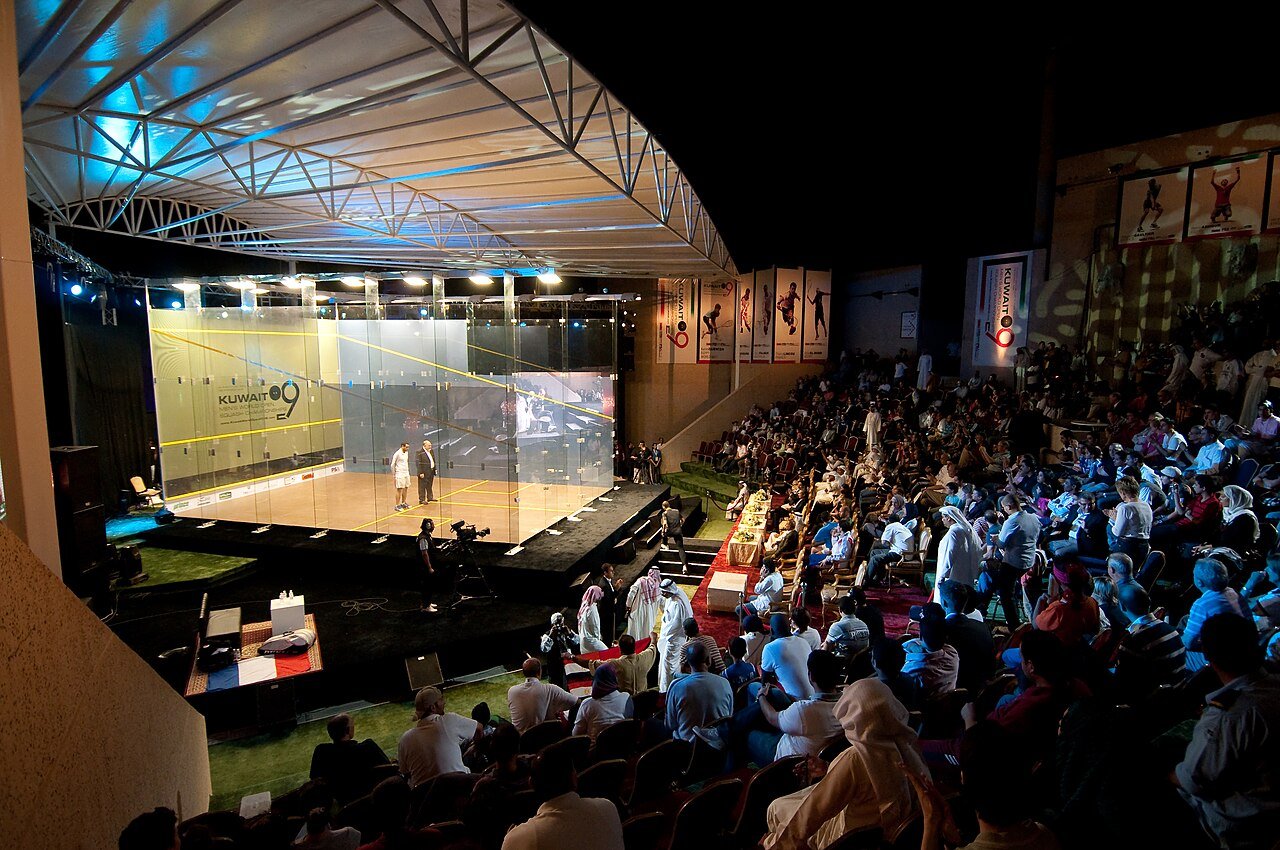
The 7 Best Squash Shoes for Seniors, Compared
Seven court shoes, one shared brief — published stability systems for hard lateral cuts, stated weights read with their size basis, and the widest fit options their makers offer. Read the card that matches your feet and your movement first.
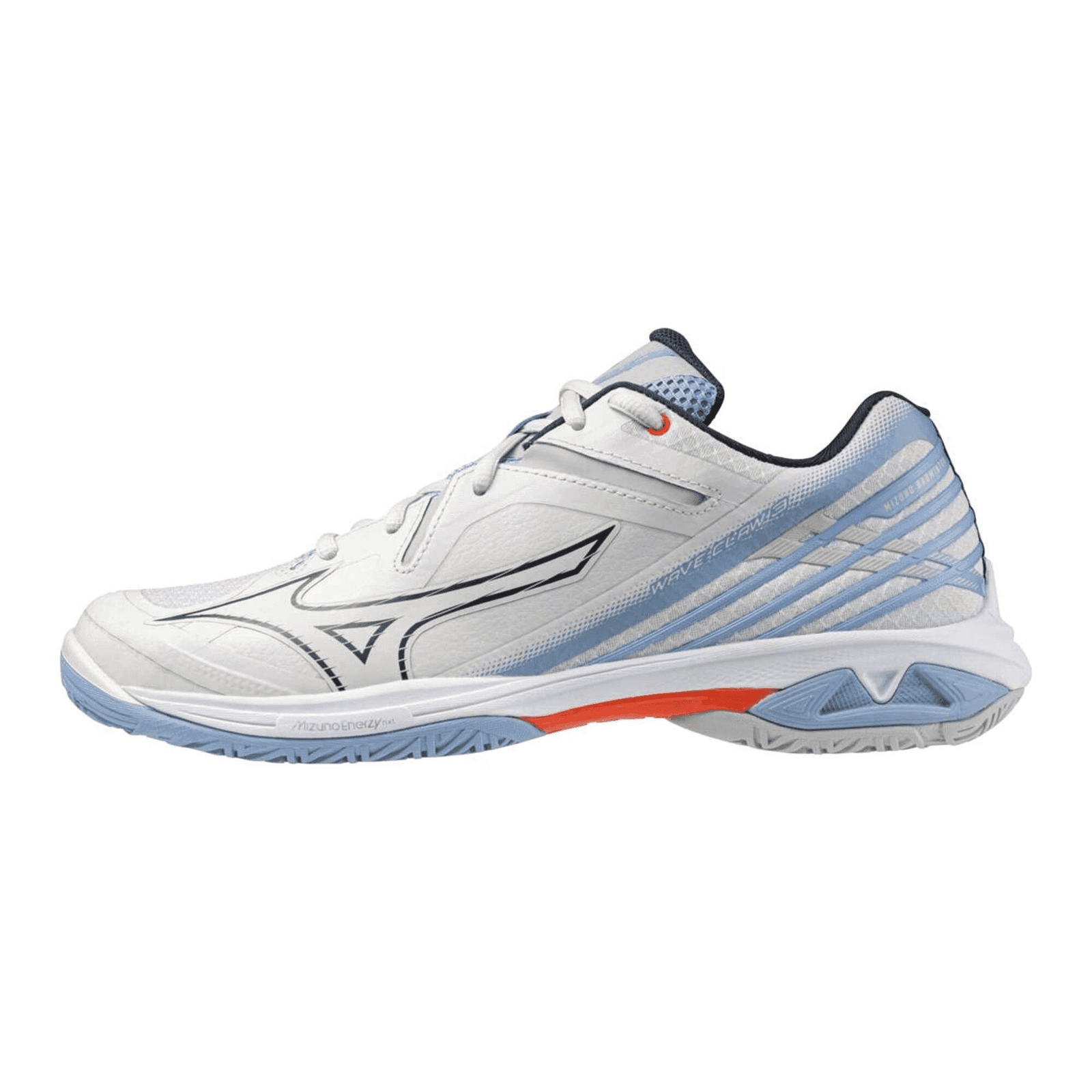
Mizuno Wave Claw 3
The complete senior specification in one published package — 305 g as Mizuno states it, a Men’s-E wide width, WAVE stability with ENERZY NXT cushioning, and a fit system that wraps the whole foot.
The Wave Claw 3 leads this guide because its published specification answers the senior brief on every line at once. Start with the number Mizuno itself prints: 305 g — Mizuno’s listing does not state the size that figure is based on, and we print it exactly that way rather than guessing a basis. That is light for a shoe carrying this much structure, and Mizuno states the shoe is about 10 g lighter than the Wave Claw 2 it replaces, while being, in Mizuno’s words, softer and more comfortable — the collar’s sponge positioning and thickness were reworked for the fit around the opening. Then the fit line, which is the one that matters most here: Mizuno lists this model in a Men’s-E width — its wide fit. A genuinely wide version of the shoe itself, published on the maker’s own specification, not a standard shoe described as roomy.
The engineering under the foot is Mizuno’s longest-running idea, done properly. The MIZUNO WAVE is the wave-shaped plate Mizuno describes as combining cushioning and stability in one structure — the plate spreads load while resisting the sideways roll a hard cut produces. In the forefoot sits the new MIZUNO ENERZY NXT, which Mizuno positions as softer than its ENERZY material with high energy return at light weight, over an ENERZY Insole and a U4icX insole board, with PoWnCe in the midsole. Mizuno also adapted the protruding heel structure from its Wave Fang 2 specifically to firm up the shoe’s feel during lunges — a squash-relevant detail in a shoe from a badminton line, and exactly the kind of published construction this guide exists to surface. The grip is XG Rubber, Mizuno’s extra-grade rubber for grip and durability during fast, intense movements (Mizuno’s listing does not add a non-marking rating for this model — check the current listing against your court’s rules). The Dyna-Eyelet Wrap uses large eyelet cut-outs so the laces tighten along the foot’s contours, and the upper is synthetic and textile with more than 90% recycled content in the synthetic leather, sockliner lining and laces, per Mizuno.
What we like
- A published Men’s-E wide width on Mizuno’s own listing — a real width option, not a roomy standard shoe
- MIZUNO WAVE plate stability with the new ENERZY NXT forefoot cushioning
- Heel structure adapted from the Wave Fang 2 specifically for lunge firmness, per Mizuno
- 305 g as Mizuno states it, and lighter than the model it replaces
Worth knowing
- Mizuno’s listing states the 305 g weight without a size basis — compare it against other shoes’ weights with that in mind
- Mizuno lists the shoe in its badminton category and does not state a non-marking rating on this listing — confirm your court’s rules before buying
As an Amazon Associate we earn from qualifying purchases.
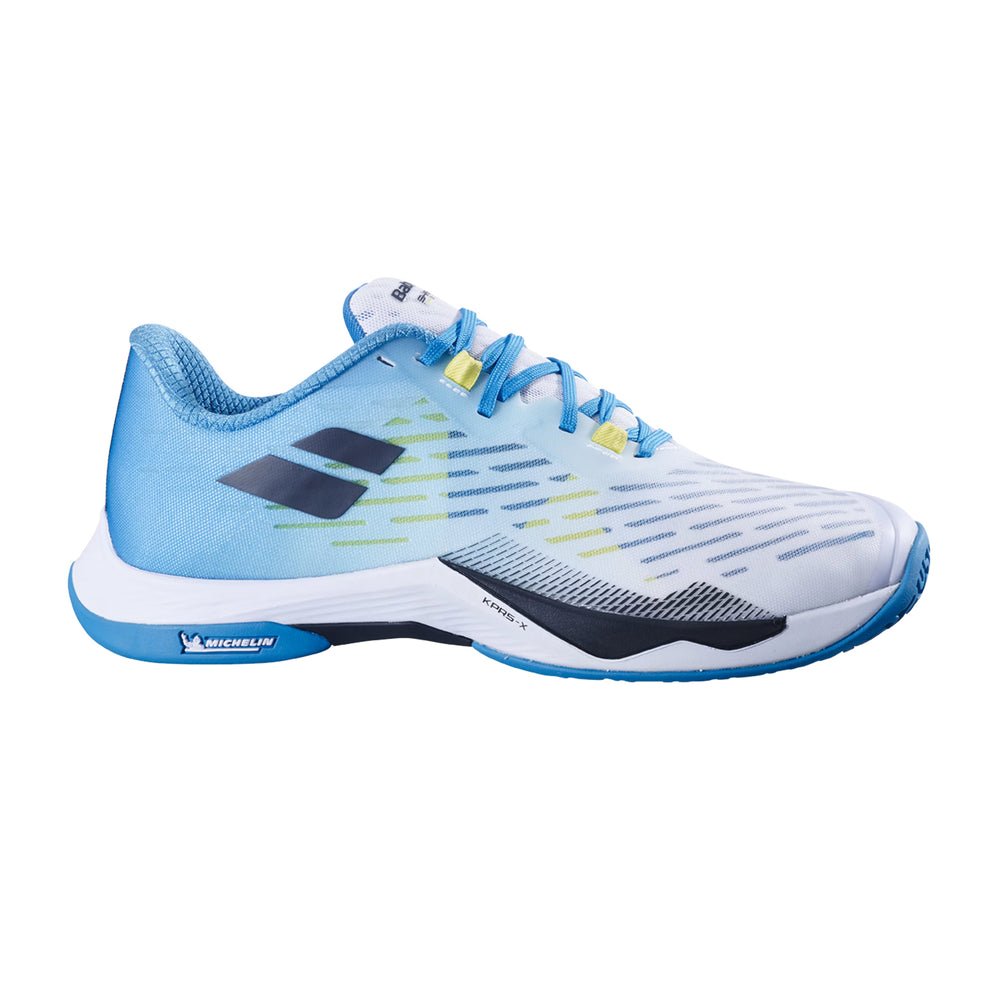
Babolat Shadow Tour 5 Men Wide
The lightest maker-stated shoe in the guide — 280 g in an EU 42.5 as Babolat states it — published in a dedicated Wide version, with strap-based lateral support and a Michelin indoor outsole.
Babolat builds the Shadow Tour line for speed, and the fifth generation states the lightest number in this guide: 280 g in an EU size 42.5, printed by Babolat with its size basis attached — the cleanest weight claim here. What earns the shoe its place in a seniors guide, though, is the fit line. Alongside the standard Shadow Tour 5 Men, Babolat publishes a dedicated Wide version of the same shoe — same KPRS-X midsole, same Michelin outsole, same strap system, built on a wider fit. For a senior player who needs forefoot room but does not want a heavier shoe to get it, that combination — the guide’s lightest stated weight in a true wide version — is unique on this page.
The support story is mechanical rather than foamy, which suits squash’s lateral load. Babolat’s Power Straps are two reinforcement straps that hold the foot in place and, in Babolat’s description, provide support for every movement, with the system designed for intricate footwork and side-to-side play. Underfoot, the KPRS-X dual-density midsole pairs a softer heel for landing absorption with a firmer forefoot for propulsion, in a rocker-shaped sole Babolat says speeds the switch from defence to attack. The outsole is Michelin rubber developed specifically for the sport’s indoor courts, with the compound and stud pattern revised for the balance of grip, lightness and durability — and a heavy-duty rubber guard runs over the inner forefoot up to the toes, the exact zone a lunging squash player drags. The upper is a double layer mesh — a perforated reinforcement panel over a subtle mesh — that Babolat describes as ultra-light and breathable with optimal support, and the 3D Active Sculpture construction is Babolat’s adjustable structure for fast, powerful movements and sudden changes of direction.
What we like
- The lightest maker-stated weight here — 280 g in EU 42.5, with the size basis published
- A dedicated Wide version of the full flagship spec, per Babolat’s own range
- Power Straps give a mechanical lateral hold that does not depend on upper stretch
- Michelin indoor rubber plus a heavy-duty guard over the inner forefoot drag zone
Worth knowing
- A speed-first shoe: the dual-density midsole is tuned for transitions, so players wanting the plushest landing should look at the Victor card
- The Wide is a separate version — check the listing carefully so the standard fit is not ordered by mistake
As an Amazon Associate we earn from qualifying purchases.
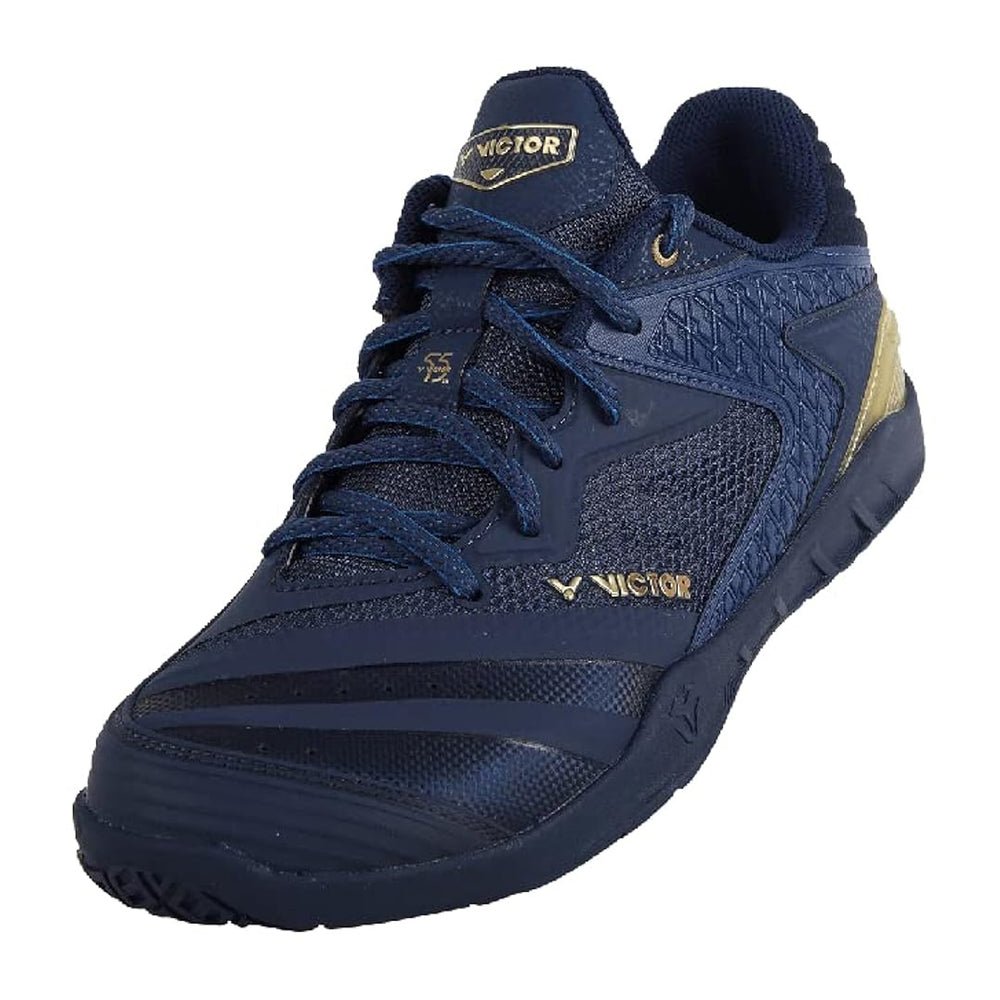
Victor P9200 III
Victor’s Support/Stability flagship, built around a single integrated Drop-In Midsole — Tri-Arch support, a lifted outer rim and a heel-stabilising cup in one unit — on a choice of lasts including a wide one.
Where the Babolat answers the senior brief with lightness, the P9200 III answers it with structure — the most support engineering Victor publishes in a court shoe. The centrepiece is the Drop-In Midsole: instead of a separate insole sitting on a midsole, Victor integrates the two into a single unit that drops into the shoe’s base, and that unit carries three systems at once. Tri-Arch follows the foot’s three arches for support and pressure distribution. A lifted outer rim raises the outside edge of the platform — the edge a player lands on in a deep forward stride — and a heel-stabilising cup seats the rear foot so it does not shift inside the shoe. For squash’s repeated hard lunges and outer-edge landings, that is a published answer to the exact movement pattern, described by its maker in construction terms.
The cushioning stack is HYPEREVA over Solid EVA; Victor’s published figures for HYPEREVA, as carried by its retailers, credit it with more rebound, less weight and better durability than standard EVA, and the character here is deliberately plush — this is the shoe Victor positions for landing comfort above outright agility, and the listing is honest that it is the heavier-feeling choice in its own range. Fit is a genuine decision on this card: the P9200 III is built on Victor’s U-Shape lasts in a 3.5 (the wide last, BX variant) or a 2.5 (TD variant), so confirm which last a listing is selling before you order. The upper is microfiber PU leather with V-Tough reinforcement and double mesh, protected at the front by a structured KPU toe cap, and the outsole is Victor’s VSR Rubber. One transparency note, printed plainly: Victor publishes no weight for the P9200 III, so none is claimed here — judge this card on its support system, not on a number its maker does not state. The 55th Anniversary Edition pictured is the same construction in a special blue/gold colourway with anniversary packaging, per Victor’s retailers.
What we like
- The most complete published support system here: Tri-Arch, lifted outer rim and heel cup in one integrated unit
- A choice of lasts, including the wide U-Shape 3.5 — fit is a menu item, not an adjective
- HYPEREVA + Solid EVA stack is Victor’s most cushioning-focused build, per its own range positioning
- KPU toe cap and V-Tough reinforcement over the drag and wear zones
Worth knowing
- Victor publishes no weight — and its own retailers position it as the comfort-first, heavier-feeling option in the range
- Two lasts (3.5 wide / 2.5 standard) are sold under the same model name; verify the variant on the listing before ordering
As an Amazon Associate we earn from qualifying purchases.
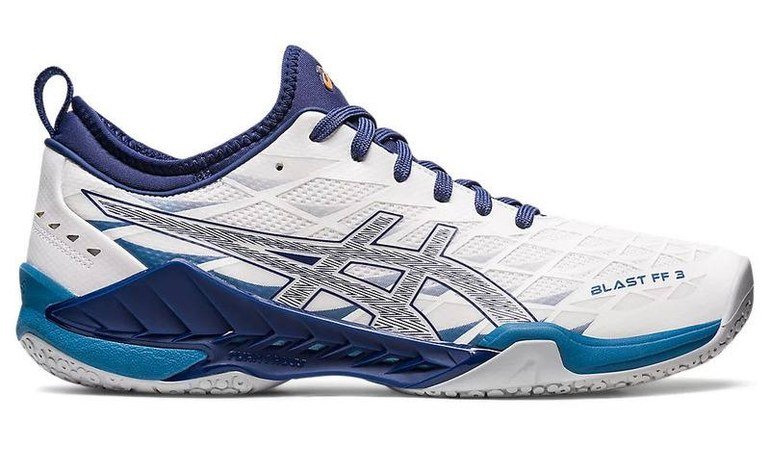
ASICS Blast FF 3
ASICS’ flagship stability hardware — a TURNTRUSS component spanning midsole and outsole, a MONO-SOCK mid-top upper and DYNAWRAP hold — the ASICS indoor shoe squash specialists point to first.
ASICS announced the Blast FF 3 in its own press release with a specific promise: a shoe designed for stability during dashing, braking and side-to-side movement — the three things squash movement is made of. The mechanism is the TURNTRUSS, a component that spans the midsole and the outsole rather than sitting inside one of them, so the shoe’s structure resists twist as a single piece when you plant and cut. The specialist squash source SquashChamps, in its ASICS model comparison, pairs that with TWISTRUSS support for quicker cuts, X GUIDANCE forefoot flexibility so the front of the shoe still bends for the lunge, and a 3D SPACE CONSTRUCTION heel. Cushioning is FLYTEFOAM Propel, ASICS’ springier FLYTEFOAM formulation. This is the most hardware-led card in the guide: if your decision is “which shoe publishes the most lateral structure,” this is the answer.
The fit is the other half of the story, and it is a deliberate trade. The Blast FF 3 uses a MONO-SOCK construction — a mid-top, sock-style upper that wraps higher than a standard low court shoe — with an improved DYNAWRAP system holding the midfoot. SquashChamps notes the line has been worn by some top squash professionals and rates its traction, support and comfort for squash, while also flagging the honest costs: it is at the premium end, and the mid-top cut feels different if you have always played in low shoes. On weight, be precise: ASICS publishes no weight for the Blast FF 3. SquashChamps puts it at around 12 to 13 oz (roughly 380 g at larger sizes) and warns it is not as light as some listings imply — we print that as the specialist estimate it is, not as an ASICS figure. Buy this shoe for its published stability system; do not buy it as a lightweight.
What we like
- TURNTRUSS spans sole and midsole — the most structural lateral system ASICS publishes
- MONO-SOCK mid-top construction with DYNAWRAP for a locked-in rear and midfoot
- Named by SquashChamps as the ASICS indoor shoe used by some top squash professionals
- X GUIDANCE forefoot flexibility keeps the lunge bend in a stiff shoe
Worth knowing
- Premium price point, and the mid-top cut is a real adjustment if you are used to low shoes
- ASICS publishes no weight, and the specialist estimate (~12–13 oz) makes it the heaviest-feeling card here
As an Amazon Associate we earn from qualifying purchases.
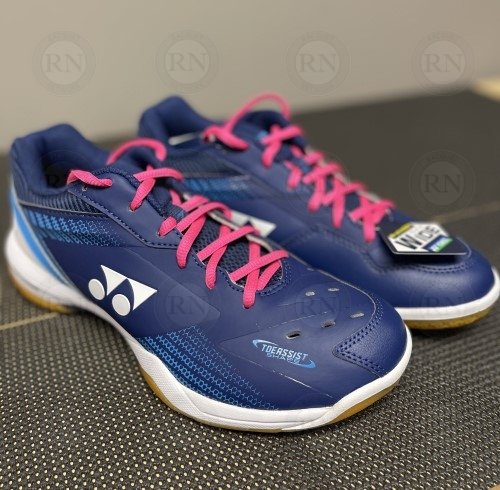
Yonex Power Cushion 65 Z3 Wide
The deepest width story in the guide — listed in Wide and Double Extra Wide — built on Power Cushion+ with a Lateral Shell, a Power Graphite Sheet and a seamless one-piece upper.
If width is your whole decision, this is your card. The 65 Z3 is Yonex’s long-running comfort all-rounder, and Racquet Network lists it in two width builds: the Wide (model SHB65Z3W) and a Double Extra Wide (SHB65Z3S) — the only shoe here with a published width ladder above a single wide option. The same retailer lists the shoe at 335 g, a measured figure, printed here as exactly that: a retailer’s measured weight, not a Yonex claim. Under the foot is Yonex’s signature Power Cushion+, the material Yonex says absorbs shock and reverses the impact energy for the next movement, with Yonex’s published test language putting the cushion’s shock absorption about 28% higher and its repulsion about 62% higher than conventional cushioning in its own comparisons. Treat those as the maker’s own test figures — which is how this guide prints every maker’s numbers.
The stability parts are named and checkable. A Power Graphite Sheet under the midfoot adds stability and reduces shoe twist, and the Lateral Shell on the outside of the forefoot is Yonex’s structure for preventing lateral movement of the foot inside the shoe during fast direction changes — the squash cut, described in badminton language. The Toe Assist Shape gives the toes room while supporting the midfoot and heel, the upper is a one-piece seamless construction with Durable Skin Light over it, and inside sits an Inner Bootie with an Ergonomic Curved Shape heel cup. The overall picture is a shoe whose published design starts from comfort and room, then adds named structure where squash needs it — the inverse of the Blast FF 3’s hardware-first approach, and the right starting point for a senior player whose feet need space before anything else.
What we like
- Two published widths — Wide and Double Extra Wide — the deepest fit menu in the guide
- Power Cushion+ is Yonex’s flagship cushioning, with the maker’s test figures printed on the listing
- Lateral Shell and Power Graphite Sheet are named, checkable stability structures
- Seamless one-piece upper and Inner Bootie suit feet that dislike internal ridges and seams
Worth knowing
- The 335 g figure is Racquet Network’s measured weight, not a Yonex-published one — compare it on that basis
- The comfort-first build means less hard hardware than the ASICS or Victor cards; the support here is shaping and shell, not truss components
As an Amazon Associate we earn from qualifying purchases.
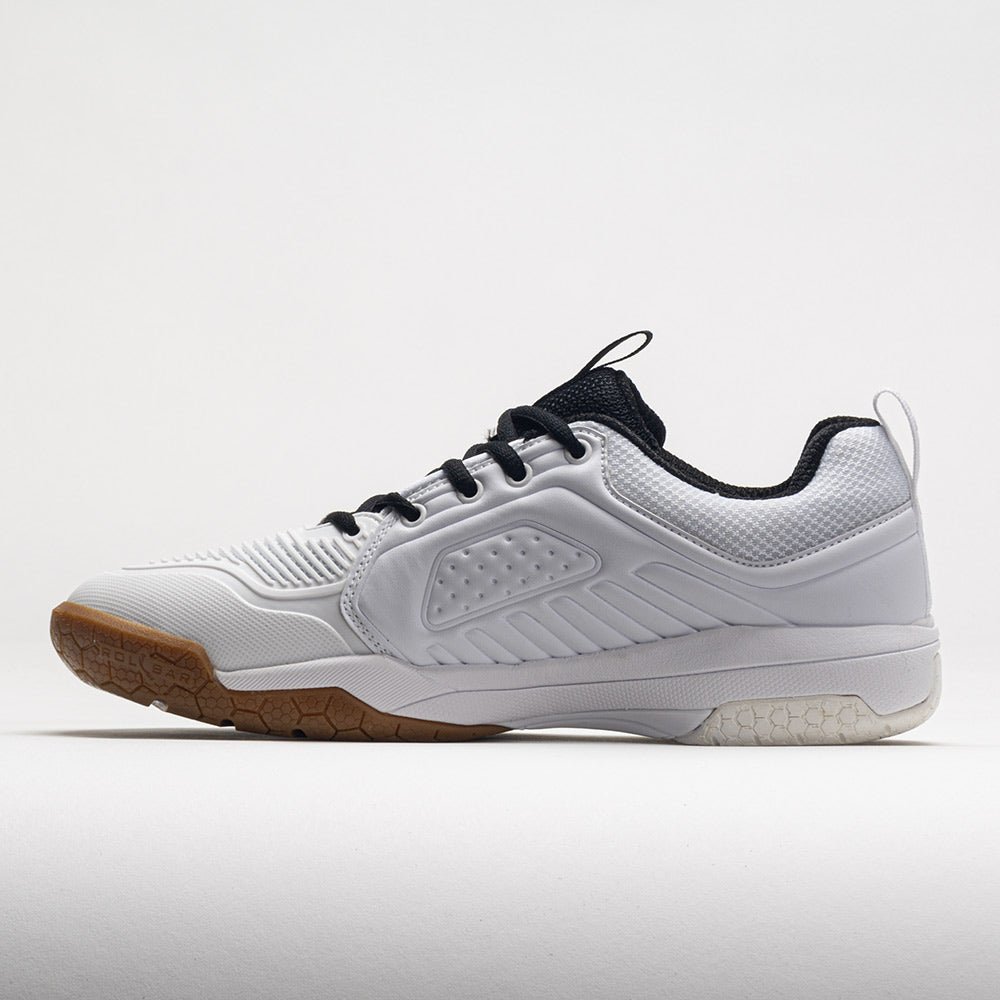
Salming Eagle 2
The squash-native pick — a full named system (TGS 62/75, LMS+, LMS, D3O, Rollbar, Hexagrip) from the one brand on this page that designs for squash first.
Salming is the squash specialist in this guide, and the Eagle 2 is its system shoe — nearly every part of the design has a published name and a stated job. Racquet World’s listing gives the measurable frame first: 342 g (12.1 oz), an 8 mm heel-to-toe drop and a 23 mm heel / 15 mm forefoot stack, with a standard D-width fit. The movement system is TGS 62/75: Salming’s Torsion Guide System, in which the distance from heel to the ball of the foot (62% of the shoe) ends at a 75-degree line, so the shoe is built to bend in exactly one place — the ball of the foot — giving the forefoot flexibility for the lunge while the rear two-thirds of the shoe stays a stable platform. For a senior player, that published geometry is the whole argument: flex where squash flexes, structure where it must not.
Twist control comes from the LMS+ (Lateral Motion Stabilizer Plus), an 11-degree torsion unit Salming says is designed to prevent the foot and ankle rolling over sideways, backed by the LMS rollbar-style design on the outer edge, and a D3O insert handles impact absorption in the heel zone. The outsole pattern is Salming’s Hexagrip, and the upper is a soft, lightweight mesh reinforced with KPU in the exposed areas. Salming also publishes its wear guidance plainly on the same listing — the Eagle is built for players who play one to three times a week — a refreshingly exact duty rating rather than a durability slogan, and a useful calibration for the senior club player this guide is written for. This is the card for the player who wants every claim to come from a squash drawing board.
What we like
- TGS 62/75 publishes its geometry: flex at the ball of the foot, structure behind it — a lunge-shaped design brief
- LMS+ 11-degree torsion unit and LMS rollbar address sideways roll explicitly, in the maker’s own terms
- Full measurable spec set on the retailer listing: 342 g, 8 mm drop, 23/15 mm stack
- D3O impact insert and Hexagrip outsole complete a genuinely squash-native system
Worth knowing
- Standard D-width fit only — no published wide version, so wide feet should start at the Babolat or Yonex cards
- Salming’s own listing rates the Eagle line for one to three sessions a week; heavier schedules will wear it faster
As an Amazon Associate we earn from qualifying purchases.
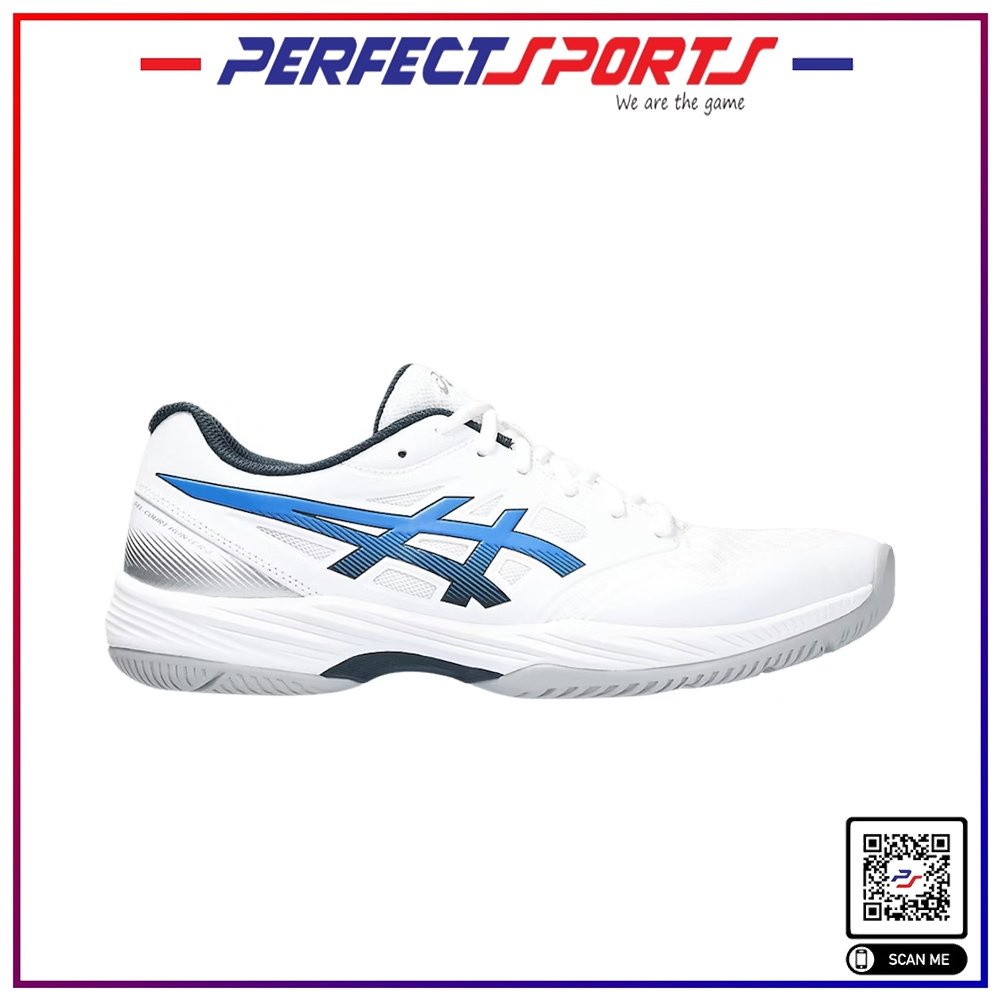
ASICS Gel-Court Hunter 3
The counterpoint card — forefoot GEL, a wrap-up forefoot and a pivot zone in ASICS’ lighter, flexible indoor design, for the senior player who moves by turning rather than bracing.
Not every senior player wants maximum hardware, and ASICS’ own range makes the case for the opposite build. The Gel-Court Hunter 3 puts its GEL cushioning in the forefoot — the part of the foot that lands the lunge — inside a shoe designed around turning: a pivot zone under the forefoot, deeper flex grooves in the outsole, and a wrap-up forefoot construction that carries the sole up the side of the shoe to support the planted, twisting foot. The outsole uses a separated design ASICS says makes it lighter than the previous version, the upper is a breathable no-sew mesh with supportive overlays for multi-directional movement, and ASICS positions the model for indoor court sports including squash. ASICS publishes no weight for it, so the lightness claim printed here is ASICS’ own design description, not a number.
Read this card as the deliberate counterpoint to the Blast FF 3. Same brand, opposite brief: where the Blast locks the foot down with truss hardware and a mid-top sock, the Hunter frees the forefoot to flex and pivot, trading published structure for published suppleness. For the senior player whose game is built on early positioning, soft landings and quick turns at the T — and who finds truss-stiff shoes tiring over a long session — that trade is the right one, and ASICS publishes both sides of it honestly. What you do not get here is a width option or a named lateral brace; if your foot rolls under load, the hardware cards above are the safer read. For the senior player who values a light, flexible, pivot-friendly shoe over maximum hardware, it is the right kind of simple.
What we like
- Forefoot GEL placed where the lunge lands, in ASICS’ lighter separated-outsole design
- Pivot zone and wrap-up forefoot are published features aimed at turning movement
- No-sew breathable mesh upper with supportive overlays — fewer internal seams to manage
- The value end of the ASICS indoor range, per SquashChamps’ model comparison
Worth knowing
- No published width option and no named lateral brace — the hardware cards above are the read for unstable ankles
- ASICS publishes no weight, so the lightness case rests on its design description alone
As an Amazon Associate we earn from qualifying purchases.
Side-by-Side Comparison Table
| Shoe | Weight (as published) | Width Story | Stability Lead | Outsole (maker’s terms) |
|---|---|---|---|---|
| Mizuno Wave Claw 3 | 305 g (Mizuno; size basis not stated) | Men’s-E wide width, per Mizuno | MIZUNO WAVE plate + ENERZY NXT | XG Rubber |
| Babolat Shadow Tour 5 Men Wide | 280 g in EU 42.5 (Babolat) | Dedicated Wide version | Power Straps + KPRS-X midsole | Michelin rubber for indoor courts |
| Victor P9200 III | Not published by Victor | U-Shape 3.5 wide or 2.5 lasts | Drop-In Midsole: Tri-Arch, rim, heel cup | VSR Rubber |
| ASICS Blast FF 3 | Not published by ASICS (~12–13 oz, SquashChamps) | MONO-SOCK mid-top fit | TURNTRUSS spanning midsole + outsole | Per ASICS / SquashChamps listing |
| Yonex Power Cushion 65 Z3 Wide | 335 g (Racquet Network, measured) | Wide and Double Extra Wide | Lateral Shell + Power Graphite Sheet | Per Yonex listing |
| Salming Eagle 2 | 342 g / 12.1 oz (Racquet World) | Standard D width | TGS 62/75 + LMS+ torsion unit | Hexagrip pattern |
| ASICS Gel-Court Hunter 3 | Not published by ASICS | Standard fit; no wide published | Pivot zone + wrap-up forefoot | Separated outsole, flex grooves |
Buying Guide: Matching the Spec Sheet to Your Game
- Start with your width, because it deletes half the list honestly. If you need a published wide fit, your shortlist is the Mizuno (Men’s-E), the Babolat (dedicated Wide version), the Victor (U-Shape 3.5 last) and the Yonex (Wide or Double Extra Wide). The Salming is a standard D and the two other ASICS cards publish no wide option — no amount of stability hardware compensates for a forefoot that has nowhere to go in the lunge.
- Then choose your stability philosophy. Hardware players — feet that roll, ankles that need bracing — should read the Victor’s Drop-In Midsole and the ASICS Blast FF 3’s TURNTRUSS first. Geometry players should read Salming’s TGS 62/75 and LMS+. Strap-and-shell players — who want hold without hard parts — should read Babolat’s Power Straps and Yonex’s Lateral Shell. The Mizuno sits across all three philosophies with a plate, which is why it leads.
- Read every weight with its basis attached. Babolat’s 280 g is an EU 42.5; Mizuno’s 305 g has no stated basis; the Yonex 335 g and Salming 342 g are retailer figures (measured and listed respectively); Victor and ASICS publish nothing, and the Blast FF 3’s ~12–13 oz is a specialist estimate. Compare like with like, and distrust any listing that prints a weight with no source.
- Match the shoe to your session load. Salming itself rates the Eagle line for one to three sessions a week. Heavier weekly schedules argue for the most reinforced uppers and toe protection — the Victor’s KPU cap and V-Tough, Babolat’s forefoot guard, Mizuno’s adapted heel structure.
- Confirm the current listing before you pay. Colourways, size bases and even outsole descriptions change between production runs, and two cards here (Victor’s lasts, Babolat’s Wide version) depend on ordering the exact variant. Check the maker’s current page for the model, the width and the outsole wording against your court’s rules.
Frequently Asked Questions
What makes a squash shoe right for a senior player?
Three published things, in this order: stability under lateral load (a named system — a plate, truss, torsion unit, rim or shell — not just soft foam), heel hold that keeps the rear foot seated through lunges and recovery steps, and a fit with genuine forefoot room. This guide ranks seven shoes on exactly those maker-published specifications: the Mizuno Wave Claw 3 leads because it answers all three at once, with a Men’s-E wide width, MIZUNO WAVE stability and 305 g as Mizuno states it.
Which of these shoes come in a true wide fit?
Four publish a real width option. Mizuno lists the Wave Claw 3 in a Men’s-E wide width; Babolat publishes a dedicated Wide version of the Shadow Tour 5 Men; Victor builds the P9200 III on U-Shape lasts including the wide 3.5; and Racquet Network lists the Yonex Power Cushion 65 Z3 in Wide and Double Extra Wide builds — the deepest width menu here. The Salming Eagle 2 is a standard D width, and ASICS publishes no wide option for the Blast FF 3 or the Gel-Court Hunter 3.
What is the lightest shoe in this guide?
By maker-stated weight, the Babolat Shadow Tour 5 Men Wide: 280 g in an EU 42.5, as Babolat states it — the only sub-300 g figure a maker publishes here, and it comes in a dedicated wide version. Mizuno states 305 g for the Wave Claw 3 without a size basis. The Yonex (335 g, Racquet Network measured) and Salming (342 g, Racquet World) figures are retailer numbers, and Victor and ASICS publish no weights for these models.
Can I use badminton shoes for squash?
The four crossover cards in this guide — Mizuno, Babolat, Victor and Yonex — come from badminton or all-court indoor lines, because that is where most indoor-court engineering is published. What qualifies them here is construction, not the label: a grippy indoor rubber outsole in the maker’s own description, lateral support systems for sideways movement, a stable heel and, on all four, a genuine width option. Confirm the current listing’s outsole description against your court’s rules before buying, since compounds and colourways change.
Why do some cards list no weight?
Because their makers publish none. Victor states no weight for the P9200 III, and ASICS states none for the Blast FF 3 or the Gel-Court Hunter 3. Where a card prints a number anyway, it is labelled with its source — SquashChamps’ ~12–13 oz estimate for the Blast FF 3, Racquet Network’s measured 335 g for the Yonex, Racquet World’s 342 g listing for the Salming — so you always know whose figure you are reading.
Which shoe has the most lateral support?
Two cards lead on published hardware. The Victor P9200 III integrates Tri-Arch support, a lifted outer rim and a heel-stabilising cup into one Drop-In Midsole — the most complete support unit here. The ASICS Blast FF 3 counters with TURNTRUSS, a component spanning midsole and outsole, plus a MONO-SOCK mid-top upper. Salming’s Eagle 2 takes the geometry route with its LMS+ torsion unit and TGS 62/75 system. Choose by philosophy: integrated platform (Victor), truss hardware (ASICS) or torsion geometry (Salming).
How does this guide differ from your main squash shoes ranking?
Scope. Our best squash shoes pillar ranks the full selection for all players and budgets, and the women’s guide owns its segment; both are linked from this page and none of their models is re-carded here. This page owns one decision only — the senior stability-and-fit decision — and every card was chosen because its maker publishes something specific for it: a stated weight with its basis, a named stability system, a real width option or a heel construction described in engineering terms.
The Verdict
Buy the specification, not the story. The Mizuno Wave Claw 3 is the complete senior answer — 305 g as Mizuno states it, a published Men’s-E wide width, WAVE plate stability with ENERZY NXT cushioning, and a heel structure its maker adapted specifically for lunges. The Babolat Shadow Tour 5 Men Wide owns the lightweight-wide decision outright: the guide’s lightest stated weight, in a dedicated wide version, held by straps rather than hope. The Victor P9200 III is the maximum-support build, and it is not close — no other card integrates arch support, an outer rim and a heel cup into one unit. The Yonex Power Cushion 65 Z3 Wide owns width depth, the ASICS Blast FF 3 owns stability hardware, the Salming Eagle 2 is the squash-native system shoe, and the ASICS Gel-Court Hunter 3 is the light, pivot-friendly counterpoint. Read the card whose published facts match your feet, your width and your movement — that match, and nothing else, is the right shoe.
Affiliate disclosure: AliShuttler is a participant in the Amazon Services LLC Associates Program. Links marked “Check Price on Amazon” are affiliate links — if you buy through them, we may earn a commission at no additional cost to you. Every specification in this guide is taken from the maker’s or its retailers’ published listings at the time of writing; where a maker publishes no weight, the guide says so and attributes any figure to the named source that measured or listed it.