Your first proper tennis shoes decide how your first season feels. Running shoes and gym trainers are built to move forwards — tennis moves sideways, in short bursts, with hard stops. These seven beginner court shoes give a new player the three things that matter most at the start: a sole that grips the court surface you actually play on, real lateral support while your footwork is still forming, and cushioning that keeps early sessions comfortable. Every model below is carded on its maker’s or retailer’s published specifications — cushioning system, outsole type, listed weight with its size basis, fit as listed — never on invented numbers.
TL;DR — The Short Answer
For most beginners, buy the ASICS Gel-Challenger 15: it pairs genuine lateral stability (ASICS’ WINGWALL construction) with rearfoot GEL cushioning and a durable AHARPLUS outsole, and it sits a clear step below the flagship Gel-Resolution line in ASICS’ own range. Players who want the lightest start should take the Babolat Jet Tere 2 All Court (12.3 ounces as listed, Michelin rubber outsole). Anyone who values a familiar, classic feel should start in the K-Swiss Court Express 2, whose listings position it squarely at players just starting out. New players who want maximum cushioning and support structure choose the adidas CourtJam Control 3, and players who want a shoe designed from the start as a starter shoe choose the Mizuno Break Shot 5 AC, with its relaxed last and flexible flat sole. Match the outsole to your club’s surface first, then pick by fit.
Quick Picks
Short on time? These are the seven shoes in this guide and the job each one does best for a first-time player.
ASICS Gel-Challenger 15
The most complete first shoe here: real lateral stability, GEL cushioning and a durable outsole.
Read the review ↓Babolat Jet Tere 2 All Court
The lightest listed weight in this guide at 12.3 ounces, with a Michelin rubber outsole.
Read the review ↓K-Swiss Court Express 2
Classic leather comfort that its own listings aim at players just starting out.
Read the review ↓Nike Court Lite 4
A plush heel collar and no listed break-in — comfortable from the very first session.
Read the review ↓HEAD Sprint Team 4.0
A low-to-the-ground ride for new players who like to feel connected to the court.
Read the review ↓adidas CourtJam Control 3
The most cushioning and support structure in this line-up, on a generous medium fit.
Read the review ↓Mizuno Break Shot 5 AC
Designed by Mizuno specifically as a starter shoe, with a relaxed last and flat, flexible sole.
Read the review ↓In This Guide
Start Here: What Makes a Beginner Shoe Different
A beginner shoe is not a worse shoe — it is a shoe whose priorities are in the order a new player needs them.
The single most common first-season mistake is playing tennis in running shoes. A running shoe is engineered for one job: moving forwards in a straight line, with a soft, raised heel and a sole that curves up at the toe to roll you into the next stride. Tennis almost never moves like that. Even in your first month of lessons you will shuffle sideways along the baseline, split-step, plant a foot and push off at an angle, and stop hard at the net. Those sideways loads are exactly what a running shoe is not built to take: its soft heel stack and narrow sole let the foot roll over the edge of the shoe on a lateral plant. A proper court shoe answers with a flatter, wider sole, reinforcement up the sides of the upper, and an outsole tread shaped for grip in every direction. If you read one paragraph in this guide, make it this one: whatever else you buy this season, buy real court shoes.
Within court shoes, beginner models differ from the flagship shoes in our main best tennis shoes guide in emphasis, not in legitimacy. Flagships chase maximum durability for players who slide on hard courts for hours a week, maximum stability for aggressive movers, or maximum speed for advanced footwork. A new player needs none of those extremes yet. What a beginner needs, in order, is: an outsole matched to the surface at their club, enough lateral support to move sideways with confidence while their footwork patterns are still being learned, cushioning that keeps the first months of regular play comfortable, and a fit they can judge easily — because a first pair is also how you learn your court-shoe size before you ever order a second pair online.
That ordering explains this line-up. Every shoe here is a genuine court shoe from a major maker’s current range, positioned by its maker or its retailers at new, recreational or club-level players. None of them is a flagship, and none needs to be: each one covers the beginner’s actual priorities with published technology — named cushioning systems, named outsole rubbers, listed weights — rather than fashion-shoe construction at a court-shoe price. If you are still learning the game itself alongside the gear, our how to play tennis guide covers the rules, scoring and basic strokes; this guide handles the shoes.
Support Before Speed
Advanced players buy lightweight shoes because their footwork is already efficient. Beginners move less economically — more adjustment steps, more planted stops — so a stable, confidence-giving shoe (the Challenger 15, the CourtJam Control 3) usually serves a first season better than the lightest shoe on the shelf. The exception is the player who already moves athletically from another sport; for them the Jet Tere 2 or Sprint Team 4.0 makes sense from day one.
Comfort Is a Learning Tool
New players practise more when their feet feel fine afterwards. Cushioning systems differ by maker — GEL at ASICS, Bounce at adidas, KPRS-X at Babolat, Zoom Air in the Court Lite 4’s forefoot as listed — but the beginner’s test is simpler than the technology names: can you play a full lesson and walk away thinking about your backhand, not your heels? Step-in comfort and a short or non-existent break-in matter more in month one than in year three.
One more beginner-specific point: your first pair is a sizing education. Court shoes fit more snugly through the midfoot than the trainers most people arrive in, brands differ from each other, and listings state length, width, arch and break-in for a reason. Read the fit line on every card in this guide, order from somewhere with a workable returns policy if you are between sizes, and judge the shoe on court movement — a short sideways shuffle and a hard stop in the shop or hallway tells you more than standing still ever will.
How to Read a Beginner Shoe’s Spec Sheet
Five spec lines appear on every card below. Here is what each one actually tells a first-time buyer.
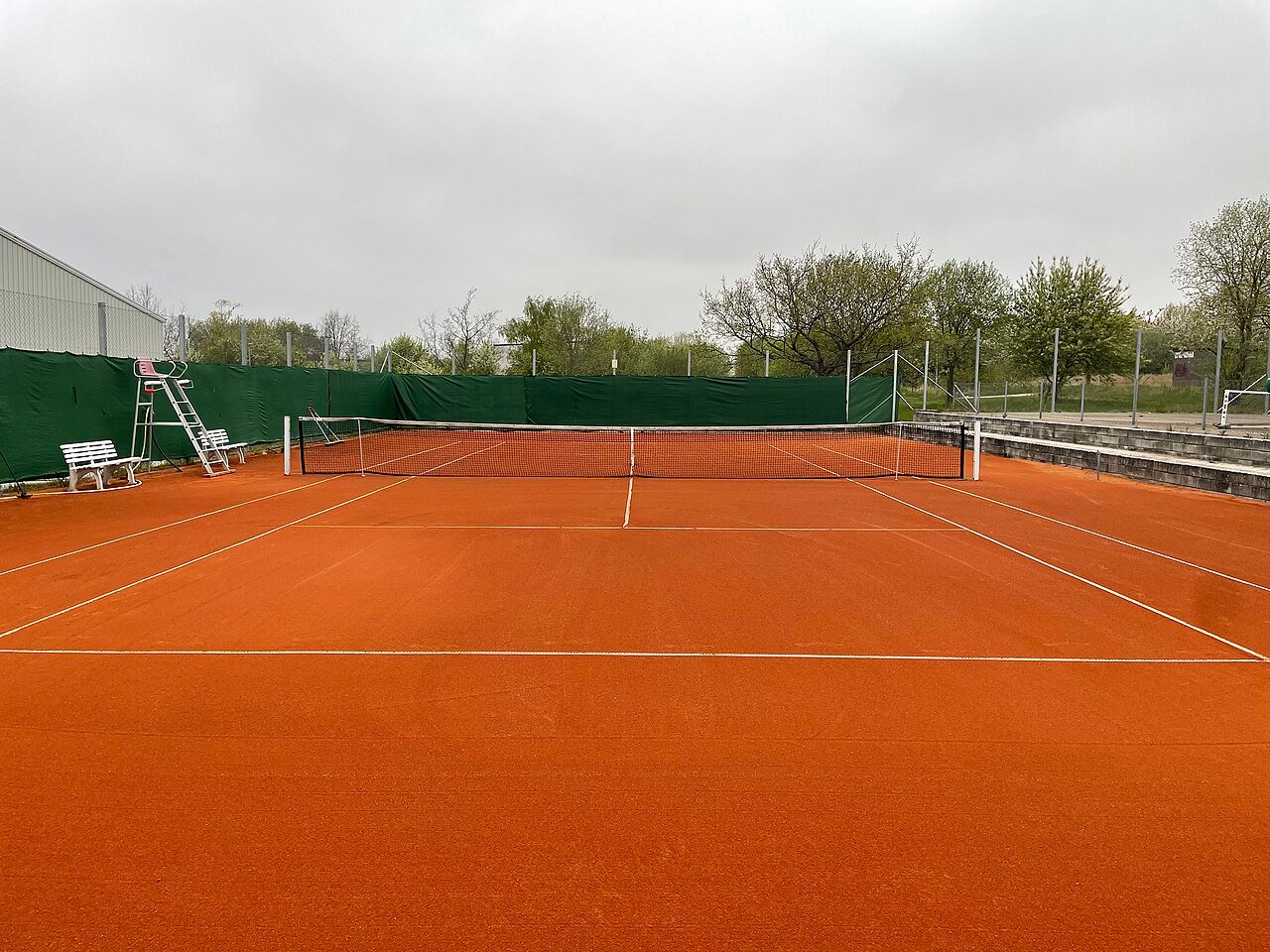
The outsole comes first, because it is chosen by your club, not by you. Most beginners play on hard courts, and the standard answer is an all-court outsole: a modified herringbone tread — the zigzag pattern, adjusted with denser or reinforced rubber in the highest-wear zones — that grips on hard courts and copes with occasional play elsewhere. Five of the seven shoes here use some version of it. If your club plays on clay, you want a full herringbone tread instead: the complete zigzag lets you slide in a controlled way and sheds clay from the grooves rather than clogging. Some models, like the Challenger 15, are sold in both an all-court version and a dedicated clay version of the same shoe — buy the version that matches your surface. Hybrid treads, like the Sprint Team 4.0’s, mix reinforced zones with more open tread to cover hard and clay courts in one shoe, a sensible compromise for a beginner who plays at more than one club. A few clubs also require non-marking soles — the Court Express 2’s listing states non-marking explicitly — so check your club’s rules before your first session.
Weight is always quoted with a basis. Shoe makers themselves rarely publish weights, so most weights in this guide are Tennis Warehouse’s listed figures for a US men’s 10.5, the retailer’s standard reference size — that shared basis is what makes the numbers comparable across brands. Mizuno is the exception: it publishes about 275 grams for the Break Shot 5 AC at a 27.0 cm size, which is a smaller reference size than 10.5, so do not rank it against the ounce figures directly. For a beginner, the practical read is feel: below roughly the middle of this guide’s range a shoe feels nimble, at the top it feels planted and cushioned. Neither is wrong; match the weight to whether you value support or lightness more.
Width listings are honest if you read them literally. This beginner field is a medium-width field: the listings say Medium, Snug Medium (Jet Tere 2), Generous Medium (CourtJam Control 3) or describe a relaxed last (Break Shot 5 AC). None of the seven is a lettered wide fitting, and this guide will not pretend otherwise. If your feet are genuinely wide, start with the generous-medium and relaxed-last options here, and know that true wide fittings exist in other guides on this site — the seniors guide in this series cards shoes listed in 2E width. A first shoe that pinches will teach you nothing except to dread lessons.
Cushioning names are systems, not scores. GEL, Bounce, KPRS-X, Zoom Air, ENERZY-family foams and plain EVA all soften landings in different constructions, and no honest guide can rank them from a spec sheet. What a beginner can use is the pattern: a shoe described with a named cushioning system plus a stability structure (the Challenger 15’s WINGWALL, the CourtJam’s Torsion System) is built to both cushion and control; a simple EVA shoe (Court Express 2, Sprint Team 4.0) cushions honestly and keeps the shoe light or classic-feeling. And break-in is a beginner spec, not a footnote: listings here range from “None” (Jet Tere 2, Court Lite 4, CourtJam Control 3) to “Slight” (Challenger 15, Court Express 2). A slight break-in is normal for structured shoes — wear them around the house and through one easy hit before a full match.
The 7 Best Tennis Shoes for Beginners, Reviewed
Ranked for a first season: surface match and stability first, then comfort, then weight. A note on sources before the cards: ASICS, Nike and Mizuno do not all publish weights, so where a card states a weight it names whose listing it comes from — most are Tennis Warehouse’s published figures for a US men’s 10.5, and Mizuno’s is the maker’s own figure at 27.0 cm. Fit, break-in and surface lines are as the listings state them.
ASICS Gel-Challenger 15
The most complete first shoe in this guide — genuine lateral stability and GEL cushioning in a shoe ASICS builds as the accessible step into its tennis range.
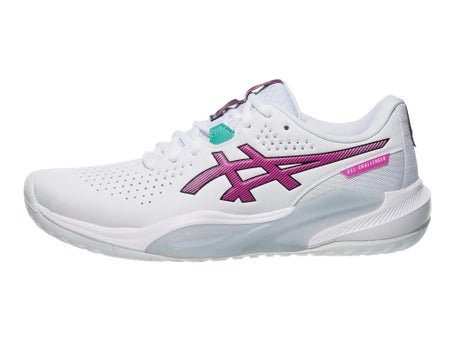
The Challenger line is where ASICS puts players who want the brand’s stability thinking without stepping up to the flagship Gel-Resolution, and the Challenger 15 is the most convincing all-round beginner shoe in this guide. Its headline feature is WINGWALL, a stability construction on the lateral edge of the shoe that gives the foot a supportive wall to load against when you plant and push sideways. For a beginner, whose side-to-side movement is still being grooved in lessons, that contained feeling is worth more than any single other spec: the shoe feels like it is holding your foot in the movement rather than simply going along with it. ASICS’ listings describe the support as coming without the heft or bulk of the bigger stability models, which matches the shoe’s middle-of-the-road 14.6-ounce listed weight.
Under the heel sits ASICS’ signature GEL cushioning, the system the brand has used across its court range for years, here in a rearfoot configuration that softens landings when a new player is still coming down heavily on their heels during split-steps and recovery steps. The upper is synthetic with perforations for ventilation, and — a detail beginners will appreciate within weeks — PGUARD drag protection reinforces the toes and the medial forefoot, the exact areas a developing player scuffs when they start dragging a foot through follow-throughs and defensive stretches. Shoes without that reinforcement show beginner wear fast; this one is built expecting it.
The outsole is AHARPLUS, ASICS’ high-abrasion rubber, in a modified herringbone pattern listed for traction and durability on a variety of court surfaces — the right default for a hard-court beginner. ASICS also sells a clay version of the Challenger 15 with a full herringbone tread, so clay-club players can take the same shoe in the correct sole rather than compromising. Fit is listed as true in length with a medium width and a slightly low arch, and a slight break-in: expect the first wear to feel structured, then settle. If your feet are wide, read the fit section of the buying guide below before ordering — this is a medium shoe, honestly labelled. As the season’s default recommendation for a new hard-court player who wants one shoe that does everything well, the Challenger 15 earns the top spot.
Pros
- WINGWALL lateral construction gives real sideways support while footwork is forming
- Rearfoot GEL cushioning softens heavy beginner landings
- PGUARD toe and medial-forefoot protection anticipates beginner drag wear
- Durable AHARPLUS outsole; a dedicated full-herringbone clay version is also sold
Cons
- Medium width only as listed — not the answer for genuinely wide feet
- Slight break-in, as listed, before it feels fully settled
- Heavier than the lightweight options here, if low weight is your priority
As an Amazon Associate we earn from qualifying purchases.
Babolat Jet Tere 2 All Court
The lightest shoe in this guide at 12.3 ounces as listed — a fast, plush-feeling starter for the beginner who already moves athletically.
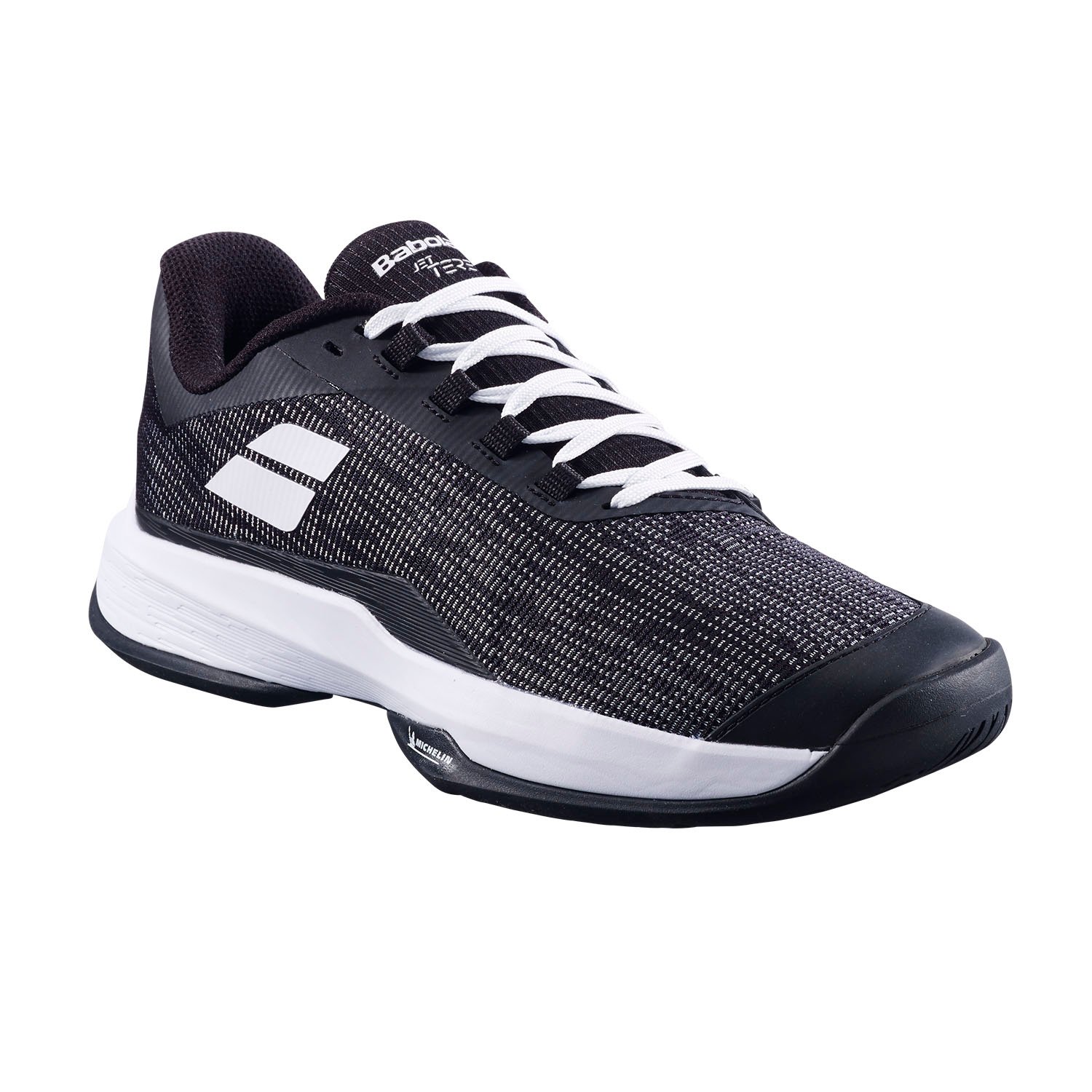
Every beginner guide needs an honest lightweight option, because some new players arrive from football, basketball or running with athletic movement already in place — and for them a heavy, maximal shoe feels like a punishment. The Jet Tere 2 is that option. At 12.3 ounces in the standard US men’s 10.5 listing it is the lightest shoe here by a clear margin, and Babolat builds it around KPRS-X, its cushioning system, in an updated form the listings describe as providing even more cushion than the first generation for a plush feeling underfoot. Light in this shoe does not mean bare: the midsole pairs KPRS-X with Active Flexion technology to keep the foot supported and connected to the court, and an OrthoLite moulded insole follows the shape of the foot.
The upper is a single layer of mesh with Matryx — Babolat’s woven technical fabric — across the forefoot for support where the foot loads during lateral steps, plus a protective rubber layer on the medial side of the toe box for drag wear. Underneath is the detail Babolat is known for in this category: a Michelin Premium Rubber outsole, from the brand’s long-running partnership with the tyre maker, thickened in its high-wear regions in this second generation to improve durability. That matters because the honest trade in most lightweight shoes is outsole life, and Babolat has clearly spent engineering effort answering it. The tread is an all-court pattern for hard courts and general use.
Read the fit line before you buy: the listing states a snug medium width, the snuggest in this guide, with a slightly low arch and no break-in required. A beginner with average or narrower feet gets a shoe that feels fast and disappears on the foot; a beginner with broad feet should look at the CourtJam Control 3 or Break Shot 5 instead. Babolat positions the upper’s support at club and recreational players, which is precisely this guide’s reader. If your first season will be played at pace and you want the shoe out of your way, this is the one.
Pros
- Lightest listed weight in this guide at 12.3 ounces
- KPRS-X cushioning gives a plush ride despite the low weight
- Michelin Premium Rubber outsole, thickened in high-wear areas for this generation
- No break-in listed, and a moulded OrthoLite insole from the first wear
Cons
- Snug medium width, as listed — the least forgiving fit here for broad feet
- Less lateral structure than the Challenger 15 or CourtJam Control 3
- Lightweight shoes generally trade some outsole volume, even with the reinforced tread
As an Amazon Associate we earn from qualifying purchases.
K-Swiss Court Express 2
A classic leather court shoe whose own listings aim it at players just starting out — familiar feel, honest cushioning, non-marking sole.
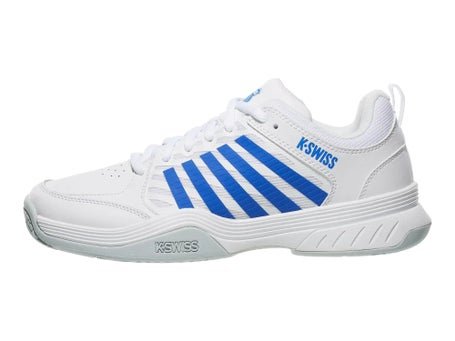
Some beginners do not want a shoe that looks and feels like a piece of racing equipment; they want the tennis shoe they picture when they picture tennis. The Court Express 2 is that shoe, and it is not a costume — K-Swiss’ retail listings describe it directly as a great value option for players just starting out, built around the classic court-shoe formula of a leather upper, a cushioned EVA midsole and a durable rubber outsole. The leather-and-synthetic upper gives the supple, contoured feel long-time players associate with K-Swiss, with the support and structure a court shoe needs, and it softens and moulds with wear in a way mesh uppers do not.
The cushioning is deliberately straightforward: a compression-moulded EVA midsole for a comfortable ride and shock absorption, over a PU foam sockliner that adds step-in softness. There is no named air or gel system to decode, which some beginners will count as a feature. The outsole is K-Swiss’ Aosta 7.0 rubber in a modified herringbone pattern, reinforced in high-wear areas, and listed as non-marking — a genuine practical point, because plenty of clubs and indoor facilities require non-marking soles, and this is the one shoe in the guide whose listing states it outright. It is listed for hard, all-court use with a slightly low arch.
Fit is true in length and medium in width per the listing, with a slight break-in while the leather settles. Two honest cautions. First, this is a comfort-and-value shoe, not a stability flagship: it supports recreational movement well, but a beginner who already plays aggressively sideways will find more lateral structure in the Challenger 15. Second, the classic formula carries a mid-pack 13.2-ounce listed weight — light enough for any beginner, without chasing the Jet Tere 2’s number. For the new player who wants a shoe that feels familiar from the first wear, plays anywhere, and offends no club’s rules, the Court Express 2 is the easiest recommendation in this guide to live with.
Pros
- Listings position it explicitly for players just starting out
- Classic leather upper moulds to the foot and feels familiar immediately
- Non-marking Aosta 7.0 outsole, as listed — safe for strict club and indoor rules
- Simple, honest EVA cushioning with a soft PU foam sockliner
Cons
- Less lateral structure than the stability-led shoes in this guide
- Slight break-in while the leather upper settles
- Medium width only, as listed
As an Amazon Associate we earn from qualifying purchases.
Nike Court Lite 4
Nike’s recreational court shoe: a plush heel collar, soft synthetic-and-mesh upper and no listed break-in, for beginners who want comfort first.
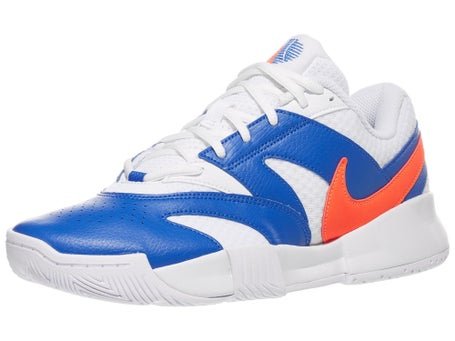
The Court Lite line is Nike’s answer for recreational players, and the fourth edition is built around the thing beginners report caring about most after their first few sessions: how the shoe feels the moment it goes on. The upper combines synthetic leather with mesh panels for flexible, soft support, and the heel collar is plush — the listing calls it out specifically for comfort and a locked-in feel around the ankle. That combination matters for a new player, because the first month of tennis involves a lot of stopping, standing in coaching queues and short bursts rather than flowing match movement; a shoe that is kind during all of that gets worn more, and practice is the whole game at this stage.
Tennis Warehouse’s spec block for the Court Lite 4 lists a Zoom Air unit in the forefoot for a responsive, springy feel under the ball of the foot, with EVA foam underfoot keeping the ride fresh through long rallies. A sourcing note in the open: Nike’s own copy leads on comfort and durability rather than on cushioning hardware, and the Zoom Air detail comes from the retailer’s published specification list, so this card credits it as listed rather than as a maker headline. The outsole is a zonal herringbone pattern in high-abrasion rubber — “zonal” meaning the tread density varies across the sole, with more rubber where wear concentrates — and this fourth edition was updated for better wear resistance in the toe region and the outsole compared with its predecessor, the two places beginner shoes die first.
The listing completes a beginner-friendly picture: true length, medium width, a low arch profile and no break-in required, at a 14.0-ounce listed weight that sits mid-pack here. The honest limits are support and structure: the Court Lite 4’s soft, comfort-led upper will not contain a hard lateral plant the way the Challenger 15’s WINGWALL or the CourtJam’s shank-and-overlay build does, and Nike’s medium fits run neater than some brands’. For the beginner whose priority is a shoe that feels good immediately, every session, while they learn — the majority of new players, honestly — this is the most welcoming card in the guide.
Pros
- Plush heel collar and soft upper — the most welcoming step-in feel here
- No break-in listed; comfortable from the first session
- Zonal herringbone outsole varies tread density for grip and wear
- This generation added toe-region and outsole wear resistance
Cons
- Comfort-led upper gives less lateral containment than the stability picks
- Medium fit only, as listed, and Nike’s medium runs neat
- The forefoot Zoom Air detail is retailer-listed rather than a maker headline spec
As an Amazon Associate we earn from qualifying purchases.
HEAD Sprint Team 4.0
A light, low-to-the-ground shoe on HEAD’s Sprint platform, with a hybrid outsole that covers hard and clay courts in one pair.
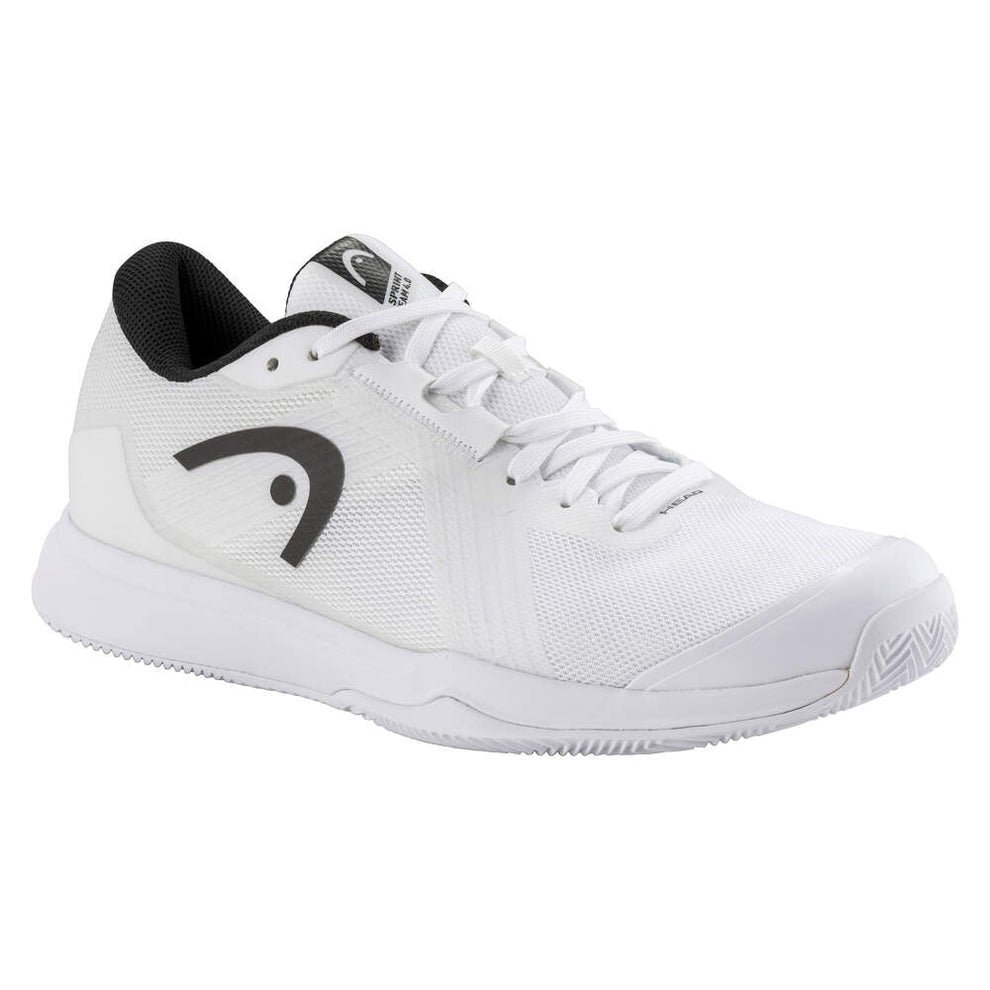
The Sprint Team is the accessible tier of HEAD’s Sprint family — the platform the brand’s faster shoes sit on — and the 4.0 generation brings the family’s working parts down to a beginner-sensible shoe: a breathable mesh upper, an EVA midsole, HEAD’s Hybrasion+ rubber in a hybrid tread, Drift Defense protection around the toe and medial side, and a Lateral Control stability trigger in the lateral outsole that resists the foot rolling outward on a hard plant. For a new player, that last pair of features is the quiet story of this card: the shoe is light and low, but HEAD has still built in the anti-roll and anti-drag hardware that separates a court shoe from a trainer.
The ride is the distinction. The Sprint Team 4.0 sits low to the ground with a minimal heel-to-toe offset, so your foot feels connected to the court rather than perched above it — beginners who dislike the tall, cushioned feel of maximal shoes often take to this immediately, and it makes balance through early footwork drills feel natural. HEAD’s product copy adds an integrated torsion shank for stability through direction changes, and the hybrid outsole mixes reinforced durability zones for hard courts with more open tread areas that grip on clay, making this the one shoe in the guide a beginner can buy once and use across both surface types without a second pair.
A transparency note on the weight: HEAD does not publish an official figure for this shoe, and neither do its retail listings, so the “about 13.3 ounces” here comes from Tennis Warehouse’s published playtest of the Sprint Team, whose testers consistently praised how light and fast it felt. Fit guidance for the Team 4.0 is thinner in published listings than for the other cards — treat it as a standard medium-fitting mesh shoe, use the sideways-shuffle test from the buying guide, and favour a retailer with easy returns for a first order. Choose it if you play at mixed-surface clubs or simply want your first shoe to feel quick and close to the court.
Pros
- Low-to-the-ground ride gives a connected, balanced feel for learning footwork
- Hybrid Hybrasion+ outsole covers hard and clay courts in one shoe
- Lateral Control trigger and Drift Defense protection are proper court hardware
- Playtesters for Tennis Warehouse singled out its light, fast feel at about 13.3 ounces
Cons
- No maker-published weight or detailed fit listing — the figure here is a playtest measurement
- EVA midsole is firmer and simpler than the named cushioning systems elsewhere here
- Low profile means less underfoot cushion for players who want maximum softness
As an Amazon Associate we earn from qualifying purchases.
adidas CourtJam Control 3
The most built-up shoe in this guide: Bounce cushioning, a Torsion System shank and a generous medium fit for beginners who want support and softness.
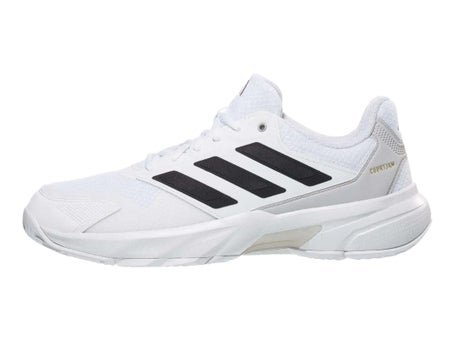
If the Challenger 15 is this guide’s stability pick, the CourtJam Control 3 is its cushioning-and-structure pick — the shoe for the beginner who lands heavily, plays on unforgiving hard courts, or simply knows from other sports that they like a substantial shoe under them. adidas builds it around a Bounce midsole, its resilient foam cushioning, described in the listings as providing energised, long-lasting comfort and shock absorption for long days on court. Above the midsole, an engineered mesh upper with TPU overlays balances ventilation with hold, and Adituff — adidas’ abrasion-resistant material — protects the medial side where beginners drag and scuff.
The structural piece is the Torsion System: a TPU shank through the midfoot that resists unwanted twisting and holds the shoe together through lateral cuts. That is flagship vocabulary in a beginner shoe, and it changes how the shoe behaves when a new player plants and pushes sideways — the sole stays under the foot as one unit instead of folding. The outsole is Adiwear, adidas’ hard-wearing rubber, in a modified herringbone pattern listed for traction and durability across court surfaces. The listings are equally honest about the ceiling: this shoe is not built to the durability standard of adidas’ Barricade line, and a beginner does not need it to be — the wear hardware here is sized for learning seasons, not for daily sliding.
Two fit facts decide this card. The listing states a generous medium width — the roomiest fit description in this guide alongside the Break Shot’s relaxed last — which makes the CourtJam the first stop for beginners who find most court shoes tight across the forefoot. And at 15.1 ounces as listed it is the heaviest shoe here: that weight is the price of the cushioning stack and structure, and players who prize lightness should take the Jet Tere 2 instead. Length is listed true, the arch low, and no break-in is required. For the new hard-court player who wants the most shoe — most cushion, most structure, most room — this is the one.
Pros
- Bounce cushioning gives the plushest underfoot ride in this guide
- Torsion System shank resists twisting through lateral cuts
- Generous medium fit, as listed — the roomiest standard fit here
- Adiwear outsole and Adituff medial protection cover beginner wear zones
Cons
- Heaviest shoe in this guide at 15.1 ounces as listed
- Not built to Barricade-level durability, as its own listings note
- The built-up ride will feel like too much shoe for players who prefer a low profile
As an Amazon Associate we earn from qualifying purchases.
Mizuno Break Shot 5 AC
The one shoe here designed from the start as a starter shoe — Mizuno gives it a relaxed last, a flat flexible sole and a removable cup insole.
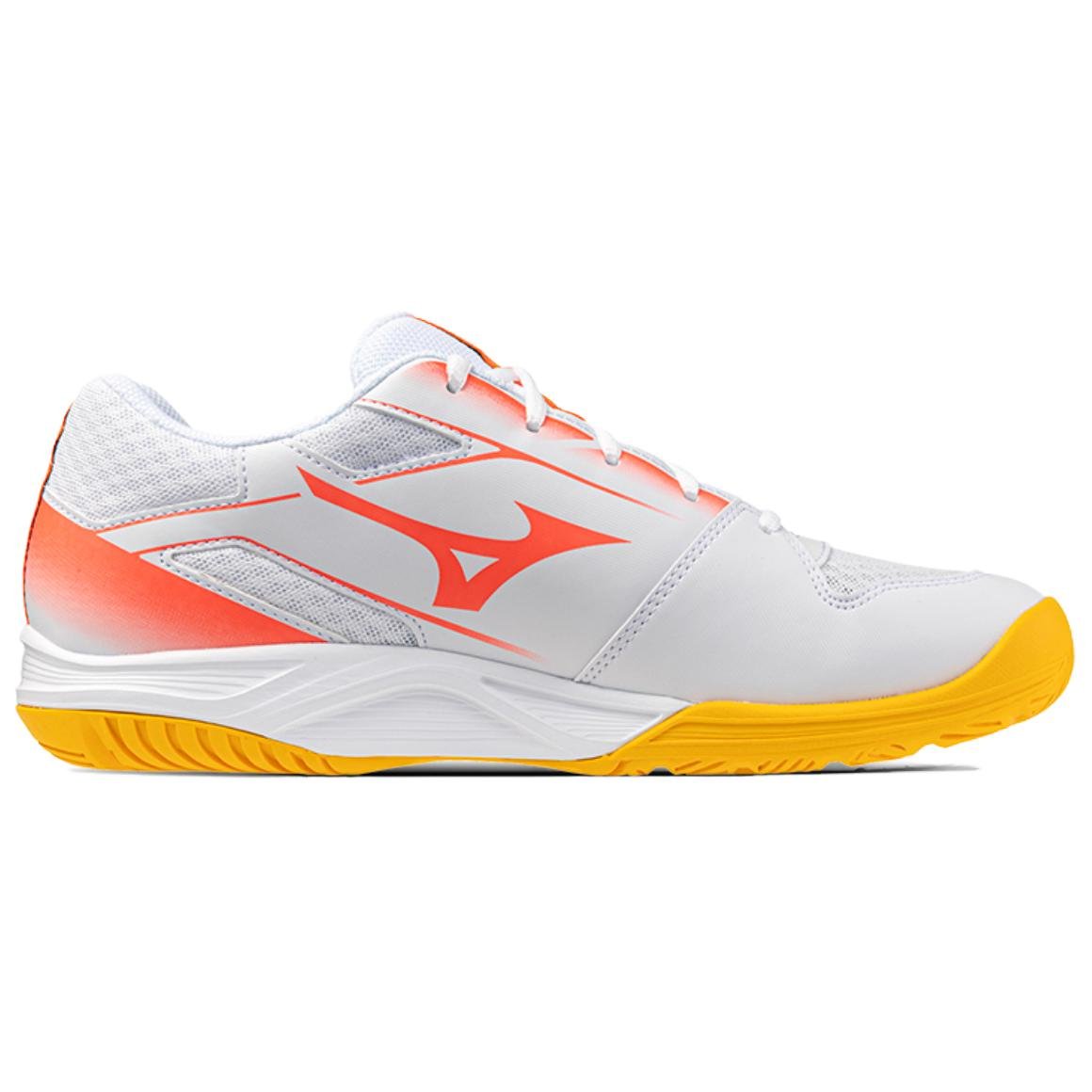
Every other shoe in this guide is a general model that happens to suit beginners; the Break Shot 5 AC is the one Mizuno designs and describes as a beginner shoe outright — its own product copy calls it the perfect starter shoe for tennis beginners, and the design choices follow that brief in ways the other cards do not. Start with the last: Mizuno made this generation’s last more relaxed than the previous model’s, specifically so the shoe matches a wide range of feet comfortably. For a first-time buyer ordering without a fitting, that forgiveness is a genuine feature, and retail listings echo it by describing a wide-feeling, relaxed fit. The upper pairs soft synthetic leather with breathable mesh sections for a shoe that feels more like a comfortable trainer than a piece of equipment — deliberately so.
The sole philosophy is the other beginner-first decision. Where performance shoes chase stiffness and propulsion, the Break Shot’s sole is flat and highly flexible: Mizuno says it bends easily even for players still building physical strength, and that the flat design is extremely stable and helps a player feel the court through the whole foot. For someone learning split-steps, balance and weight transfer in their first lessons, that ground feel is teaching information, not a compromise. A removable cup insole follows the shape of the foot and can be swapped or aired out — a small, practical touch none of the other cards lists. Mizuno also trimmed about 15 grams from the previous model, publishing a weight of about 275 grams at a 27.0 cm size, with the honest caveat that final weight may vary; note the smaller reference size before comparing it with the ounce figures elsewhere in this guide.
The AC in the name is the all-court version, and this is where the beginner-first brief shows its limits as clearly as its strengths. The flat, flexible sole that teaches feel will not give a fast-improving player the lateral structure of the Challenger 15 or the CourtJam Control 3 once their movement sharpens, and the comfort-led build is a first-and-second-season shoe rather than a long-term match shoe. That is not a flaw in the brief — it is the brief. If you are buying your very first pair, uncertain about sizing, surfaces and how much you will play, the Break Shot 5 AC is the lowest-risk start in this guide, from the one maker that designed its shoe for exactly you.
Pros
- Designed and described by Mizuno specifically as a beginner starter shoe
- Relaxed last suits a wide range of feet — forgiving for a first online order
- Flat, flexible sole builds court feel and balance while you learn
- Removable cup insole, and a maker-published weight with its size basis stated
Cons
- Flexible sole offers less lateral structure as your game quickens
- Weight basis (27.0 cm) is not directly comparable with the US 10.5 ounce figures
- Comfort-led build is a starter shoe, not a long-term advanced match shoe
As an Amazon Associate we earn from qualifying purchases.
Side-by-Side Comparison Table
Every specification below is as its maker or retailer listing states it. Weights use each listing’s own basis — Tennis Warehouse’s US men’s 10.5 figures for six shoes, Mizuno’s published 27.0 cm figure for the Break Shot 5 — so compare the ounce figures with each other, and treat the Mizuno’s gram figure on its own terms.
| Shoe | Best For | Cushioning | Outsole | Listed Weight | Fit / Break-in |
|---|---|---|---|---|---|
| ASICS Gel-Challenger 15 | Best overall first shoe | Rearfoot GEL | AHARPLUS rubber, modified herringbone | 14.6 oz (US m 10.5) | True / Medium · Slight |
| Babolat Jet Tere 2 All Court | Lightest start | KPRS-X | Michelin Premium Rubber, all-court tread | 12.3 oz (US m 10.5) | True / Snug medium · None |
| K-Swiss Court Express 2 | Classic feel, strict clubs | Compression-moulded EVA + PU sockliner | Aosta 7.0 rubber, non-marking, modified herringbone | 13.2 oz (US m 10.5) | True / Medium · Slight |
| Nike Court Lite 4 | Step-in comfort | Forefoot Zoom Air unit (per listing), EVA underfoot | Zonal herringbone, high-abrasion rubber | 14.0 oz (US m 10.5) | True / Medium · None |
| HEAD Sprint Team 4.0 | Low court feel, mixed surfaces | EVA, low profile | Hybrasion+ rubber, hybrid tread | About 13.3 oz (playtest) | Standard medium · Not listed |
| adidas CourtJam Control 3 | Cushioning and structure | Bounce | Adiwear rubber, modified herringbone | 15.1 oz (US m 10.5) | True / Generous medium · None |
| Mizuno Break Shot 5 AC | Purpose-built starter shoe | Removable cup insole, flexible flat sole | All-court (AC) outsole | About 275 g (27.0 cm) | Relaxed last · Not listed |
Read the table the way a beginner should: find your surface first (all-court outsoles for hard courts, a full herringbone clay version if your club is clay, the Sprint Team’s hybrid if you split time), then your fit reality (snug, medium, generous or relaxed), then the feel you want — light and low, classic, plush or structured. The most expensive mistake is a shoe that fails one of the first two filters, however good it looks on the third.
How to Choose Your First Tennis Shoes
Five decisions, in the order to make them. Get the first two right and any of the seven shoes above will serve your first season well.
Match the Outsole to Your Club’s Surface
Ask your club what you will actually play on before you shop. Hard courts take an all-court outsole — the modified herringbone used by most of this guide. Clay takes a full herringbone tread that slides in a controlled way and clears loose clay; some shoes, including the Challenger 15, are sold in a dedicated clay version, so buy the version, not just the model. If you split time between surfaces, the Sprint Team 4.0’s hybrid tread is the one-shoe compromise. Check club rules too: where non-marking soles are required, the Court Express 2’s listing states non-marking outright.
Decide How Much Support Your Movement Needs
Be honest about how you move. If you are new to court sports entirely, your footwork is unformed and your stops are planted and heavy — take structure: the Challenger 15’s WINGWALL or the CourtJam Control 3’s Torsion System shank. If you arrive athletic from another sport and move lightly already, the Jet Tere 2 and Sprint Team 4.0 reward that. Most beginners sit in the first group for their first season, which is why the stability-led shoes rank where they do.
Get the Fit Right — Including the Width Reality
Court shoes should hold the midfoot firmly with a thumb’s width or less at the toes, because your foot drives forward into stops. All seven listings here state true length, so order your trainer size first. On width, be literal: this is a medium-width field — snug medium (Jet Tere 2), standard medium (Challenger 15, Court Express 2, Court Lite 4), generous medium (CourtJam Control 3) or a relaxed last (Break Shot 5 AC). If you know your feet are wide, start with the last two. Players shopping the women’s range will find the equivalent picks in our best tennis shoes for women guide, and players who need a true lettered wide fitting today will find 2E-listed options in our best tennis shoes for seniors guide — width is a fit fact, not an age category.
Pick Cushioning by Feel, Not by Name
GEL, Bounce, KPRS-X, Zoom Air and EVA are different constructions doing the same job, and a beginner cannot rank them from a spec sheet — so choose by the ride you want. Maximum softness with structure: CourtJam Control 3. Cushioned and stable: Challenger 15. Plush despite low weight: Jet Tere 2. Immediate step-in comfort: Court Lite 4. Classic, simple foam feel: Court Express 2. Low and connected: Sprint Team 4.0. Flexible ground feel: Break Shot 5 AC. Then respect the break-in line — a “slight” listing means one easy session before a full match.
Plan the Second Pair While You Buy the First
A first pair teaches you your court-shoe size in a brand, your surface, and how fast you wear outsoles — write those down when the season ends. When you outgrow a beginner shoe, the step up is our best tennis shoes pillar, where the flagship stability, durability and speed models live; pair the shoes with the right racket as your game settles using our best tennis rackets for beginners guide. Upgrading because your movement has outgrown the shoe is the normal, happy path — not a sign the first pair was a mistake.
A Note on Sources and “Tested” Claims
This guide does not claim hands-on testing. Every weight, fit line, break-in note and technology name above comes from the maker’s or a specialist retailer’s published listing for that shoe, and where a figure’s basis matters — Tennis Warehouse’s US men’s 10.5 listings, Mizuno’s 27.0 cm figure, a playtest measurement for the Sprint Team 4.0 — the card says so. One deliberate consequence: where a maker publishes no weight, the card presents the best attributed listing figure available rather than a house estimate. Always check the current listing for your size before ordering, because colourways and generations change.
Beginner Tennis Shoe FAQs
Can beginners play tennis in running shoes?
It is the most common beginner mistake, and worth avoiding from the first session. Running shoes are built for straight-line forward motion: soft, raised heels, curved soles and little sideways reinforcement. Tennis movement is lateral — shuffles, split-steps, planted stops and angled push-offs — and a running shoe’s sole and upper are not built to contain those loads, so the foot can roll over the edge of the shoe on a hard sideways plant. Every shoe in this guide is a proper court shoe with a flatter sole, lateral support and a court tread, and even the simplest of them is a safer and more useful first purchase than a good running shoe.
What is the difference between all-court and clay-court tennis shoes?
The outsole tread. An all-court shoe uses a modified herringbone pattern — the classic zigzag, adjusted with reinforced rubber in high-wear zones — that grips hard courts and copes with general use; most beginners on hard courts should buy this. A clay-court shoe uses a full herringbone tread across the whole sole, which lets you slide in a controlled way on clay and sheds loose surface from its grooves instead of clogging. Some models are sold in both versions, so check which one you are ordering. Hybrid treads, like the HEAD Sprint Team 4.0’s, mix reinforced and open zones as a one-shoe compromise for players who use both surfaces.
How should a first pair of tennis shoes fit?
Snug through the midfoot so the foot cannot slide sideways inside the shoe, with a small amount of room — roughly a thumb’s width or less — in front of the longest toe, because tennis stops drive the foot forwards. All seven shoes in this guide are listed as true to length, so start with your normal trainer size. Judge the fit actively: lace up, take a few sideways shuffles and make one hard stop. If your heel lifts or your toes jam the front on the stop, change size before you change model. Listings also state break-in; “slight” means wear the shoe in gently before a full match.
Do beginners need wide tennis shoes?
Only if their feet are wide — width is a fit fact, not a beginner feature. This guide’s field is honestly a medium-width one, and the cards say so: the adidas CourtJam Control 3 is listed as a generous medium and the Mizuno Break Shot 5 AC uses a relaxed last, making those two the first stops for broader feet, while the Babolat Jet Tere 2 is listed as a snug medium and suits narrower feet best. If you need a true lettered wide fitting, it exists in other ranges — our seniors footwear guide cards shoes listed in 2E width — and a correctly wide shoe will always beat a medium shoe bought a size up.
How long do beginner tennis shoes last?
There is no honest fixed number, because wear depends on your surface, hours and movement — treat any guide that promises one with suspicion. Watch the shoe instead: the outsole tread is usually the first thing to go on hard courts, and once the herringbone under the ball of the foot wears smooth, grip is gone and it is time to replace the shoe. Toe and medial-side wear from dragging is the second sign — which is why several shoes here add protection in exactly those zones. Cushioning also firms up with use; if a shoe that was comfortable starts feeling flat and hard through a session, its useful life is ending even if the upper looks fine.
Are expensive flagship tennis shoes worth it for a beginner?
Usually not yet. Flagships charge for extremes a first season does not use — maximum outsole durability for players who slide for hours weekly, maximum stability for aggressive advanced movement, or minimum weight for fast competitive footwork. The beginner shoes in this guide cover what a first season actually needs: the right outsole, enough lateral support, real cushioning and an honest fit, using named technology from the same makers. The sensible path is to learn the game in a shoe like these, then step up to the flagship models in our main best tennis shoes guide when your movement — not your enthusiasm — has outgrown the beginner shoe.
When should a beginner upgrade to an advanced tennis shoe?
When the shoe starts limiting the movement you have learned. Practical signs: you are playing several times a week and wearing outsoles smooth quickly, you slide deliberately on hard courts, your lateral movement has become sharp enough that a comfort-led upper feels loose on hard cuts, or your first pair has simply worn out after teaching you your size and surface. At that point the flagship stability, durability and speed models in our best tennis shoes pillar are built for exactly your game — and you will choose between them far better with a season of court-shoe experience behind you.
The Verdict: Which Beginner Tennis Shoes Should You Buy?
Buy the ASICS Gel-Challenger 15 if you want one first shoe that does everything well: genuine WINGWALL lateral support, GEL cushioning and a durable AHARPLUS outsole, with a dedicated clay version if your club needs it. Take the Babolat Jet Tere 2 All Court if low weight matters most and your feet run average to narrow — at 12.3 ounces listed it is the lightest start here. Choose the K-Swiss Court Express 2 for a classic leather feel and a non-marking sole that satisfies strict clubs, or the Nike Court Lite 4 if step-in comfort decides your first season. The HEAD Sprint Team 4.0 suits players who split time between hard and clay courts and like a low, connected ride. For the most cushioning, structure and forefoot room, it is the adidas CourtJam Control 3. And if you are buying your very first pair and want the lowest-risk start of all, the Mizuno Break Shot 5 AC was designed for exactly that purchase.
Whichever you choose, choose it in the right order — surface, then fit, then feel — and learn the game in real court shoes from the first lesson. When your movement outgrows this guide, the best tennis shoes pillar is waiting with the flagships.
Affiliate disclosure: Alishuttler is reader-supported. When you buy through links on this page we may earn an affiliate commission from Amazon, at no additional cost to you. Product specifications, weights and fit details are taken from the makers’ and specialist retailers’ published listings as described in the note on sources above; we do not claim hands-on testing, and specifications can change between generations and colourways, so always check the current listing before ordering. Prices are never shown here because they change frequently — use the Amazon buttons for the live figure.